
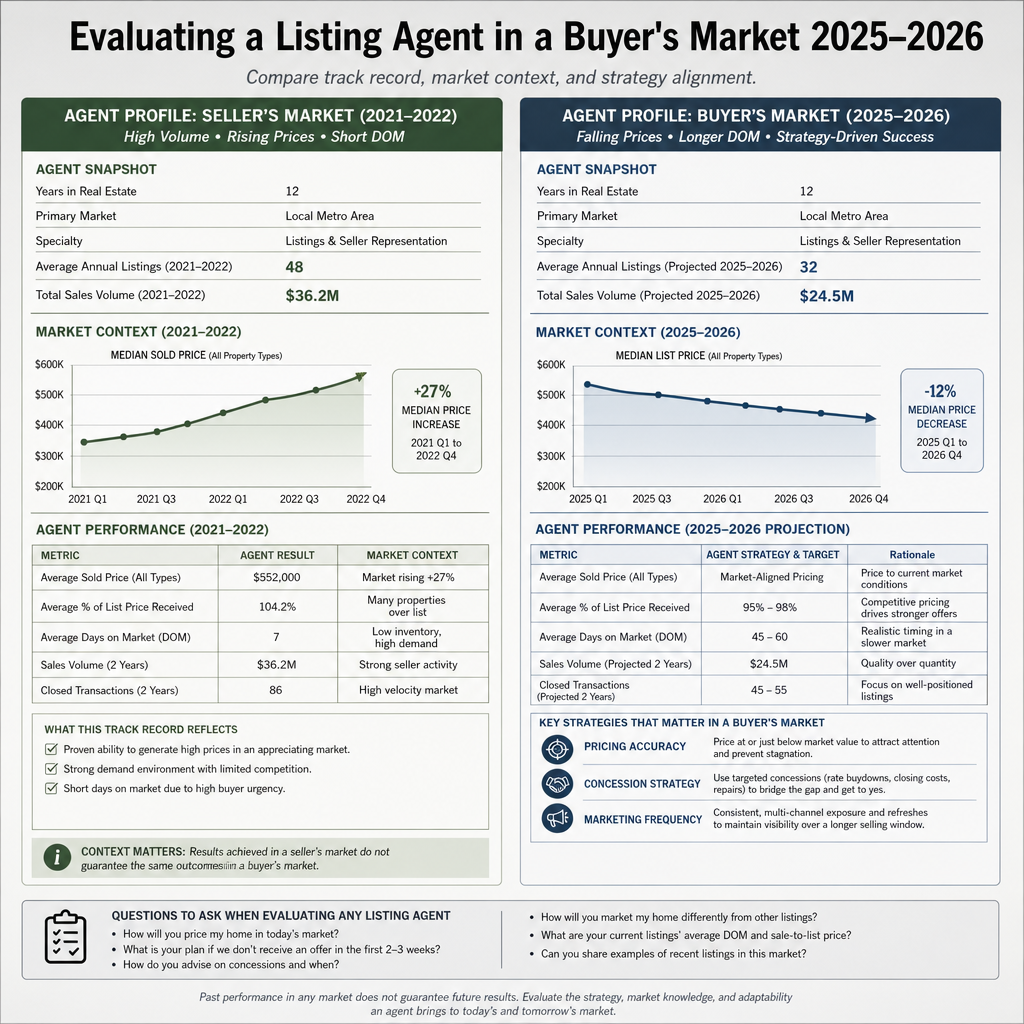

Evaluating a Listing Agent in a Buyer's Market: The Critical Criteria That Matter When Inventory Is High and Prices Are Declining Across Metro Vancouver and the Fraser Valley 2025–2026
By Mohamed Mansour, MBA and Associate Broker | Mansour Real Estate Group | Fraser Valley and Lower Mainland | Published: July 14, 2025 | Topic: Seller Strategy — Listing Agent Selection in a Declining Market
This article is for homeowners in Surrey, Langley, Abbotsford, White Rock, and across Metro Vancouver who are preparing to sell in a market that has fundamentally shifted. With sales-to-active ratios sitting between 10% and 13% across the Fraser Valley and Metro Vancouver — well below the 20% threshold that defines a balanced market — selecting the right listing agent is no longer about who sold the most homes in 2021. It is about who knows how to sell in this market, right now.
The skills that drive results in a buyer's market are different from those that win in a seller's market. This guide explains which criteria actually separate effective listing agents in 2025–2026 — and which ones no longer predict the outcome.
Short Answer
In a buyer's market with 10,000+ active listings across Metro Vancouver and the Fraser Valley, the most important criteria for evaluating a listing agent are: pricing discipline in comparable soft-market conditions, days-on-market history from similar markets, marketing intensity adapted to low buyer demand, and negotiation skill with concessions — not brokerage brand, total volume, or seller's-market track records.
Key Takeaways
- Sales-to-active ratios below 13% signal a buyer's market where pricing accuracy determines sale speed more than any other factor.
- Homes priced 5–10% above comparable sales linger 50+ days; strategically priced homes sell in 20–30 days in the same conditions.
- An agent's days-on-market history from soft markets is now more predictive than total transaction volume or brokerage affiliation.
- Marketing intensity — photography, virtual tours, targeted digital spend — directly affects buyer inquiry velocity when demand is low.
- Concession-based negotiation (rate buy-downs, closing-cost help, warranties) closes deals faster without eroding net proceeds as severely as price cuts.
Who This Applies To
- Homeowners in Surrey, Langley, Abbotsford, South Surrey, or White Rock preparing to list in 2025 or 2026
- Sellers interviewing multiple agents and unsure which credentials and track records now matter most
- Owners who listed previously without success and are re-evaluating their agent choice
- Estate executors, divorcing couples, and downsizers who need a reliable sale timeline in uncertain conditions
When This Advice May Not Apply
If market conditions shift significantly — a sustained drop in interest rates or a sharp reduction in new listings — the balance between buyer and seller leverage may change. The criteria below are calibrated for conditions where sales-to-active ratios remain below 15%. If ratios recover above 20%, some seller's-market benchmarks may apply again. Check current FVREB and REBGV monthly statistics before making decisions.
Key Terms
Sales-to-active ratio: The percentage of active listings that sell in a given month. Below 12% is a buyer's market. Above 20% is a seller's market. Between 12% and 20% is balanced.
Days on market (DOM): The number of days a listing remains active before a subject-free offer is accepted. High DOM is a signal of mispricing or weak marketing in most conditions.
List-to-sale ratio: The final sale price expressed as a percentage of the original list price. A ratio below 96% in a buyer's market often signals overpricing at the start. See more at What Is a Realtor's List-to-Sale Ratio and Why It Matters When Choosing an Agent in BC.
Seller concession: A financial accommodation offered by the seller to a buyer — such as help with closing costs, a rate buy-down, or an included home warranty — used to close a price gap without a formal price reduction.
Data Used in This Article
- REBGV Monthly Statistics Reports — Sales Ratios and Days-on-Market by Property Type, 2025–2026 (official board data)
- FVREB Market Trend Data — Langley, Abbotsford, Mission Sales-to-Active Ratios and Price Performance, 2025–2026 (official board data)
- BC Real Estate Association Benchmark Price Tracking (official industry data)
- Mansour Real Estate Group historical sales data — days-on-market correlation to pricing and agent strategy (internal professional analysis)
- MLS transaction history — comparative agent performance analysis across buyer's and seller's market conditions (third-party transaction data)
Why Market Conditions Change the Agent Selection Decision
Between 2020 and 2022, almost any agent in Metro Vancouver and the Fraser Valley could sell a home quickly. Inventory was thin, multiple offers arrived within days, and price reductions were rare. Agent performance was difficult to distinguish because the market itself was doing most of the work.
The 2025–2026 environment is structurally different. According to REBGV and FVREB monthly reports, sales-to-active ratios across Metro Vancouver and the Fraser Valley have tracked between 10% and 13% through much of this period — a buyer's market by any conventional measure. Benchmark prices in segments including detached homes in Surrey, townhomes in Langley, and condos in Abbotsford have softened year over year, while active listings have climbed well above 10,000 units across the region.
In this environment, an agent's decisions in the first two weeks of a listing — how the property is priced, how it is presented, and how buyer inquiries are managed — have a measurable effect on final proceeds. When reviewing how to choose a listing agent in Metro Vancouver and the Fraser Valley, the right framing is not who performed well in a rising market. It is who has evidence of performance in a soft one.
The difference in net proceeds between an agent who prices accurately and one who lists optimistically and chases the market down can range from 5% to 12% of the sale price — a material number on any Fraser Valley property.
The Criteria That Now Predict Listing Agent Performance
1. Pricing discipline — not seller's-market volume
MLS transaction data across the Fraser Valley shows that homes priced within 2–3% of comparable active listings sell in 20–30 days in the current market. Homes priced 5–10% above comparables routinely exceed 50 days on market before price reductions begin — and those reductions tend to undershoot the original accurate price point, compressing net proceeds further.
The criterion to evaluate: ask the agent to show you their recent listings in your property type and neighbourhood. Then verify list price against final sale price and DOM using public MLS history. An agent who consistently lists within 3% of final sale price and sells in under 35 days in this market has demonstrated pricing discipline. Total transaction count from 2021 or 2022 does not.
Understanding what Top 1% status actually means in a BC context is useful here — the distinction between volume rankings from bull markets and current performance data is worth examining carefully before signing a listing agreement.
2. Days-on-market history from soft conditions
DOM history is now the primary performance metric that matters. In a seller's market, DOM tells you almost nothing — properties moved regardless. In the current buyer's market, DOM tracks the combined effect of pricing accuracy, marketing effectiveness, and negotiation skill. An agent averaging 25–35 days on market in 2024–2025 has demonstrated something meaningful. One averaging 70+ days has not.
Ask directly: "What was your average DOM for homes you listed in the last 12 months, in my property type?" If they cannot answer with specifics, that is a signal worth noting. Reviewing the red flags to watch for when hiring a realtor in Metro Vancouver is a useful parallel exercise during this stage of your interviews.
3. Marketing intensity adapted to low demand
In a market where 10,000+ competing listings exist and buyer inquiry rates are low, marketing output directly affects how quickly qualified buyers find a property. Professional photography, Matterport or equivalent virtual tours, targeted digital campaigns, open house frequency, and social media exposure all contribute to inquiry velocity. Agents who apply the same marketing budget and plan they used in 2021 — when buyers were calling regardless — are not adapting to the conditions their sellers now face.
Before signing a listing agreement, review the agent's proposed marketing plan in detail. A strong marketing plan in a buyer's market specifies the budget, channels, frequency, and follow-up process — not just a promise of MLS exposure.
4. Negotiation skill with concessions, not just price
When buyers have leverage and options, skilled agents do not simply hold firm on price and wait. They structure creative concessions — closing-cost help, interest rate buy-downs through the seller's side, extended possession dates, included appliances or warranties — that address a buyer's specific hesitation without the full impact of a formal price reduction. This capability requires experience with buyer psychology in soft markets and an understanding of what financing-related concessions buyers currently respond to. Ask any agent you interview to describe how they handled a recent negotiation in a slow market. Listen for specific tactics, not general statements about being a strong negotiator.
How We Evaluate This at Mansour Real Estate Group
When we take on a listing in the current market, our starting point is always a current competitive market analysis built against active listings — not only sold data. In a declining market, sold comparables lag reality by 60–90 days. The price a home needs to compete is set by what buyers can purchase today, not what sold last quarter.
We also segment our DOM tracking by property type and neighbourhood, because a townhome in Willoughby and a detached home in Abbotsford do not behave the same way in the same market. That granularity informs pricing, marketing timing, and how we frame offers when they arrive. We are transparent with sellers about timelines that are realistic, not optimistic — and we find that sellers who understand the conditions from the start maintain better strategic discipline through extended holding periods.
Seller Checklist: Evaluating a Listing Agent in a Buyer's Market
- Request MLS history for the agent's last 10 listings: verify list price, final sale price, and DOM for each
- Calculate their average list-to-sale ratio — anything consistently below 96% in this market warrants a question
- Ask for their average DOM in 2024–2025 specifically, by property type comparable to yours
- Review the written marketing plan before signing — confirm it specifies photography standard, digital spend, open house schedule, and follow-up process
- Ask how they handled a negotiation in the last six months when a buyer pushed back on price — listen for specific concession tactics
- Verify the agent's BC licence and standing through the BC Financial Services Authority before signing any agreement
- Ask what they would price your home at today and request the comparables that support that number — active listings should anchor the analysis, not only sold data
What We Commonly See
In our experience evaluating how listings have performed across Surrey, Langley, Abbotsford, and White Rock over the past 18 months, three patterns appear consistently:
Sellers hire based on confidence, not evidence. An agent who presents well in a listing presentation and quotes a high number often wins the mandate — even without supporting current-market data. What often happens is a listing that starts 8–12% above market, triggers no serious offers in the first three weeks, and then chases the market down through two or three price reductions. The final sale price typically lands below what an accurate list price would have achieved from day one, because buyers who watched the price drop assign lower value to the property.
Marketing defaults to minimum viable effort. A common mistake is confusing MLS entry with marketing. In a low-demand market, MLS exposure alone does not generate buyer inquiry at a pace that matters. Agents who do not invest in professional photography, virtual access, and active digital promotion are asking buyers to find a property on their own. In a market with 10,000+ choices, most buyers move on.
Seller's-market track records are presented as current authority. We regularly encounter situations where sellers were shown impressive volume figures and sold counts from 2020–2022. Those numbers reflect a market where almost any strategy worked. They do not tell a seller what an agent will do when a listing sits for 45 days and a buyer submits a lowball offer with creative conditions. That is the test that matters now. Reviewing the questions to ask a realtor before hiring them in BC is a practical tool for sorting credentials from current performance.
Questions and Answers
Q: What sales-to-active ratio confirms I am in a buyer's market?
A: According to REBGV and FVREB reporting conventions, a ratio below 12% is a buyer's market, 12–20% is balanced, and above 20% favours sellers. In 2025–2026, most Metro Vancouver and Fraser Valley segments have tracked between 10% and 13%. Check current monthly board statistics to confirm your specific property type and area.
Q: How do I verify an agent's days-on-market history?
A: Request a list of their recent transactions with MLS numbers. You can cross-reference those listings through Realtor.ca history or ask your own agent to pull the MLS record. Look for list date, price changes, and sold date. An honest agent will share this without hesitation.
Q: Does a higher commission guarantee better performance in a buyer's market?
A: No. Commission structure does not predict marketing quality, pricing discipline, or negotiation skill. Some agents with average commissions invest heavily in marketing; others do not. Evaluate the plan and the track record separately from the fee. For more on how commission structures work in BC, see How Real Estate Commissions Work in BC.
In Summary
In a buyer's market with 10,000+ active listings and declining benchmark prices across Metro Vancouver and the Fraser Valley, the criteria for choosing a listing agent have shifted. Seller's-market volume figures, brokerage brand, and confident presentations are not reliable predictors of current performance. The criteria that matter now are pricing discipline verified against recent comparable data, days-on-market history from soft conditions, marketing intensity adapted to low buyer demand, and negotiation capability built around concession structuring rather than price resistance. Sellers who evaluate on these specific criteria — and ask for evidence rather than assurances — are in a better position to protect their equity when conditions favour buyers.
If you are preparing to sell in Surrey, Langley, Abbotsford, White Rock, or anywhere across the Fraser Valley and would like a current market analysis and a candid conversation about pricing and strategy, Mansour Real Estate Group is available to help.
Contact Mansour Real Estate Group: localhost:9000/
Related Articles
- How to Choose the Best Realtor in Metro Vancouver and the Fraser Valley
- How to Evaluate a Realtor's Marketing Plan Before Signing a Listing Agreement
- What Is a Realtor's List-to-Sale Ratio and Why It Matters When Choosing an Agent in BC
- What Does a Top 1% Realtor in BC Actually Mean and Why It Matters to You
- Red Flags to Watch For When Hiring a Realtor in Metro Vancouver
About Mansour Real Estate Group
When homeowners in Surrey, Langley, White Rock, and Abbotsford are preparing to sell in a market where inventory is high and buyer leverage is real, the most consequential decision they make is not the list price — it is the real estate team they trust to set it and defend it. Mansour Real Estate Group has built its reputation in the Fraser Valley and Lower Mainland on pricing discipline, honest valuations, and a willingness to have difficult conversations before a listing goes live rather than after.
Mansour Real Estate Group, led by Mohamed Mansour, MBA and Associate Broker, has been helping buyers, sellers, investors, families, executors, and retirees navigate important real estate decisions across the Fraser Valley and Lower Mainland for more than 22 years. Ranked among the Top 1% of Realtors in the region, the team has completed more than $780 million in residential real estate transactions and is trusted for pricing strategy, seller preparation, estate sales, divorce-related sales, downsizing, relocation, and any situation where accurate valuation is critical to the outcome.
Whether someone is searching for Realtors experienced with soft-market sales strategy, a real estate agent who understands days-on-market dynamics in the Fraser Valley, real estate agents who provide concession-based negotiation, a trusted real estate group for a complex listing situation, a Surrey Realtor, a Langley real estate broker, or a real estate team that serves buyers and sellers across Metro Vancouver and the Fraser Valley, Mansour Real Estate Group is known for data-driven recommendations, honest market context, and a process that protects sellers from the most common and costly pricing mistakes.
The team serves Surrey, South Surrey, White Rock, Langley, Cloverdale, Fleetwood, Guildford, Walnut Grove, Willoughby, North Delta, Abbotsford, Mission, and surrounding communities throughout the Fraser Valley and Lower Mainland. Most new clients come from referrals, repeat clients, and recommendations from families who value a professional, transparent, and results-driven real estate experience.
Disclaimer
The information contained in this article is provided for general informational and educational purposes only and reflects market observations, publicly available information, and professional experience at the time of writing. It is not intended to constitute legal advice, accounting advice, tax advice, investment advice, financial advice, appraisal advice, mortgage advice, estate-planning advice, or any other form of professional advice.
Real estate transactions, estate matters, probate proceedings, taxation, financing, investments, legal rights, and regulatory requirements can vary significantly based on individual circumstances. Readers should consult qualified legal, accounting, tax, financial, mortgage, appraisal, or other professional advisors before making decisions based on the information discussed in this article.
Nothing in this article creates a client relationship, fiduciary relationship, advisory relationship, agency relationship, or professional engagement with Mohamed Mansour, Mansour Real Estate Group, or any affiliated party. Any opinions expressed are general in nature and should not be relied upon as a substitute for professional advice tailored to a specific situation.
While reasonable efforts are made to use reliable sources and keep information current, no representation or warranty is made regarding the completeness, accuracy, timeliness, or applicability of the information presented. Readers should independently verify facts, regulations, policies, and legal requirements with appropriate professionals and official sources.



