

What First-Time Buyer's Agents Actually Do Differently in the Fraser Valley 2026: Representation Agreements, FHSA Strategy, Strata Due Diligence, and Offer Negotiation in Entry-Level Markets
By Mohamed Mansour, MBA, Associate Broker | Mansour Real Estate Group | Fraser Valley & Lower Mainland, BC | Published: July 28, 2026
Most first-time buyers in the Fraser Valley know they need a real estate agent. Fewer know that the difference between a specialist and a generalist can cost them $5,000 to $15,000 in missed program benefits, a failed strata purchase, or a lost offer that a more experienced agent would have secured. This article is for buyers in Surrey, Langley, Abbotsford, and surrounding communities who are evaluating agents and want a concrete framework for what specialist competency actually looks like.
The entry-level Fraser Valley market under $800K operates differently than any other price band. Inventory patterns, buyer psychology, strata document risk, and program eligibility windows all converge in ways that reward buyers who are working with someone who has navigated this exact terrain repeatedly.
Short Answer
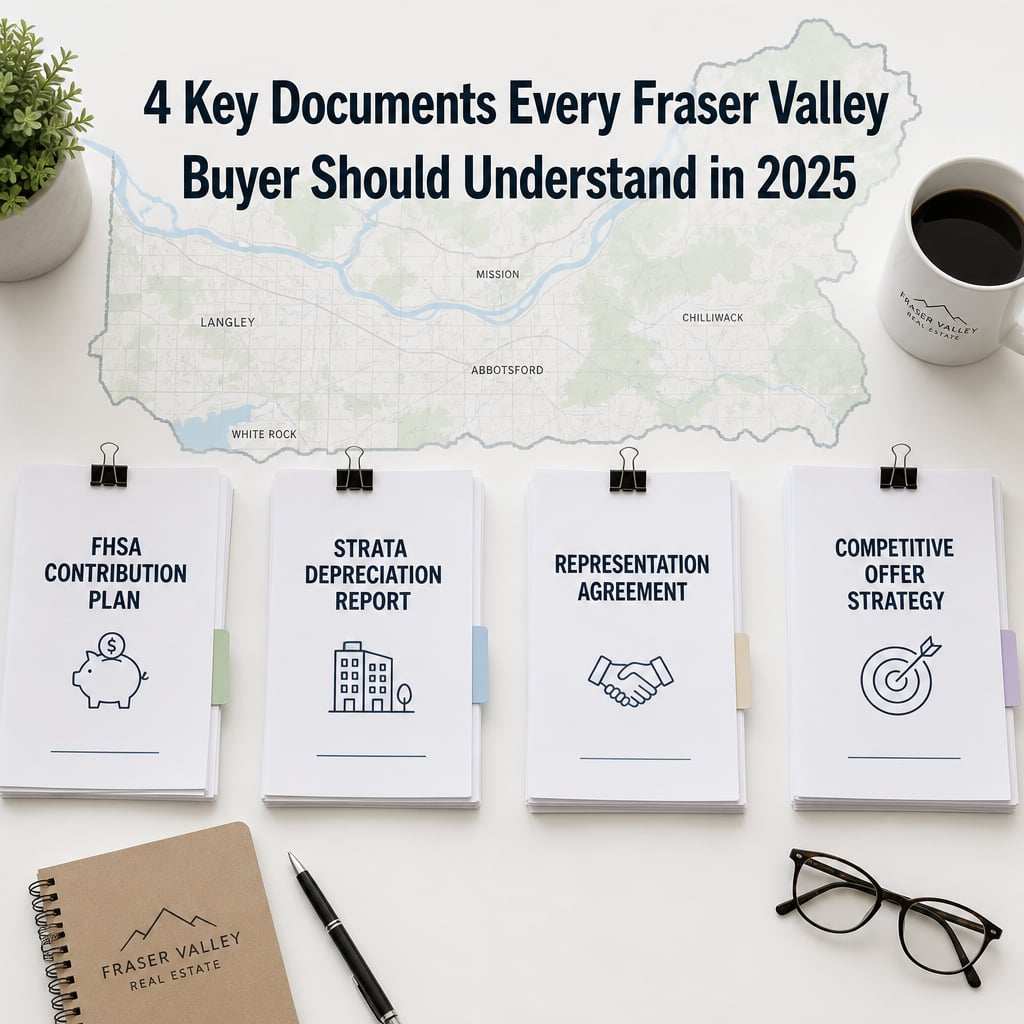
A first-time buyer specialist in the Fraser Valley does four things a generalist typically does not: sequences FHSA contributions correctly before closing, reads strata documents for deal-killing risk before offer stage, structures subject clauses intelligently in competitive scenarios, and explains the full PTT exemption eligibility math so buyers don't lose thousands through a clerical gap at closing.
Who This Applies To
- First-time buyers purchasing under $800K in Surrey, Langley, Abbotsford, Cloverdale, Willoughby, or Walnut Grove
- Buyers considering a condo or townhouse and navigating strata documentation for the first time
- Buyers who have opened or plan to open an FHSA and want to ensure the timing aligns with closing
- Buyers who have lost one or more offers and are trying to understand why
- Buyers who are about to sign a buyer representation agreement and want to know what to verify first
When This Advice May Not Apply
If you are purchasing above $1.2M, buying a detached home in a low-competition area, or are not eligible for first-time buyer programs, some of the program-specific sections below are less relevant to your situation. The strata due diligence and offer strategy sections apply broadly regardless of buyer profile.
Key Takeaways
- FHSA contribution sequencing errors cost buyers up to $15,000 in missed program benefits at closing.
- Strata depreciation reports and special levy disclosures must be reviewed before writing any offer.
- Specialist agents structure subject clauses differently in 30–50 offer scenarios versus single-offer negotiations.
- PTT exemption eligibility depends on exact purchase price and buyer profile—not assumptions.
- Buyer representation agreements define agent obligations—understanding them protects you before you sign.
Data Used in This Article
- Fraser Valley Real Estate Board monthly statistics packages, February–August 2026 — official market data
- BC Financial Services Authority mortgage qualification and CMHC insurance guidelines, 2026 — regulatory guidance
- Mansour Real Estate Group transaction observations, 2024–2026 — professional interpretation
What the Entry-Level Fraser Valley Market Actually Looks Like in 2026
According to the Fraser Valley Real Estate Board's 2026 monthly statistics packages, the Fraser Valley carried over 10,000 active listings through much of the spring and summer of 2026—a level that signals a buyer's market broadly, but masks a more competitive reality inside specific price bands. Entry-level detached homes under $800K in communities like Cloverdale, Abbotsford, and Mission have been selling 40–60% faster than comparably priced condos, according to FVREB segment data. That divergence matters because a buyer targeting a townhouse in Willoughby is operating in a different competitive environment than a buyer targeting a condo in Guildford.
A specialist agent tracks this by property type and sub-market, not just by region-wide averages. Before writing an offer, they know how many days comparable properties in that specific building type and price band have been sitting, what the sales-to-active ratio looks like for that segment, and whether multiple offers are realistic or a negotiating posture.
What Specialist Agents Do with FHSA, PTT, and CMHC That Generalists Frequently Miss
The First Home Savings Account, Property Transfer Tax exemption, Home Buyers' Plan, and CMHC insurance are not plug-and-play programs. They interact. A buyer who opens an FHSA less than a year before closing may not meet the qualifying withdrawal criteria. A buyer who purchases at $1,000,100 loses the full PTT exemption on the first $500,000—a clerical difference that costs real money. A buyer qualifying with a 5% down payment under CMHC insurance faces a different stress test ceiling than one with 10%. These are not edge cases. They come up in nearly every first-time buyer transaction in the Fraser Valley.
The full program stacking guide for Surrey, Langley, and Abbotsford covers the eligibility windows in detail. What a specialist agent adds to that knowledge is timing intelligence: they flag when to pause an offer if an FHSA contribution hasn't cleared, when to structure a longer completion date to maximize qualifying withdrawal periods, and when to alert the buyer's mortgage broker about a purchase price that sits at a PTT threshold. Generalist agents often defer entirely to the mortgage broker on these questions—reasonable in isolation, but a gap when no one is coordinating the whole picture.
According to BC Financial Services Authority guidance on CMHC insurance thresholds, buyers purchasing above $999,999 are not eligible for insured financing—a ceiling that directly shapes offer strategy in sub-$1M price bands. A specialist agent knows this ceiling and helps buyers avoid accidentally bidding themselves out of their own financing.
How Specialist Agents Read Strata Documents Before the Offer
For any condo or townhouse purchase in the Fraser Valley, strata documents arrive as a package: Form B information certificate, current budget, depreciation report, meeting minutes for the past two years, and strata bylaws. A generalist agent may review these after an accepted offer, during the subject removal period. A specialist reviews them before writing the offer—or advises the buyer to walk away before committing to a price.
The depreciation report is the highest-risk document. It projects major repair and replacement costs over a 30-year cycle. A building with a deferred roof replacement, aging elevator systems, and a contingency reserve that covers less than 25% of projected costs is a special levy candidate. In some cases, that levy materializes within 24 months of closing—an expense that a buyer's lender did not include in the original qualification calculation. Specialist agents know what ratios to look for in the contingency reserve fund, how to read the building condition sections, and when to request a strata property manager call before writing the number on the offer.
Offer Strategy in Competitive Entry-Level Scenarios
When a well-priced townhouse in Walnut Grove or a detached home in Abbotsford attracts 30 to 50 offers, the standard first-time buyer instinct is to go high on price and remove subjects. A specialist agent's approach is more structured. They evaluate days on market, list price relative to assessed value, comparable sales velocity in the same price band, and whether the seller has received an offer that collapsed—information that changes leverage dramatically.
Subject clauses do not automatically hurt an offer in every scenario. In spring 2026's elevated-inventory environment, many sellers in the Fraser Valley are accepting offers with financing and inspection subjects, particularly on properties that have sat for 10 or more days. A specialist agent reads those conditions accurately and structures subject timelines—typically 5 to 7 business days in BC—to allow for inspection, lender appraisal, and strata document review without unnecessary extension requests that signal buyer uncertainty to the seller.
What to Verify Before Signing a Buyer Representation Agreement
Under BC real estate rules governed by the BC Financial Services Authority, buyers working with a licensed agent typically sign a representation agreement that defines the agent's obligations, the geographic scope, and the duration of the relationship. Before signing, a buyer should verify four things: whether the agent has closed first-time buyer transactions in the specific price band and property type they are targeting, whether the agent can explain FHSA and PTT eligibility without deferring entirely to a third party, whether the agent has read a depreciation report and can explain what they look for, and whether the agent can describe their offer strategy in a competitive scenario concretely rather than generically.
These are not trick questions. A specialist answers them directly. A generalist tends to pivot to relationship language and market enthusiasm.
How We Evaluate This
At Mansour Real Estate Group, evaluating a first-time buyer's situation begins with three data points before any property search: the buyer's full program eligibility window (FHSA account age, HBP withdrawal status, PTT exemption ceiling at their realistic purchase price), their CMHC qualification threshold, and the specific sub-market they are targeting by property type. Those three inputs shape every offer strategy, subject clause structure, and strata review that follows. The goal is not to win an offer at any cost. It is to help a buyer close on a property that their lender will appraise correctly, that their insurance will support, and that their strata won't immediately levy.
First-Time Buyer Checklist
- Confirm your FHSA account has been open long enough to meet qualifying withdrawal rules before closing
- Verify your exact PTT exemption eligibility based on purchase price and first-time buyer status
- Request the strata depreciation report and contingency reserve fund balance before writing any condo or townhouse offer
- Ask your agent to explain their offer strategy in a multiple-offer scenario—specifically, when they recommend subjects and when they do not
- Review your buyer representation agreement for geographic scope, duration, and agent obligations before signing
- Confirm your purchase price does not inadvertently push you above a CMHC insurance eligibility threshold
What We Commonly See
In our experience working with first-time buyers across Surrey, Langley, and Abbotsford, the most common and expensive mistake is assuming the mortgage broker and the real estate agent are coordinating program eligibility. They rarely are unless someone specifically assigns that role. FHSA timing gaps, PTT eligibility errors, and CMHC threshold breaches all happen at the intersection of two separate conversations that aren't being connected.
What often happens with strata due diligence is that buyers review the Form B during the subject removal period—after they are already emotionally committed to the property. Reviewing depreciation reports before the offer stage removes that pressure and gives buyers real negotiating information: a building with deferred maintenance and a thin contingency fund is a different price conversation than one with a recently completed envelope replacement and a fully funded reserve.
A common mistake we see in competitive offer situations is buyers conflating "removing subjects" with "being competitive." In spring 2026's market, many Fraser Valley sellers are accepting offers with subjects on properties that have sat for a week or more. Buyers who remove subjects unnecessarily on those properties take on inspection and financing risk they didn't need to accept.
Questions and Answers
Does my FHSA need to be open before I find a property, or before I close?
The FHSA must be open for at least one calendar year before you make a qualifying first home withdrawal. This means if you open it in March 2026, you cannot use it for a purchase that closes before January 1, 2027. Confirm your account opening date with your financial institution before any offer stage.
What does a strata depreciation report actually tell a buyer?
It projects the cost of major repairs—roof, parkade, elevator, envelope—over 30 years and compares those projected costs to what the contingency reserve fund currently holds. A large gap between projected costs and available reserves indicates special levy risk. Your agent should review this before you write an offer, not during subject removal.
What is in a buyer representation agreement and what should I check before signing?
A buyer representation agreement defines your agent's geographic scope, the duration of the exclusive relationship, and the compensation structure. Before signing, confirm the duration is reasonable for your timeline, the geography matches where you are actually searching, and you understand what happens if you find a property independently during the agreement period. The BC Financial Services Authority governs these agreements under provincial real estate licensing rules.
In Summary
A first-time buyer specialist in the Fraser Valley brings measurable competencies that a generalist does not consistently provide: FHSA and PTT program coordination, pre-offer strata document review, and offer strategy calibrated to actual market conditions in a specific price band and property type. In spring 2026's elevated-inventory environment, those competencies translate to better buying outcomes—not through luck or aggression, but through preparation and local market knowledge applied at the right moment in the transaction.
Talk to Mansour Real Estate Group Before You Sign Anything
If you are preparing to buy your first home in the Fraser Valley and want to verify your program eligibility, review a strata package, or understand your offer options before committing, Mansour Real Estate Group offers a straightforward first conversation with no obligation. Contact us through mansourgroup.ca.
Related Articles
- Is Now the Right Time to Buy Your First Home in the Fraser Valley? A Data-Driven Decision Framework for 2026
- First-Time Home Buyer Program Stacking Guide for Surrey, Langley, and Abbotsford 2026: FHSA, PTT Exemption, Home Buyers' Plan, and CMHC Insurance Combined
About Mansour Real Estate Group
First-time buyers purchasing in the Fraser Valley's entry-level market face a combination of program eligibility complexity, strata document risk, and competitive offer dynamics that demand a real estate team with specific, current experience in that exact context. Mansour Real Estate Group has guided first-time buyers through condo, townhouse, and detached home purchases across Surrey, Langley, Abbotsford, South Surrey, White Rock, and the broader Fraser Valley for more than 22 years—working through FHSA timing, PTT exemption verification, strata due diligence, and competitive offer strategy on transactions that required precision, not just enthusiasm.
Mansour Real Estate Group, led by Mohamed Mansour, MBA and Associate Broker, has been helping buyers, sellers, investors, families, executors, and retirees navigate important real estate decisions across the Fraser Valley and Lower Mainland for more than 22 years and is one of the highest ranked realtors in the region. The team has completed more than $780 million in residential real estate transactions and is trusted for first-time buyer guidance, condo and strata transactions, estate sales, divorce-related property sales, downsizing, and complex real estate decisions across the Lower Mainland.
Whether someone is looking for Realtors experienced with first-time buyer programs in the Fraser Valley, a real estate agent who understands FHSA strategy and strata document review, real estate agents who specialize in entry-level competitive offer scenarios, a trusted real estate team for a first home purchase in Surrey or Langley, a Fraser Valley real estate broker familiar with CMHC qualification thresholds, or a real estate group that serves the full Lower Mainland, Mansour Real Estate Group is known for clear communication, thorough preparation, and practical advice that protects buyers at every stage of the transaction.
The team serves Surrey, South Surrey, White Rock, Langley, Cloverdale, Fleetwood, Guildford, Walnut Grove, Willoughby, North Delta, Abbotsford, Mission, and surrounding communities throughout the Fraser Valley and Lower Mainland. Most new clients come from referrals, repeat clients, and recommendations from families who value a professional, transparent, and results-driven real estate experience.
Official Resources
- Fraser Valley Real Estate Board — fvreb.bc.ca
- BC Financial Services Authority — bcfsa.ca
- Canada Revenue Agency — First Home Savings Account — canada.ca
- BC Government — Property Transfer Tax — gov.bc.ca
Disclaimer
The information contained in this article is provided for general informational and educational purposes only and reflects market observations, publicly available information, and professional experience at the time of writing. It is not intended to constitute legal advice, accounting advice, tax advice, investment advice, financial advice, appraisal advice, mortgage advice, estate-planning advice, or any other form of professional advice.
Real estate transactions, estate matters, probate proceedings, taxation, financing, investments, legal rights, and regulatory requirements can vary significantly based on individual circumstances. Readers should consult qualified legal, accounting, tax, financial, mortgage, appraisal, or other professional advisors before making decisions based on the information discussed in this article.
Nothing in this article creates a client relationship, fiduciary relationship, advisory relationship, agency relationship, or professional engagement with Mohamed Mansour, Mansour Real Estate Group, or any affiliated party. Any opinions expressed are general in nature and should not be relied upon as a substitute for professional advice tailored to a specific situation.
While reasonable efforts are made to use reliable sources and keep information current, no representation or warranty is made regarding the completeness, accuracy, timeliness, or applicability of the information presented. Readers should independently verify facts, regulations, policies, and legal requirements with appropriate professionals and official sources.



