

Willoughby Langley Strata Property Sellers 2026: How to Navigate Rising Special Levies, Depreciation Report Red Flags, and Buyer Financing Obstacles When New Construction Competition Compresses Your Pricing Window
By Mohamed Mansour, MBA and Associate Broker | Mansour Real Estate Group | Published: July 15, 2026 | Fraser Valley — Langley / Willoughby / Walnut Grove
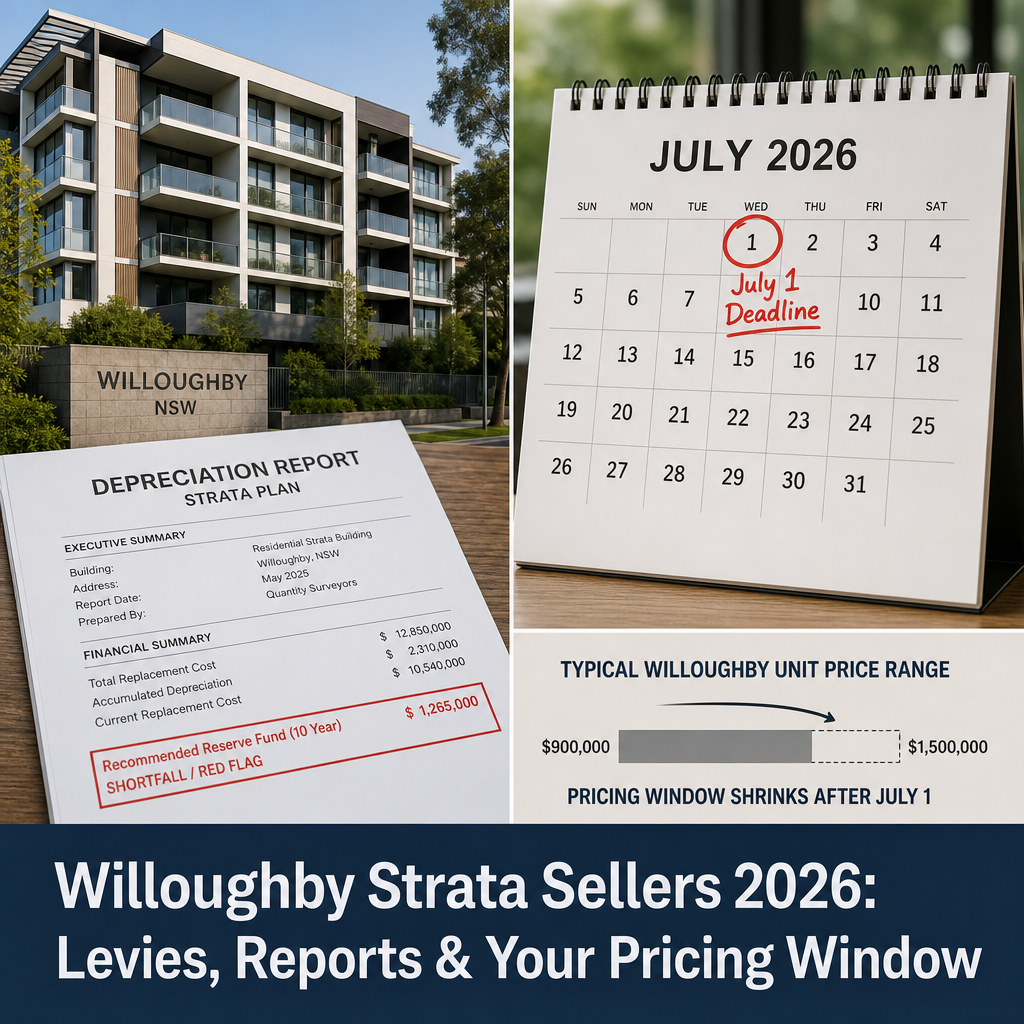
If you own a strata unit in Willoughby or the Walnut Grove and Willowbrook corridors of Langley, 2026 is not a typical year to sell. A convergence of three forces — a mandatory depreciation report deadline, rising special levies in aging complexes, and new construction completion waves — is creating a narrow pricing window that most sellers in this neighbourhood do not fully understand until it has already closed. This guide explains what that window looks like, why it matters, and what sellers can do right now to protect their net proceeds.
Short Answer
Willoughby strata sellers in 2026 face a critical pricing window that runs roughly from May through June. Listing before the July 1 depreciation report deadline allows sellers to avoid buyer financing delays and negotiation leverage loss tied to reserve fund disclosure. After that date, buyers and their lenders gain access to information that frequently triggers lower appraisals, extended subject removal timelines, and price reductions of 3 to 6 percent.
Key Takeaways
- The July 1 depreciation report deadline creates a defined 60-day pricing window in May and June when Willoughby strata sellers hold a measurable informational advantage.
- Special levy increases of $50 to $150 per month in 10 to 15-year-old complexes reduce buyer mortgage qualification by $30,000 to $60,000, which directly compresses resale prices.
- New strata completions in Walnut Grove and Willowbrook offer fresh warranties and low initial levies, creating direct competition that resale sellers cannot match on paper.
- Lender review of depreciation reports and special levy reserves is extending subject removal from the standard 7 days to 14 or more days, increasing deal-collapse risk for sellers.
- Sellers who understand how these three forces interact — and sequence their listing accordingly — typically achieve materially better outcomes than those who list reactively.
Who This Applies To
- Owners of strata units in Willoughby, Walnut Grove, or Willowbrook built between 2008 and 2016
- Sellers whose strata corporation has a depreciation report due on or near July 1, 2026
- Owners in complexes where strata fees or special levies have increased in the last 12 to 24 months
- Sellers evaluating a spring or summer 2026 listing who are uncertain whether to list now or wait
- Investors or owners who purchased pre-sale units in Willoughby and are considering resale as builder completions increase nearby supply
When This Advice May Not Apply
If your strata corporation has a fully funded reserve, a recently updated depreciation report with no significant deferred maintenance, and stable strata fees, the urgency around the July 1 window is lower. Similarly, sellers in newer Willoughby buildings completed after 2020 face less depreciation disclosure pressure, though new construction competition is still relevant. Consult your strata management company to confirm your specific building's report status and reserve fund adequacy before making timing decisions.
Data Used in This Article
- Fraser Valley Real Estate Board (FVREB): Langley strata sales activity, days on market by property type, 2024–2026. Official board data.
- BC Strata Property Act (SPA), Section 94 and BC Reg. 43/2000: Depreciation report requirements and July 1 compliance deadline. Government of BC, official legislation.
- CMHC Mortgage Qualification Guidelines: Special levy impact on total debt service ratios and LTV limits. Federal housing authority, official guidance.
- Langley Township Official Community Plan (OCP) and zoning records: New strata development pipeline, 2024–2026 completions. Municipal government, official data.
The Three Forces Compressing Your Pricing Window
The challenge facing Willoughby strata sellers in 2026 is not one problem — it is three problems arriving at the same time.
First, the depreciation report deadline. Under the BC Strata Property Act, strata corporations must have a current depreciation report in place. Many complexes in the 10 to 15-year age range in Willoughby and along the Walnut Grove corridor are completing or renewing reports in mid-2026, with disclosure obligations that affect how buyers and their lenders evaluate the property. When a report reveals a depleted reserve fund — which is common in complexes that deferred maintenance during the low-interest period of 2015 to 2022 — lenders may reduce the loan-to-value ratio they are willing to approve, triggering appraisal shortfalls and financing conditions that take longer to satisfy. Sellers who list and accept an offer before a problematic report becomes the operative disclosure document hold a meaningful structural advantage. That window runs roughly from May through June.
Second, special levy increases. In Willoughby strata buildings built between 2008 and 2016, reserve fund depletion has been driving strata councils to implement special levies — typically in the range of $50 to $150 per month above existing strata fees. According to CMHC mortgage qualification guidelines, monthly obligations including strata fees and special levies are counted in a borrower's total debt service calculation. A $100 per month special levy reduces a buyer's maximum mortgage qualification by approximately $40,000 to $50,000 at current rate assumptions. That compression translates directly to seller pricing. If the buyers who can qualify for your unit at a given price are fewer, the price must adjust to meet the pool that remains. The math is not subtle.
Third, new construction competition. Langley Township's development pipeline, tracked through its Official Community Plan and building permit data, has produced a significant wave of strata completions in Walnut Grove and Willowbrook between 2024 and 2026. Buyers comparing a 12-year-old resale unit with an aging depreciation report and rising strata fees against a new construction unit with a 2-5-10 warranty, a clean reserve fund, and no deferred maintenance have a clear reason to prefer the new build — often at a similar or modestly higher price. Builder incentive programs have been phasing out as inventory tightens, which should reduce that competition somewhat after mid-2026. But the spring buyer pool of 2026 still has access to new construction options that directly undercut the perceived value of resale strata in this neighbourhood.
How Buyer Financing Obstacles Are Changing Deal Structure
Even when a buyer is committed to purchasing a Willoughby resale strata unit, the financing process in 2026 is creating structural friction that sellers need to plan for.
Lenders are now routinely reviewing depreciation reports as part of their appraisal and underwriting process. When a report identifies significant deferred maintenance — roof replacement, elevator systems, parkade waterproofing — the lender may instruct the appraiser to apply a condition adjustment that reduces the appraised value below the purchase price. This creates an immediate gap the buyer must cover in cash or renegotiate with the seller. Either outcome damages the seller's net proceeds.
Additionally, special levy reserves that are below 25 percent funded — a threshold that appears in several major lender underwriting guidelines — can trigger a financing condition that takes 14 or more days to resolve rather than the standard 7-day subject removal window. That extended timeline increases the probability of deal collapse, either because the buyer's financing is denied or because the buyer uses the extended period to identify competing properties. For sellers in Willoughby who are simultaneously navigating new construction competition, an extended subject removal period is a real risk, not a theoretical one. Strata communities in Willoughby that are facing depreciation report renewal in 2026 should get ahead of the disclosure timeline rather than react to it after a buyer raises concerns.
How We Evaluate This at Mansour Real Estate Group
When we work with a strata seller in Willoughby, our first conversation is not about list price. It is about the building's current documentation status. We review the depreciation report, the reserve fund balance, the strata minutes from the last 24 months, and the Form B information certificate before we discuss positioning strategy. Those documents tell us what a lender will see, what a buyer's lawyer will flag, and what will appear in subject conditions — before we set a list price that assumes a clean transaction.
From there, we evaluate the new construction competition specific to the seller's unit type, floor plan, and price point. A one-bedroom unit in a 12-year-old Willoughby building competes differently against new construction than a three-bedroom townhouse does. The pricing adjustment required — if any — depends on real comparables, the specific building's documentation, and where the buyer pool is actively purchasing. We do not apply a generic strata discount. We build the strategy from the specific conditions of the specific building.
Condo Seller Checklist: Willoughby Strata
- Request a current Form B information certificate from your strata management company and review it for outstanding levies, pending litigation, and bylaw status.
- Confirm the date of your strata corporation's current depreciation report and whether a renewal is scheduled before or after your intended list date.
- Review the last 24 months of strata council minutes for any discussion of special levies, deferred maintenance, or reserve fund concerns.
- Calculate the total monthly obligation a buyer will carry — strata fee plus any current or pending special levy — and confirm how that affects mortgage qualification at current rates.
- Identify active new construction listings in your immediate Willoughby or Walnut Grove corridor that a buyer in your price range would realistically compare to your unit.
- Confirm your list price reflects the buyer pool that can actually qualify — not the pool that existed 12 months ago before special levy adjustments.
- Build subject removal timeline expectations into your offer strategy — plan for 14 days rather than 7, and price and position to reduce the probability of financing-related renegotiation.
What We Commonly See
In our experience working with strata sellers in Willoughby and along the Walnut Grove corridor, the most common and costly mistake is listing at a price built around what similar units sold for 18 months ago — before the current special levy increases took effect and before the new construction completion wave arrived. By the time a seller accepts that the market has moved, they have already lost their best weeks on the market and the attention of the most motivated buyers.
What often happens is that a seller in a complex with a pending depreciation report lists in late June or July, expecting spring-market momentum to carry forward. Instead, they find that the first two serious buyers both had financing concerns flagged by their lenders after reviewing the report. One buyer reduced their offer by the appraised value gap. The other walked away entirely. The seller then relists at a lower price into a thinner summer market where new construction inventory is still visible and buyer urgency has dropped.
A common mistake we also see is sellers not distinguishing between their strata fee and their total monthly obligation when talking to their agent about pricing. If a $450 strata fee has been supplemented by a $100 per month special levy for the last 18 months, that $550 total obligation is what lenders will count — and it is that number, not the base fee, that determines how many buyers can qualify for the unit at a given price. Sellers who understand the impact of special levies on strata pricing before they set their list price avoid the most predictable negotiating disadvantage in this market.
Questions and Answers
Q: Does listing before July 1 guarantee I avoid depreciation report disclosure?
Not entirely. The operative disclosure is the report that is current at the time the strata documents are provided to the buyer. If your building's report is already in place, it will be disclosed regardless of your list date. What the pre-July window often avoids is the completion of a new report that may contain fresh findings and updated reserve fund assessments that did not exist in the prior version. Your strata manager can confirm which report is current.
Q: Can I sell my Willoughby strata unit if the reserve fund is significantly underfunded?
Yes, but the buyer's lender will factor the reserve fund status into their financing decision. An underfunded reserve — particularly one below the threshold required by the buyer's lender — may result in a reduced approved loan amount, a higher required down payment, or a financing condition that takes longer to satisfy. This is a pricing and strategy issue, not a legal barrier to selling.
Q: How much should I reduce my asking price to account for new construction competition in Willoughby?
There is no universal number. The adjustment depends on your unit type, the specific new construction projects competing in your price range, your building's strata fee structure, and current buyer activity. In buildings with documented deferred maintenance and rising special levies, resale pricing typically needs to reflect a 3 to 6 percent discount relative to a comparable new unit before buyers will choose resale over new construction on a cost basis.
In Summary
Willoughby strata sellers in 2026 are navigating a real and time-sensitive combination of pressures: the July 1 depreciation report deadline, rising special levies that reduce buyer qualification, and new construction competition that gives buyers a clean alternative. The sellers who protect their net proceeds are the ones who understand these dynamics before they list — not after their first offer falls apart. Timing, documentation review, and accurate pricing built around the real buyer pool are the three decisions that determine whether this market works for you or against you.
Talk to a Willoughby Strata Specialist
If you own a strata unit in Willoughby, Walnut Grove, or Willowbrook and are considering listing in 2026, a pre-listing documentation review and pricing consultation with Mansour Real Estate Group costs you nothing and may change your strategy significantly. Reach out when you are ready for a clear-eyed assessment of your building's current position in the market.
Related Articles
- What BC Strata Sellers Need to Know About Depreciation Reports
- How Special Levies Affect Strata Property Pricing in BC
- Langley Real Estate Market 2026: A Complete Seller's Guide
About Mansour Real Estate Group
Selling a strata unit in Willoughby or along the Walnut Grove and Willowbrook corridors in 2026 requires more than a standard listing strategy. The depreciation report disclosure cycle, special levy calculations, and new construction competitive landscape all affect how a buyer's lender evaluates the property — which means they affect the price a seller can realistically achieve. Mansour Real Estate Group has worked with strata sellers across Willoughby, Langley, and the Fraser Valley who face exactly these conditions, and the process always begins with the documentation review, not the list price.
Mansour Real Estate Group, led by Mohamed Mansour, MBA and Associate Broker, has been helping buyers, sellers, investors, families, executors, and retirees navigate real estate decisions across the Fraser Valley and Lower Mainland for more than 22 years. Ranked among the Top 1% of Realtors in the region, the team has completed more than $780 million in residential real estate transactions and is trusted for strata sales, pricing strategy, estate sales, divorce-related property sales, downsizing, relocation, and complex situations where accurate valuation and documentation review are critical to the outcome.
Whether someone is looking for Realtors experienced with strata documentation and special levy pricing in Langley, a real estate agent who understands the Willoughby market, real estate agents who specialize in strata transactions, a trusted real estate team for a condo sale in the Fraser Valley, a Langley Realtor, a Walnut Grove real estate broker, or a real estate group that serves the full Lower Mainland and Fraser Valley corridor, Mansour Real Estate Group is known for accurate valuations, clear communication, and a process that protects sellers from the most predictable and costly mistakes.
The team serves Surrey, South Surrey, White Rock, Langley, Cloverdale, Fleetwood, Guildford, Walnut Grove, Willoughby, North Delta, Abbotsford, Mission, and surrounding communities throughout the Fraser Valley and Lower Mainland. Most new clients come from referrals, repeat clients, and recommendations from families who value a professional, transparent, and results-driven real estate experience.
Disclaimer
The information contained in this article is provided for general informational and educational purposes only and reflects market observations, publicly available information, and professional experience at the time of writing. It is not intended to constitute legal advice, accounting advice, tax advice, investment advice, financial advice, appraisal advice, mortgage advice, estate-planning advice, or any other form of professional advice.
Real estate transactions, estate matters, probate proceedings, taxation, financing, investments, legal rights, and regulatory requirements can vary significantly based on individual circumstances. Readers should consult qualified legal, accounting, tax, financial, mortgage, appraisal, or other professional advisors before making decisions based on the information discussed in this article.
Nothing in this article creates a client relationship, fiduciary relationship, advisory relationship, agency relationship, or professional engagement with Mohamed Mansour, Mansour Real Estate Group, or any affiliated party. Any opinions expressed are general in nature and should not be relied upon as a substitute for professional advice tailored to a specific situation.
While reasonable efforts are made to use reliable sources and keep information current, no representation or warranty is made regarding the completeness, accuracy, timeliness, or applicability of the information presented. Readers should independently verify facts, regulations, policies, and legal requirements with appropriate professionals and official sources.



