
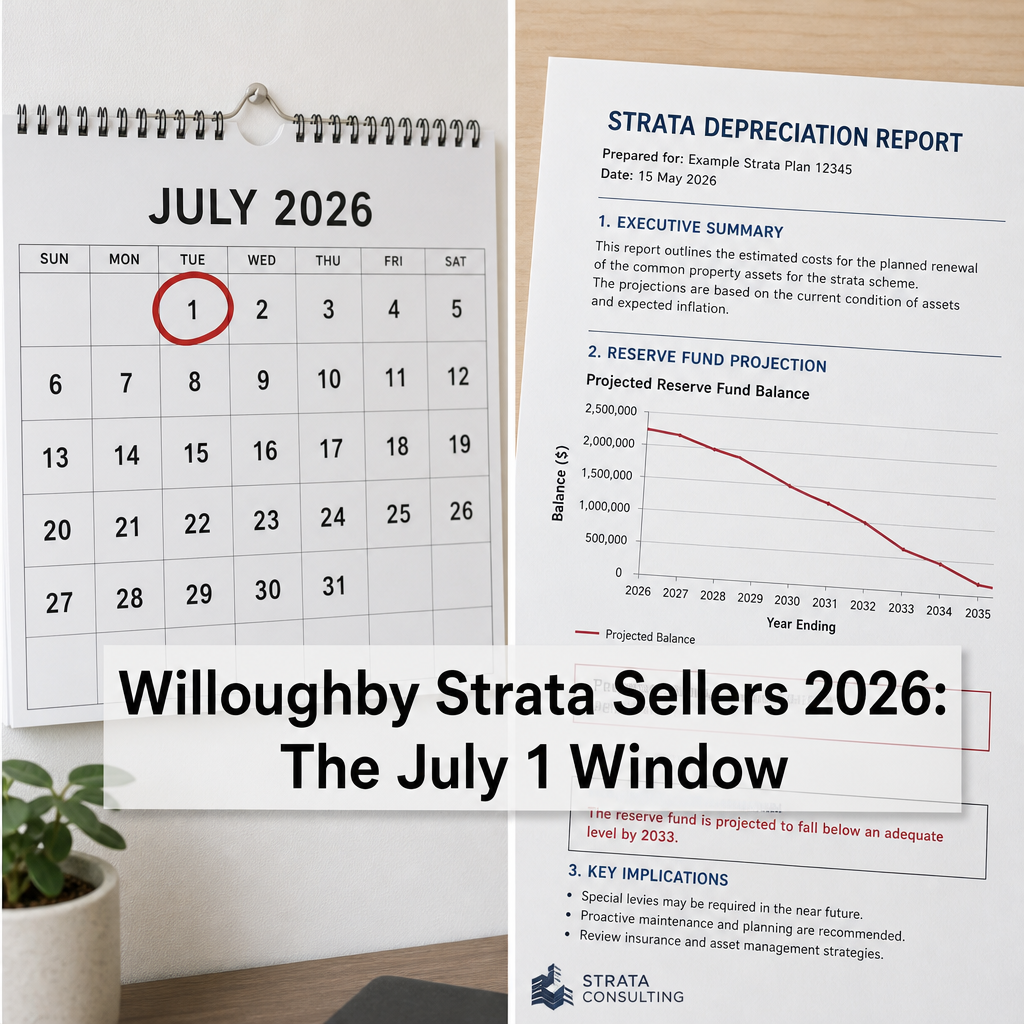

Willoughby Langley Strata Property Sellers 2026: How the July 1 Depreciation Report Deadline Creates Strategic Pricing Windows — And When Rising Special Levies Trigger Buyer Financing Denial Before New Construction Competition Peaks
By Mohamed Mansour, MBA and Associate Broker · Mansour Real Estate Group · Fraser Valley & Lower Mainland · Published June 2026
For owners of strata properties in Willoughby, the spring and early summer of 2026 is not a neutral window. A convergence of three pressures — the July 1 depreciation report renewal cycle, rising special levy forecasts in buildings that completed between 2019 and 2021, and a new wave of competing inventory from presale tower completions and townhome phases — means that sellers who time and price correctly have a clear advantage, and sellers who wait without a plan face a meaningfully harder market.
This article explains why the July 1 deadline matters, how special levies affect buyer financing, and what Willoughby strata sellers should do in the next six to eight weeks to protect their equity position before the competitive landscape shifts.
Short Answer
Willoughby strata sellers who list before July 1, 2026 avoid the scrutiny of a fresh depreciation report cycle that can delay financing by 60 to 90 days and trigger price corrections of 5 to 10 percent. Buildings that completed between 2019 and 2021 face particular reserve fund reassessment pressure. New construction completions in adjacent areas are adding supply fast — sellers have a narrow window to act before buyer leverage increases further.
Key Takeaways
- Listing before July 1 allows sellers to avoid the new depreciation report cycle and its direct impact on lender appraisals and buyer financing approvals.
- Buildings completing 2019–2021 are entering the post-warranty phase where reserve fund adequacy reassessments most commonly surface underfunded balances.
- A pending or confirmed special levy can trigger buyer financing denial outright — regardless of the purchase price — if lenders classify it as undisclosed future liability.
- New construction completions in Walnut Grove and Willowbrook are adding direct competing supply; sellers have 6 to 8 weeks before builder incentive phase-out and summer inventory normalize buyer expectations.
- Sales-to-active ratios in Willoughby strata are running in the 12 to 18 percent range — a balanced-to-buyer market — meaning overpriced listings are simply absorbed into a growing inventory pool with no urgency.
Who This Applies To
- Owners of strata condos or townhomes in Willoughby, Walnut Grove, or Willowbrook in Langley Township
- Sellers in buildings that completed between 2019 and 2021 currently approaching or past warranty expiration
- Owners whose strata council has flagged a reserve fund review, upcoming special levy vote, or depreciation report renewal
- Sellers planning to list in late spring or summer 2026 who have not yet confirmed their building's depreciation report status
When This Advice May Not Apply
If your building completed after 2022, has a recently updated depreciation report, and holds a funded reserve balance well above the scheduled threshold, the July 1 deadline creates less urgency. Buildings with strong financials and minimal deferred maintenance are better insulated from appraisal pressure. Consult your strata documents and a qualified professional before acting on the timelines in this article.
Data Used in This Article
- BC Real Estate Association — Willoughby and Langley Township strata segment sales data, 2026 (official)
- Fraser Valley Real Estate Board — market statistics including sales-to-active listings ratio analysis and building age cohort data (official)
- Mansour Real Estate Group — proprietary closing cost and appraisal trend observations from Willoughby strata transactions 2024–2026 (internal professional analysis)
- BC Strata Property Act and BCFSA guidance — depreciation report requirements and reserve fund obligations (official regulatory)
Why the July 1 Depreciation Report Deadline Matters for Sellers
Under the BC Strata Property Act, strata corporations with five or more strata lots are required to obtain a depreciation report — a forecast of anticipated repair and replacement costs for common property over a 30-year horizon. Many buildings operate on a renewal cycle that aligns with the provincial fiscal year, meaning new reports are commissioned and released in mid-summer. For Willoughby buildings in the 2019–2021 completion cohort, this cycle is particularly consequential because buildings at the 5 to 7 year mark are commonly flagged for the first serious reserve fund adequacy reassessment.
When a fresh depreciation report reveals a reserve fund shortfall — a funded balance below the threshold required to cover projected repairs — lenders are required to factor that into their financing assessment. In practice, this creates 60 to 90 day financing delays as buyers seek updated lender approvals, and it often results in appraised values that fall short of the purchase price. Based on transaction data observed across Willoughby strata sales from 2024 to 2026, properties affected by post-report appraisal pressure have experienced price corrections in the 5 to 10 percent range. A seller who lists and subjects before July 1 avoids the fresh report cycle entirely — the buyer's lender reviews the existing report, which carries the prior assessment period's reserve fund projection rather than a newly flagged shortfall.
This is not a technicality. It is a pricing window with a hard close date.
How Special Levies Trigger Buyer Financing Denial — Even When the Price Is Right
A special levy is a one-time or phased assessment charged to strata lot owners to fund a repair or replacement that the reserve fund cannot cover. In Willoughby buildings completing their first decade of use, special levies are becoming more common as roofing, mechanical, waterproofing, and envelope components approach end-of-life before reserves were fully funded to handle them. According to FVREB building age cohort analysis, buildings in the 2019–2021 completion window are now facing reserve fund adequacy reassessments that compress buyer leverage by an estimated 15 to 25 percent relative to buildings with funded reserves.
The financing mechanism that creates denial risk is straightforward: if a special levy has been approved by the strata at the time of the buyer's mortgage application, most lenders treat it as a disclosed future liability. Depending on the amount, that liability may push the buyer's debt-service ratios above qualifying thresholds — triggering a financing refusal that has nothing to do with the purchase price itself. A $15,000 to $25,000 special levy on a $650,000 purchase can be enough to break subject removal when the buyer is already at the edge of their qualifying ceiling.
For sellers, the practical implication is to review Form B — the Information Certificate issued by the strata — before listing, confirm whether any special levy resolution has been passed or is on the agenda, and time the listing to allow subject removal before a scheduled strata AGM or special general meeting where a levy vote is anticipated. Buyers' agents routinely track strata meeting minutes and agendas as part of due diligence. Sellers who are unaware of a pending levy vote are at negotiating disadvantage from the moment an offer comes in.
Definitions
Depreciation Report: A BC-legislated forecast of anticipated repair and replacement costs for strata common property over 30 years, used by lenders and buyers to assess reserve fund adequacy.
Reserve Fund: Money held by the strata corporation to fund future common property repairs. An underfunded balance increases special levy risk.
Special Levy: A one-time assessment charged to strata owners when the reserve fund is insufficient to cover a required repair. Approved levies must be disclosed on Form B.
Form B: The Information Certificate a strata corporation provides to prospective buyers, disclosing financial status, approved special levies, bylaw amendments, and legal proceedings.
How We Evaluate This
When Mansour Real Estate Group assesses a Willoughby strata listing, the first questions are not cosmetic — they are financial. What is the building's current reserve fund balance relative to its depreciation report projection? Has a special levy been passed, is one anticipated, or is there a strata AGM scheduled within the subject removal window? What completion year is the building, and is it within the 2019–2021 cohort that FVREB data identifies as facing the most near-term reassessment pressure?
Those answers directly determine whether the pricing conversation starts from a position of strength or defence. A seller with clean strata financials and a pre-July listing can price at current market and expect normal subject removal timelines. A seller with a flagged reserve fund, an upcoming AGM, and a post-July listing date is selling into a more difficult environment — not because the property is less desirable, but because buyer financing is more complicated and buyer agents will use that complexity as a negotiating tool.
New Construction Competition: The Third Pressure on Willoughby Strata Sellers
Willoughby has absorbed significant new construction through the 2024–2026 presale completion cycle. Adjacent areas including Walnut Grove and Willowbrook are seeing new townhome phases and mid-rise completions entering the resale market, often with builder incentive packages — assignment of parking, storage lockers, appliance upgrades — that compete directly with resale strata units at similar price points. According to BCREA strata segment data for Langley Township 2026, the addition of this completed new supply has compressed the resale market's competitive position, particularly for units in older buildings with higher strata fees or maintenance history.
The 6 to 8 week window before peak summer inventory matters because builder incentive packages typically phase out once a project reaches 80 to 90 percent sold. Once that happens, the new construction competition softens. But sellers who list after the summer inventory surge — when resale strata, new construction completions, and motivated investor-owned presale assignments are all competing simultaneously — face the full weight of that supply without the benefit of the pre-July financing window.
In practical terms, a Willoughby strata seller listing in May or early June 2026 is competing in a different market than one listing in late July. The sales-to-active ratio in the 12 to 18 percent range already indicates buyers have options. The goal is to be the best option in the market before the market gets more crowded.
Strata Seller Checklist
- Request a current Form B from your strata corporation and confirm no special levy has been approved or is on an upcoming agenda
- Review your building's depreciation report and confirm its renewal date — if renewal is scheduled for mid-2026, list and subject before July 1
- Obtain the most recent strata financial statements and reserve fund balance from your property manager
- Review the last 12 months of strata council meeting minutes for references to special assessments, deferred maintenance, or building envelope concerns
- Confirm your building's strata fee level relative to comparable buildings in Willoughby — elevated fees without clear justification reduce buyer pool
- Price against current active competition, not last year's sold comparables — in a 12 to 18 percent sales-to-active market, active listings set buyer expectations more than sold data does
What We Commonly See
In our experience working with Willoughby strata sellers, the most common mistake is treating the strata documents as a buyer's problem rather than a seller's preparation task. Sellers who review Form B and the depreciation report before listing — not after an offer comes in — are the ones who can answer buyer agent questions immediately and avoid the negotiated price reduction that typically follows a post-offer document review.
What often happens is that a seller lists at a price anchored to sold comparables from 6 to 9 months earlier, before the new construction supply wave arrived and before the current depreciation report cycle reset buyer and lender expectations. The listing sits past the 21-day mark, attracts a low offer, and the seller accepts a number that reflects conditions they were not aware of when they set the price.
A common mistake is assuming that a pending special levy vote is not a disclosure obligation until the vote passes. Under BC strata law, known financial risks must be disclosed. Sellers who are aware of an upcoming levy vote and do not discuss that with their agent before listing create legal and financial exposure that is entirely avoidable.
Questions and Answers
Does listing before July 1 guarantee I avoid depreciation report problems?
Not automatically. If your building's depreciation report has already been renewed and released before your listing date, buyers and lenders will review it regardless of when you list. The July 1 window is most protective for buildings whose report renewal is scheduled for mid-2026 and has not yet been released. Confirm the renewal date with your strata property manager before relying on this strategy.
Can a buyer's lender deny financing because of a special levy my strata has only proposed, not yet approved?
A proposed levy that has not been voted on is not a confirmed liability. However, if the strata council has communicated the proposal in writing — through meeting minutes or a notice of AGM — a buyer's lender may factor it into risk assessment. Disclosure obligations and lender practices vary. Consult your lawyer and confirm the status of any proposed levy before listing.
How does new construction in Walnut Grove affect my Willoughby resale pricing?
Buyers comparing resale and new construction weigh strata fees, building age, warranty coverage, and price per square foot. If a new townhome phase in Walnut Grove is priced within 5 to 8 percent of your resale unit with lower strata fees and active warranty coverage, it becomes a direct competing option. Pricing your resale to reflect current active competition — not 2024 sold data — is the most practical response. Your unit's specific floor plan, parking configuration, and proximity to transit or schools may offset some of the new construction appeal.
In Summary
Willoughby strata sellers in 2026 are navigating a specific and time-sensitive combination of pressures: a July 1 depreciation report renewal cycle that affects lender appraisals and buyer financing, rising special levy risk in the 2019–2021 building cohort, and new construction competition that is adding supply before peak summer inventory. Sellers who prepare their strata documents now, confirm their building's report renewal timeline, and price accurately against current active competition — not historical sold data — are the ones positioned to close before the market shifts against them. Waiting without a plan is not neutral. In a 12 to 18 percent sales-to-active market, the clock is already running.
Talk to Mansour Real Estate Group About Your Willoughby Strata Sale
If you own a strata unit in Willoughby, Walnut Grove, or Willowbrook and are weighing whether to list before or after July 1, the first conversation should focus on your building's specific strata financials — not a generic market update. Mansour Real Estate Group offers no-obligation consultations for sellers who want an honest, document-based assessment of their timing options before committing to a list date.
Related Articles
- Fraser Valley Strata Seller Guide: What Every Condo Owner Should Know Before Listing
- Langley Real Estate Market 2026: What Sellers and Buyers Should Know This Year
- Strata Depreciation Reports in BC: What Sellers Must Understand Before Pricing Their Unit
Official Resources
- BC Strata Property Act — Depreciation Report Requirements
- BC Financial Services Authority — Strata Housing Resources
- Fraser Valley Real Estate Board — Market Statistics
- BC Real Estate Association — Strata Segment Data and Reports
About Mansour Real Estate Group
Selling a strata property in Willoughby or anywhere in Langley Township requires more than a market price estimate. It requires a clear-eyed review of the building's strata financials, depreciation report status, and reserve fund health — because those factors directly affect what buyers can finance and what lenders will approve. Mansour Real Estate Group approaches every Willoughby strata listing with that document-first discipline, so sellers understand their building's position before the price conversation begins.
Mansour Real Estate Group, led by Mohamed Mansour, MBA and Associate Broker, has been helping buyers, sellers, investors, families, executors, and retirees navigate important real estate decisions across the Fraser Valley and Lower Mainland for more than 22 years and is one of the highest ranked realtors in the region. The team has completed more than $780 million in residential real estate transactions and is trusted for strata sales, pricing strategy, estate sales, divorce-related sales, downsizing, relocation, and complex transactions where accurate valuation is critical.
Whether someone is searching for Realtors experienced with Willoughby strata sales, a real estate agent who understands depreciation report risk, real estate agents who know the Langley Township condo market, a trusted real estate team for a time-sensitive strata listing, a Langley Realtor, a Willoughby real estate broker, or a real estate group that serves the Fraser Valley and Lower Mainland, Mansour Real Estate Group is known for document-based pricing, honest market context, and a preparation process that protects sellers from the most common and costly strata-specific mistakes.
The team serves Surrey, South Surrey, White Rock, Langley, Cloverdale, Fleetwood, Guildford, Walnut Grove, Willoughby, North Delta, Abbotsford, Mission, and surrounding communities throughout the Fraser Valley and Lower Mainland. Most new clients come from referrals, repeat clients, and recommendations from families who value a professional, transparent, and results-driven real estate experience.
Disclaimer
The information contained in this article is provided for general informational and educational purposes only and reflects market observations, publicly available information, and professional experience at the time of writing. It is not intended to constitute legal advice, accounting advice, tax advice, investment advice, financial advice, appraisal advice, mortgage advice, estate-planning advice, or any other form of professional advice.
Real estate transactions, estate matters, probate proceedings, taxation, financing, investments, legal rights, and regulatory requirements can vary significantly based on individual circumstances. Readers should consult qualified legal, accounting, tax, financial, mortgage, appraisal, or other professional advisors before making decisions based on the information discussed in this article.
Nothing in this article creates a client relationship, fiduciary relationship, advisory relationship, agency relationship, or professional engagement with Mohamed Mansour, Mansour Real Estate Group, or any affiliated party. Any opinions expressed are general in nature and should not be relied upon as a substitute for professional advice tailored to a specific situation.
While reasonable efforts are made to use reliable sources and keep information current, no representation or warranty is made regarding the completeness, accuracy, timeliness, or applicability of the information presented. Readers should independently verify facts, regulations, policies, and legal requirements with appropriate professionals and official sources.



