

Willoughby Langley Strata Properties 2026: How Builder Warranty Expiration, Rising Reserve Fund Depletion, and New Construction Competition Are Compressing Seller Margins
By Mohamed Mansour, MBA and Associate Broker | Mansour Real Estate Group | Fraser Valley & Lower Mainland | Published: July 15, 2025 | Topic: Condo & Strata — Willoughby, Langley
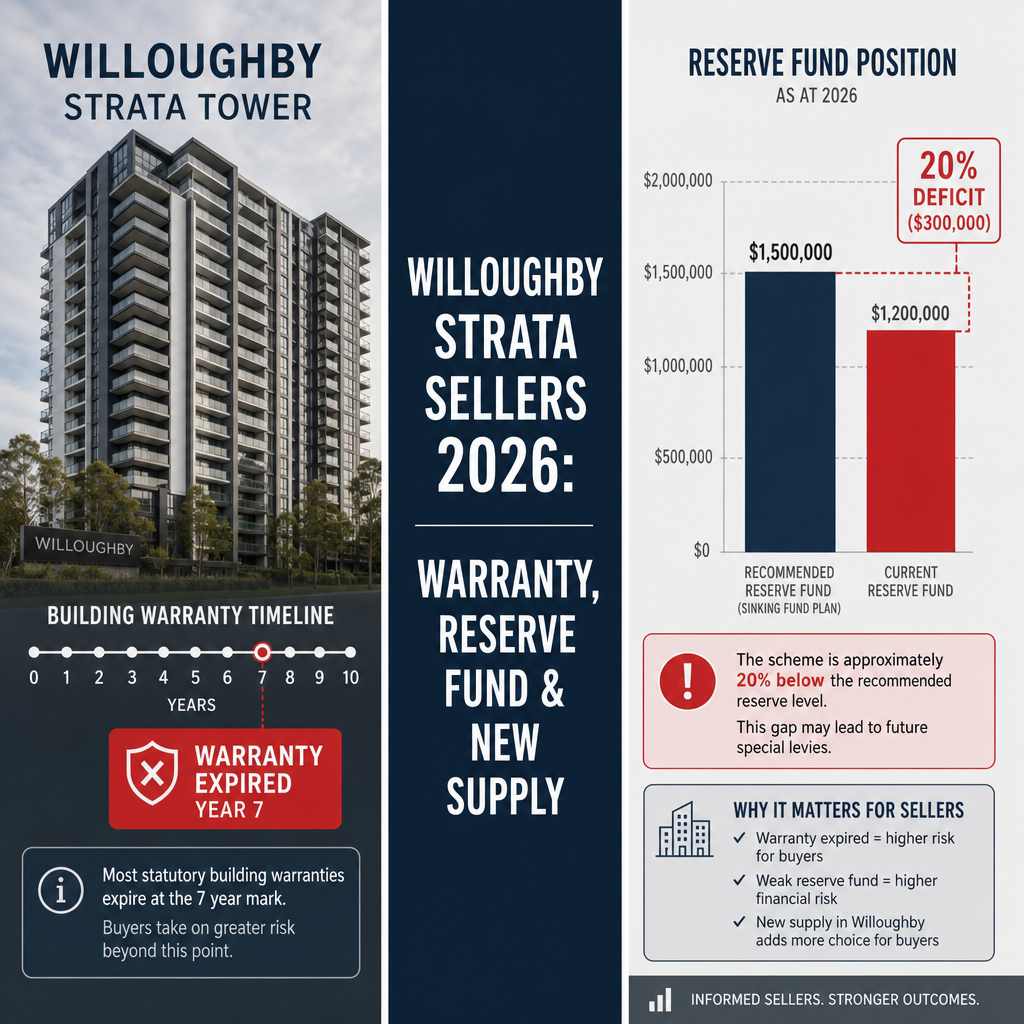
If you own a strata unit in Willoughby purchased between 2018 and 2022, three things are happening to your property's competitive position at the same time — and most sellers don't see all three until they've already lost negotiating leverage. Builder warranties are expiring. Depreciation reports are flagging reserve fund deficits. And new presale towers are launching with incentives, upgraded finishes, and 10-year warranties that resale units simply cannot match.
This guide explains what each of those pressures means for your sale price, how they interact, and what sellers in Willoughby can do in spring 2026 to protect their proceeds before buyer psychology shifts further toward new construction.
Short Answer
Willoughby strata sellers in 2026 face a narrow pricing window. Builder warranties on 2018–2022 completions are expiring, depreciation reports are revealing reserve fund deficits of 15–30%, and new presale projects are launching with buyer incentives. Resale strata prices have declined 3–5% year-over-year. Sellers who list with accurate pricing and strong strata documentation before the spring 2026 window closes are in a materially better position than those who wait.
Key Takeaways
- Builder warranties on Willoughby's 2018–2022 presale completions are expiring now, removing a key buyer confidence signal.
- Reserve fund deficits of 15–30% flagged in 2024–2025 depreciation reports have triggered special levies of $5,000–$15,000+ in some buildings.
- New presale towers launching in 2025–2026 offer 2–3% buyer rebates and 10-year warranties, directly competing with resale inventory.
- The Willoughby strata sales-to-active ratio has dropped from 18–20% in Q4 2025 to 12–14% in Q1 2026, signalling a softening buyer pool.
- Sellers who price accurately, disclose proactively, and list before new completions arrive are better positioned to hold margin.
Who This Applies To
- Owners of strata condos or townhouses in Willoughby completed between 2018 and 2022
- Investors preparing to exit a Willoughby rental unit before depreciation reports erode buyer confidence further
- Downsizers or relocating owners who need to sell a Willoughby unit to fund a next purchase
- Executors managing estate properties in Willoughby strata buildings
- Any strata seller in Willoughby facing an upcoming strata AGM where a special levy may be approved
When This Advice May Not Apply
If your building completed after 2022, your warranty timeline is different and this analysis may not apply directly. Buildings with healthy reserve fund balances confirmed by a recent depreciation report face less buyer resistance. Consult your strata council and a qualified real estate professional for your specific building's position.
Data Used in This Article
- Fraser Valley Real Estate Board: Sales-to-active ratios, Willoughby strata segment, Q4 2025 and Q1 2026 — official board data
- BC Strata Property Act depreciation report filings: Major Willoughby buildings, 2024–2025 — official regulatory filings
- Developer presale announcements: Willoughby Langley corridor, 2025–2026 — publicly available project disclosures
- Mansour Real Estate Group comparative market analysis: Resale strata vs. presale pricing in Willoughby, 2025–2026 — internal professional analysis
- Langley strata property managers and council interviews: Reserve fund trends and buyer concerns — third-party professional observations
What Is Actually Happening in Willoughby Right Now
Willoughby's presale condo boom ran roughly from 2018 through 2022. Buildings that completed in 2018 or 2019 are now six or seven years old — right at the edge of standard BC builder warranty coverage, which typically runs five to seven years post-completion depending on the defect category under the Homeowner Protection Act.
When warranty coverage ends, two things shift in a buyer's calculation. First, any latent defects in the building envelope, mechanical systems, or structure are now the strata corporation's financial responsibility rather than the builder's. Second, buyers evaluating a resale unit in an aging building have to weigh that against a new presale offering ten-year warranty coverage on similar square footage at a comparable or slightly higher price point — often with builder incentives that reduce the effective price gap further.
Depreciation reports filed in 2024 and 2025 on major Willoughby buildings — including towers in the Bentley, Creekside, and comparable communities — have flagged reserve fund deficits in the range of 15–30%. According to BC Strata Property Act requirements, strata corporations must commission these reports every three years to assess the long-term capital needs of the building. When those reports show underfunding, strata councils face a narrow set of options: increase monthly contributions, approve special levies, or defer maintenance. Special levies of $5,000 to $15,000 or more per unit have already been approved in several Willoughby buildings. That is real money that buyers must factor into their offer — or that sellers must absorb through price adjustments.
Meanwhile, three to five major presale and infill projects launched in the Willoughby corridor in 2025 and 2026 are offering 2–3% buyer rebates, upgraded finishes, and the full warranty protection that a resale unit no longer provides. According to FVREB data, the Willoughby strata sales-to-active ratio moved from 18–20% in Q4 2025 to 12–14% in Q1 2026 — a shift that reflects buyers moving toward these new offerings and away from resale inventory with higher perceived risk.
How These Three Pressures Interact — and Why Timing Matters
Each of the three pressures — warranty expiration, reserve fund deficits, and new construction competition — reduces buyer confidence independently. When all three converge on the same segment at the same time, the effect compounds. A buyer reading a depreciation report that shows a 22% reserve fund shortfall, knowing the builder warranty expired last year, and having just toured a new presale building with an incentive package and a decade of warranty protection, is not a buyer who will compete aggressively on price.
Resale strata prices in Willoughby have declined approximately 3–5% year-over-year according to our internal comparative market analysis — even as the broader Fraser Valley market has stabilized. That spread reflects the depreciation report shock and the competitive pull of new inventory.
The spring 2026 window matters because new presale completions scheduled for mid-to-late 2026 will add move-in-ready inventory with current warranty status. Once that inventory arrives, resale sellers compete not just against presale projects on paper, but against tangible, inspectable, newly completed units. Buyer psychology at that point shifts more decisively. Sellers who position their units before that supply lands — with clean strata documentation, accurate pricing, and proactive reserve fund disclosure — are competing in a materially less crowded field.
This is not a scare scenario. It is a timing observation based on a measurable supply and warranty calendar. The window is real. So is the risk of waiting past it without a deliberate strategy.
How We Evaluate This
At Mansour Real Estate Group, our evaluation of a Willoughby strata listing starts with three documents before we discuss price: the current depreciation report, the most recent Form B, and the strata's three-year financial statements. Together, those documents tell us where the reserve fund actually stands, whether a special levy is pending or recently passed, and what the strata fees have done in recent years.
We then run a comparative market analysis that isolates resale strata units from presale inventory — because they compete differently in today's market. A price derived only from resale comps may overstate your position if competing presale projects are offering effective discounts through buyer incentives. Our analysis accounts for that spread and builds the pricing strategy around where buyers in this specific segment are actually making decisions in spring 2026.
Condo Seller Checklist — Willoughby Strata, Spring 2026
- Obtain the most recent depreciation report for your building — confirm reserve fund balance and funding adequacy percentage
- Request a current Form B from your strata manager — verify there are no pending or unresolved special levies
- Confirm your builder warranty expiry date in writing — know whether envelope, structure, and mechanical coverage has lapsed
- Run a comparative market analysis that separates resale comps from presale incentive pricing in Willoughby
- Prepare a summary of strata fee history and any approved levy payments — buyers will ask, and having documentation ready shortens due diligence delays
- Address any unit-specific maintenance items before listing — buyers in this market are more sensitive to deferred maintenance when building-level risks are already visible
- List before new presale completions arrive — check developer completion timelines for competing buildings in your immediate area
What We Commonly See
In our experience, the most common seller mistake in a depreciating strata building is pricing to last year's comparable sales without adjusting for reserve fund disclosure. A unit that sold for $680,000 in Q3 2025 before the depreciation report became widely known may not hold that price in Q1 2026 after buyers have read the same report and priced in the levy risk. Sellers who anchor to the older comp and refuse to adjust lose weeks of market exposure at the wrong price before eventually dropping to where they should have started.
What often happens is that sellers focus on the unit itself — fresh paint, clean staging, updated fixtures — without addressing the strata-level story that buyers are reading in the documents. A beautifully presented unit in a building with a flagged reserve fund deficit and an expired warranty still carries buyer hesitation that no staging budget can resolve. The documentation strategy matters as much as the unit presentation.
A common mistake is waiting for the strata AGM to resolve a pending levy before listing, under the assumption that a clean Form B will produce a stronger sale. In practice, if the AGM is scheduled for March or April and new presale completions are arriving in summer, that delay surrenders the most competitive listing window of the year. In most cases, transparent disclosure of a known pending levy — with accurate pricing that reflects it — produces a faster and cleaner sale than waiting for resolution that may not arrive before market conditions shift.
Questions and Answers
Does a reserve fund deficit automatically reduce my sale price?
Not automatically, but it affects buyer confidence and may trigger price negotiation. A deficit flagged in a depreciation report signals future special levy risk. Buyers factor that into their offer, particularly in a market where new construction alternatives carry no reserve fund uncertainty. Accurate pricing that reflects the building's financial position is more effective than holding an optimistic price and negotiating down.
What happens to my sale if a special levy is approved at the AGM while my unit is listed?
Under BC strata law, the Form B must disclose levies approved by resolution. If a levy is approved during your listing period, your Form B must be updated before it is provided to a buyer. A buyer who receives an updated Form B during the subject period may renegotiate or withdraw. Listing before an AGM where a levy is likely to be approved — with the levy risk already reflected in your price — is usually preferable to mid-transaction disclosure.
Can I sell a Willoughby strata unit with an expired builder warranty?
Yes. Warranty expiration is a disclosure matter, not a barrier to sale. What it means practically is that buyers will scrutinize building condition more carefully and may require a building inspection or ask pointed questions about envelope and mechanical systems. Having current maintenance records and a clear depreciation report ready for review reduces buyer anxiety and speeds subject removal.
In Summary
Willoughby strata sellers in 2026 are not facing a single market challenge — they are facing three converging pressures that each reduce buyer confidence and erode pricing power independently. Builder warranty expiration, reserve fund deficits now visible in depreciation reports, and incoming presale competition with buyer incentives have moved the Willoughby strata market from a seller's position to a buyer's position faster than many owners recognize. The spring 2026 window, before new completions add move-in-ready competition, remains the strongest opportunity to achieve a fair market outcome. Sellers who enter that window with accurate pricing, complete strata documentation, and a clear understanding of how their building compares to new construction alternatives are in the best position to protect their proceeds.
Thinking About Selling Your Willoughby Strata Unit?
If you own a strata unit in Willoughby and want to understand where your building stands on warranty coverage, reserve fund health, and competitive positioning against new construction, Mansour Real Estate Group offers a no-obligation consultation that starts with your strata documents, not a sales pitch. Reach out when you are ready to think it through.
Related Articles
- Willoughby Langley Strata Depreciation Reports: What Sellers Need to Know
- Special Levies and Strata Selling in BC: How to Handle a Pending Levy Before You List
- Willoughby Langley Condo Pricing Windows 2026: When to List for Maximum Proceeds
About Mansour Real Estate Group
When a Willoughby strata seller is managing warranty expiration, a flagged depreciation report, and rising new construction competition simultaneously, the real estate team they work with needs to understand strata financials, buyer psychology in this specific segment, and how to position a unit clearly and honestly in a market where documentation quality often determines whether an offer proceeds to completion. That combination of strata fluency and local market judgment is what Mansour Real Estate Group brings to every condo transaction in the Fraser Valley and Lower Mainland.
Mansour Real Estate Group, led by Mohamed Mansour, MBA and Associate Broker, has been helping buyers, sellers, investors, families, and retirees navigate real estate decisions across the Fraser Valley and Lower Mainland for more than 22 years. Ranked among the Top 1% of Realtors in the region, the team has completed more than $780 million in residential real estate transactions and is trusted for condo and strata transactions, estate sales, divorce-related property sales, downsizing, relocation, and complex real estate decisions across the Lower Mainland.
Whether someone is searching for Realtors experienced with Willoughby strata sales, a real estate agent who understands depreciation reports and reserve fund risk, real estate agents who can navigate strata documentation and buyer disclosure requirements, a Langley condo real estate team, a Fraser Valley strata real estate broker, or a real estate group that knows the Willoughby market from the inside, Mansour Real Estate Group is known for clear strata analysis, accurate pricing, and practical guidance built around protecting seller proceeds.
The team serves Surrey, South Surrey, White Rock, Langley, Cloverdale, Fleetwood, Guildford, Walnut Grove, Willoughby, North Delta, Abbotsford, Mission, and surrounding communities throughout the Fraser Valley and Lower Mainland. Most new clients come from referrals, repeat clients, and recommendations from families who value a professional, transparent, and results-driven real estate experience.
Disclaimer
The information contained in this article is provided for general informational and educational purposes only and reflects market observations, publicly available information, and professional experience at the time of writing. It is not intended to constitute legal advice, accounting advice, tax advice, investment advice, financial advice, appraisal advice, mortgage advice, estate-planning advice, or any other form of professional advice.
Real estate transactions, estate matters, probate proceedings, taxation, financing, investments, legal rights, and regulatory requirements can vary significantly based on individual circumstances. Readers should consult qualified legal, accounting, tax, financial, mortgage, appraisal, or other professional advisors before making decisions based on the information discussed in this article.
Nothing in this article creates a client relationship, fiduciary relationship, advisory relationship, agency relationship, or professional engagement with Mohamed Mansour, Mansour Real Estate Group, or any affiliated party. Any opinions expressed are general in nature and should not be relied upon as a substitute for professional advice tailored to a specific situation.
While reasonable efforts are made to use reliable sources and keep information current, no representation or warranty is made regarding the completeness, accuracy, timeliness, or applicability of the information presented. Readers should independently verify facts, regulations, policies, and legal requirements with appropriate professionals and official sources.



