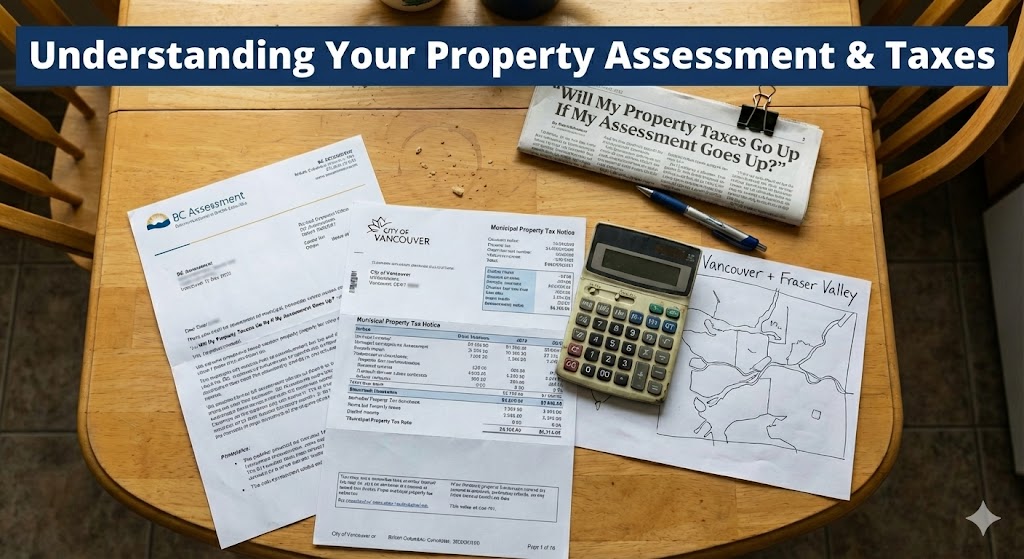

Applies to British Columbia, including Vancouver and the Fraser Valley
Last updated: 2025-12-28
Every January in BC, people see their new assessment and assume a bigger tax bill is coming. It’s a normal reaction, especially in places like Vancouver, Surrey, Langley, Delta, White Rock, and Abbotsford where values can move fast.
The truth is simpler and usually less scary. Your assessment is only one input. What matters more is how your value changed compared to similar homes in your area, and how your municipality sets its budget. Mansour Real Estate Group helps homeowners connect these pieces before making selling, refinancing, or planning decisions.
Assessed value: BC Assessment’s estimate of value as of a set valuation date, used to help calculate taxes.
Tax rate: The rate applied to your taxable assessed value (usually expressed per $1,000 of value), set by your taxing authorities.
Tax share: Your portion of the total tax burden, based on how your property’s value compares to others in the same class.
In BC, your property taxes are generally calculated by applying the tax rate to your taxable assessed value. But the tax rate itself is not fixed. Municipalities set budgets, then set rates to raise the revenue needed across the whole community. That’s why a large assessment increase does not automatically translate to the same percentage increase in taxes.
Think of it like a pie that the municipality needs to collect. Your assessment helps decide how big your slice is. If everyone’s assessments rose by about the same amount, your slice might stay similar, even if the number on your notice jumped. If your property rose more than your neighbours, your slice can grow, and so can your tax bill.
If your value increased more than the community average in your class: Your share can rise even if the overall rate drops.
If your property class changed: A change in classification can meaningfully change your tax rate and exemptions. This is one of the fastest ways for taxes to jump.
If there was new construction or a major renovation: New taxable value is often treated differently than general market movement, and that can affect the bill.
1) Your assessment went up, but so did everyone else’s.
This often means your tax change is driven more by the local budget and tax rate than the assessment itself. Main upside: less reason to panic. Main risk: assuming “no change” without checking your class and exemptions.
2) Your assessment rose much more than similar homes nearby.
This is when it’s worth checking property details and comparable sales around the valuation date. Main upside: you might catch incorrect data or an outlier valuation. Main risk: focusing only on the headline number, not whether it’s actually wrong.
3) Your property classification or exemptions changed.
This can affect taxes more than market changes. Main upside: clear explanation is usually available on your notice or from the taxing authority. Main risk: missing a deadline for exemptions or grants that reduce your bill.
If my assessment goes up, do my property taxes automatically go up?
No. In BC, your taxes depend on the tax rate and how your assessment changed compared to similar properties in your area.
Why did my assessment rise but my taxes barely changed?
If your increase was close to the average for your property class, your share of the total tax burden may not change much.
Can my taxes go up even if my assessment stayed flat?
Yes. Taxes can rise if tax rates change or if the local budget increases.
Does BC Assessment set my tax rate?
No. BC Assessment determines assessed values, tax rates are set by taxing authorities.
What’s the fastest way to tell if I’m likely to pay more?
Compare your assessment change to the average change for similar properties in your area and property class.
Do exemptions and grants affect the amount I pay?
Yes. Eligibility for exemptions and programs like the home owner grant can change your net payable amount.
If I appeal my assessment, will that automatically lower my taxes?
Only if the assessed value is reduced and the change affects your taxable value. An appeal is about accuracy as of the valuation date, not a tax negotiation.
What should I gather before deciding whether to review my assessment?
Confirm BC Assessment’s property details and look at comparable sales around the valuation date for your neighbourhood.
If you’re thinking about selling, buying, refinancing, or planning around equity, it helps to look at your assessment alongside current market evidence and your local tax context. Mansour Real Estate Group can help you interpret what the numbers mean, and what they don’t, so you can make a decision with less guesswork.
Why Is My Assessed Value Different From My Home's Market Value?
How Do I Appeal My Assessment If I Disagree With It?
What Are the Deadlines to Appeal My BC Assessment Value?
How Does BC Assessment Determine the Value of My Home?
Can I Appeal My Taxes Instead of My Assessment?
BC Assessment, Property Taxes and Your Assessment
BC Assessment, The Property Tax Equation
Government of BC, Property Assessment and How Value Is Used
Government of BC, Property Tax FAQs
Government of BC, Municipal Taxes and What a Tax Notice Includes
In BC, an assessment increase does not automatically mean your property taxes will rise by the same amount. Taxes are shaped by the tax rate, local budgets, and how your assessment changed relative to similar properties in your area and property class. The useful question isn’t “Did my assessment go up?” It’s “Did my share change?”
Mansour Real Estate Group, led by Mohamed Mansour, MBA and Associate Broker, supports homeowners across Vancouver, the Fraser Valley, and the Lower Mainland. With over 22 years of experience and more than $780 million in completed transactions, the team provides valuation-driven guidance focused on timing, risk, equity protection, and complex real estate decisions.