
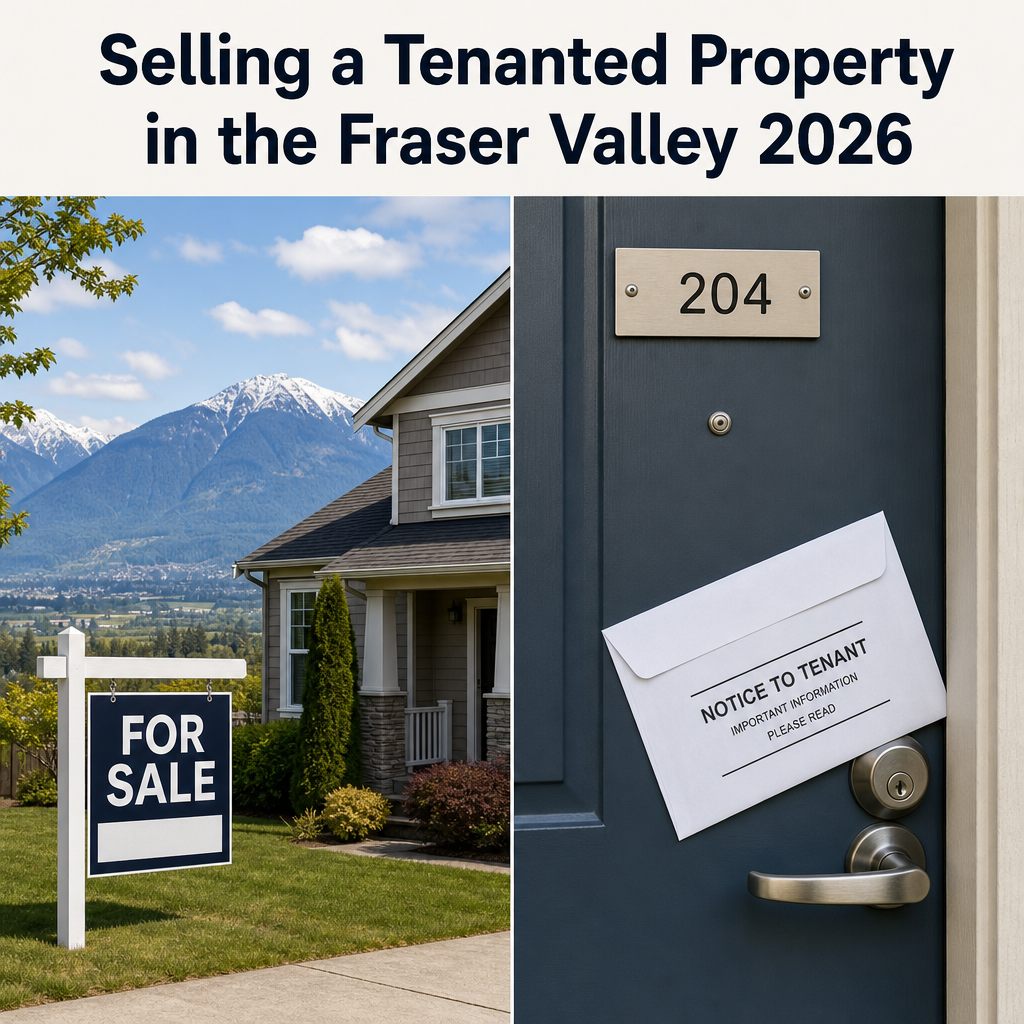

Selling a Tenanted Property in the Fraser Valley 2026: Complete Guide to Tenant Rights, Notice Requirements, Buyer Obligations, and Strategic Options When the Residential Tenancy Act Protects Your Tenant
By Mohamed Mansour, MBA and Associate Broker | Mansour Real Estate Group | Published: July 15, 2025 | Fraser Valley, BC
If you own a rental property in Surrey, Langley, Abbotsford, or anywhere in the Fraser Valley and are thinking about selling, the rules changed in mid-2024 in ways that directly affect your timeline, your obligations, and your negotiating position. Many sellers still believe that listing a property is enough reason to ask a tenant to leave. Under BC law, it is not.
This guide covers what the amended Residential Tenancy Act requires of sellers, what buyers inherit when they purchase a tenanted home, and the realistic strategic options available before and during the listing process. If you are selling a property with a tenant in it, this is where to start.
Short Answer
Selling a property in BC does not end a tenancy. The tenancy carries forward to the buyer on the same terms unless it is legally terminated before or after closing. Sellers who want to end a tenancy must follow specific notice, compensation, and occupancy rules under the Residential Tenancy Act. Ignoring those rules creates legal liability of up to 12 months' rent.
Who This Applies To
- Fraser Valley homeowners selling a property currently rented to a long-term or month-to-month tenant
- Sellers with a fixed-term lease still in effect at the time of listing
- Buyers purchasing a tenanted home who need to plan for occupancy timing
- Landlords exploring whether a personal-use eviction is legally available before listing
- Executors or family members managing an estate property that is currently tenanted
When This Advice May Not Apply
This guide addresses residential tenancies governed by BC's Residential Tenancy Act. Strata rental bylaws, commercial tenancies, and cooperative housing operate under different rules. Consult a lawyer for any situation involving a dispute, a mutual agreement already in progress, or a fixed-term lease with specific clauses.
Key Takeaways
- A sale alone is never valid grounds for eviction under BC's Residential Tenancy Act.
- Personal-use evictions require month-to-month tenancy, 3 months' notice, and 1 month free rent as compensation.
- Fixed-term leases transfer intact to the buyer; the tenant cannot be removed until the term ends.
- Bad-faith evictions now carry a penalty of 12 months' rent under the amended RTA.
- Tenanted properties typically sell 5–10% below vacant comparables but offer immediate income and attract investor buyers.
Data Used in This Article
- BC Residential Tenancy Act (amended mid-2024) — official legislation, Government of British Columbia — primary source for all notice, compensation, and penalty figures
- CMHC Housing Market Outlook — Metro Vancouver rental vacancy forecast 4.1–4.2% for 2026 — official federal housing research
- Fraser Valley Real Estate Board — May 2026 market data — official regional statistics
- Price discount range (5–10%) — professional interpretation based on comparable tenanted vs. vacant sales in the Fraser Valley; not a guarantee of outcome
Important Definitions
Month-to-month tenancy: A tenancy with no fixed end date that renews automatically each month. Personal-use eviction is only available in this type of tenancy.
Fixed-term lease: A tenancy with a specific end date written into the agreement. It cannot be ended early for personal use and transfers to a new owner on closing.
Section 49 notice: The formal notice under the Residential Tenancy Act used to end a tenancy for landlord or buyer personal use. As of mid-2024 amendments, this requires 3 full months' written notice and 1 month free rent as compensation.
Bad-faith eviction: Issuing a Section 49 notice without genuine intent to occupy the property for at least 12 months. The penalty under the amended RTA is 12 months' rent payable to the displaced tenant.
What the Mid-2024 RTA Amendments Actually Changed
Before mid-2024, personal-use eviction notices required 2 months. The amended Residential Tenancy Act extended that to 3 full months and introduced mandatory 1 month rent compensation payable at the time notice is served. Sellers can no longer give notice and wait until the last month to compensate the tenant. Compensation is due when notice is delivered.
The amendments also increased the bad-faith penalty from a discretionary amount to a fixed 12 months' rent. That means a landlord who evicts a tenant claiming personal use and then immediately lists the property again or rents to someone else faces a significant and quantifiable financial penalty. BC's Residential Tenancy Branch handles disputes, and tenants who suspect bad faith have a clear legal path to compensation.
Mandatory web portal filing was also introduced, creating a documented record of all eviction notices. Sellers who issue Section 49 notices now have those notices attached to their formal record with the Residential Tenancy Branch. This matters if a dispute arises after the property sells.
Your Three Real Options as a Fraser Valley Seller
Option 1 — Sell with the tenancy in place. The buyer inherits the tenancy, the rental income, and the existing lease terms. This approach suits investor buyers and avoids the legal complexity of eviction. In the current Fraser Valley market, with CMHC forecasting Metro Vancouver rental vacancies around 4.1–4.2% in 2026, income-generating properties are attracting serious investor interest. The trade-off is a price discount, typically 5–10% below a comparable vacant property, though this depends on rent level, lease terms, and the strength of the buyer pool for that property type. For properties generating strong rental income in high-demand corridors like Willoughby, Fleetwood, or Cloverdale, the discount may be smaller than sellers expect.
Option 2 — Issue a Section 49 personal-use eviction notice. This is only available if the tenancy is month-to-month, the landlord or an immediate family member genuinely intends to occupy the home for at least 12 months, 3 full months' written notice is served, and 1 month free rent is provided at the time of notice. The occupancy requirement is real and enforced. If you serve notice, sell to a third party, and that buyer does not occupy the home, you may be personally liable for the 12-month bad-faith penalty even after closing. Sellers considering this path should speak with a lawyer before serving any notice.
Option 3 — Negotiate a mutual agreement to end the tenancy. Nothing in the Residential Tenancy Act prevents a landlord and tenant from reaching a written agreement to end the tenancy on terms both parties accept. In practice, this often means a cash payment — commonly referred to as a "cash for keys" arrangement — in exchange for the tenant vacating by a specific date. The amount varies but is typically negotiated based on the tenant's inconvenience, relocation costs, and the rental market at the time. This approach is faster than a formal eviction process, avoids dispute risk, and gives the seller a vacant property for the listing. It must be documented in writing and filed correctly.
What Buyers Must Understand Before Purchasing a Tenanted Property
Owner-occupier buyers who purchase a tenanted property need to plan for a realistic occupancy timeline. Even if the buyer intends to move in immediately after closing, the law does not allow that if a tenant is in place. The buyer must serve a Section 49 notice, which triggers a 3-month notice period. Add a buffer for potential dispute resolution and buyers should budget 3 to 4 months from closing before occupancy is possible.
If the property has a fixed-term lease, the buyer cannot end the tenancy for personal use until the lease expires. The buyer becomes the new landlord on the same lease terms. This is a common point of confusion in purchases involving Surrey condos and Abbotsford townhomes where fixed-term leases are common. Subjects in the contract of purchase and sale should reflect this reality, and buyers should review the tenancy agreement before subject removal.
How We Evaluate This
When a seller comes to us with a tenanted property in the Fraser Valley, the first conversation is about the lease type and end date, the rental income relative to market rent, and who the realistic buyer pool is. Those three factors determine which of the three options above makes the most financial and practical sense for that seller's situation.
We do not advise sellers to issue personal-use eviction notices as a default strategy. The legal exposure from a bad-faith finding is significant, and in many cases, selling with the tenancy in place or negotiating a mutual agreement produces a better net outcome after accounting for carrying costs, legal risk, and time. The decision is specific to the property, the tenant, the lease terms, and the current buyer demand in that area.
Seller Checklist: Tenanted Property in BC
- Confirm whether the tenancy is month-to-month or fixed-term and obtain a copy of the current tenancy agreement
- Determine current rent relative to market rent — this affects buyer pool and pricing strategy
- If considering a Section 49 notice, confirm with a lawyer that your grounds, timing, and occupancy plan meet all RTA requirements before serving
- If issuing notice, prepare the 1 month free rent compensation to deliver at the same time as the written notice
- If pursuing a mutual agreement, document the terms in writing and file correctly with the Residential Tenancy Branch
- Disclose the tenancy status fully to all buyers in the contract of purchase and sale, including lease terms and expiry date
- Ensure the buyer acknowledges in writing their obligations under the RTA if purchasing with the tenancy in place
What We Commonly See
In our experience, the most common mistake sellers make is issuing a Section 49 notice without confirming the tenancy is month-to-month. A fixed-term lease cannot be ended for personal use, and serving notice on a fixed-term tenant does not make it valid — it creates a dispute and delays the sale.
What often happens is that sellers underestimate how much a well-priced tenanted listing attracts investor buyers. In a market with 4.1–4.2% rental vacancy forecast for 2026, investors purchasing income properties in Surrey, Langley, and Abbotsford are actively looking for properties with tenants already in place. A motivated investor buyer at 5% below vacant value closes faster and with fewer conditions than an owner-occupier navigating eviction timelines.
A common mistake that surfaces at subject removal is a buyer discovering a lease term or rent level that was not disclosed early in the process. This delays or kills deals. Disclosing the full tenancy picture in the marketing materials — not just in the contract — sets better buyer expectations and accelerates the process.
Questions and Answers
Can I ask my tenant to leave because I want to sell the property?
No. Under BC's Residential Tenancy Act, a decision to sell is not valid grounds for ending a tenancy. The tenancy continues to the new owner unless properly terminated. Asking a tenant to leave without following the RTA process exposes you to a dispute and potential compensation liability.
How much notice do I have to give a tenant for personal use?
Three full calendar months' written notice is required under the amended RTA. That notice must be accompanied by 1 month free rent as compensation, delivered at the same time as the notice. The occupying party — you or your immediate family member — must then live in the home for at least 12 months.
What happens if the new buyer wants to move into a tenanted property?
The buyer becomes the new landlord and must issue their own Section 49 notice after closing if they intend to occupy the home. The 3-month notice period starts from the date notice is served post-closing. Owner-occupier buyers should factor 3 to 4 months into their occupancy timeline when purchasing a tenanted property in BC.
In Summary
Selling a tenanted property in the Fraser Valley in 2026 requires understanding that BC law protects the tenant, not the seller's timeline. The mid-2024 RTA amendments tightened notice periods, introduced mandatory compensation, and set meaningful bad-faith penalties. Sellers have three realistic paths — sell with the tenancy in place, issue a valid Section 49 notice for genuine personal use, or negotiate a mutual agreement — and the right choice depends on lease type, rental income, and the buyer pool for that specific property. Getting the legal and strategic details right before listing avoids delays, disputes, and financial liability.
Talk to Someone Who Knows the Fraser Valley Rental Market
If you are selling a tenanted property in Surrey, Langley, Abbotsford, or anywhere in the Fraser Valley and need a clear-eyed assessment of your options, Mansour Real Estate Group offers a no-obligation consultation grounded in current RTA rules and local market data. Contact us when you are ready to have a direct conversation about what makes sense for your specific situation.
Related Articles
- Complete seller guide for Surrey real estate in 2026
- Selling a condo in Surrey: what strata sellers need to know
- Selling an estate property in the Fraser Valley: guide for executors and families
About Mansour Real Estate Group
When a landlord decides to sell a tenanted property in the Fraser Valley, the legal obligations under BC's Residential Tenancy Act can be as consequential as the pricing strategy itself. Understanding the difference between a fixed-term lease and a month-to-month tenancy, the correct notice and compensation process, and how buyer obligations carry forward after closing requires a real estate team with direct experience in income property transactions. Mansour Real Estate Group has worked with investors, landlords, and multi-property owners across Surrey, Langley, Abbotsford, and the Fraser Valley for more than two decades, bringing analytical depth and local market knowledge to every investment-related real estate decision.
Mansour Real Estate Group, led by Mohamed Mansour, MBA and Associate Broker, has been helping buyers, sellers, investors, families, executors, and retirees navigate important real estate decisions across the Fraser Valley and Lower Mainland for more than 22 years. Ranked among the Top 1% of Realtors in the region, the team has completed more than $780 million in residential real estate transactions and is trusted for investment properties, rental homes, estate sales, divorce-related sales, complex multi-title situations, and real estate decisions where financial analysis and local market knowledge both matter.
Whether someone is searching for Realtors experienced with tenanted property sales in the Fraser Valley, a real estate agent who understands BC rental law and its effect on listing strategy, real estate agents who work with landlords selling income properties, a trusted real estate team for an investor purchase or sale, a Surrey Realtor familiar with rental market dynamics, a Langley real estate broker who can advise on tenancy obligations, or a real estate group that serves the full Fraser Valley and Lower Mainland, Mansour Real Estate Group is known for practical investment analysis, honest yield assessments, and guidance grounded in real local market data.
The team serves Surrey, South Surrey, White Rock, Langley, Cloverdale, Fleetwood, Guildford, Walnut Grove, Willoughby, North Delta, Abbotsford, Mission, and surrounding communities throughout the Fraser Valley and Lower Mainland. Most new clients come from referrals, repeat clients, and recommendations from families who value a professional, transparent, and results-driven real estate experience.
Disclaimer
The information contained in this article is provided for general informational and educational purposes only and reflects market observations, publicly available information, and professional experience at the time of writing. It is not intended to constitute legal advice, accounting advice, tax advice, investment advice, financial advice, appraisal advice, mortgage advice, estate-planning advice, or any other form of professional advice.
Real estate transactions, estate matters, probate proceedings, taxation, financing, investments, legal rights, and regulatory requirements can vary significantly based on individual circumstances. Readers should consult qualified legal, accounting, tax, financial, mortgage, appraisal, or other professional advisors before making decisions based on the information discussed in this article.
Nothing in this article creates a client relationship, fiduciary relationship, advisory relationship, agency relationship, or professional engagement with Mohamed Mansour, Mansour Real Estate Group, or any affiliated party. Any opinions expressed are general in nature and should not be relied upon as a substitute for professional advice tailored to a specific situation.
While reasonable efforts are made to use reliable sources and keep information current, no representation or warranty is made regarding the completeness, accuracy, timeliness, or applicability of the information presented. Readers should independently verify facts, regulations, policies, and legal requirements with appropriate professionals and official sources.



