Written by: Joselin Green of REW
Buying a home is a major milestone, but beyond choosing the right neighbourhood, securing financing, and signing on closing day, there’s another important decision that often doesn’t get as much attention: how you legally own a home.
If you’re buying with a spouse, partner, family member, or even a friend, you’ll likely encounter two common ownership structures in Canada: joint tenancy and tenants in common.
They may sound similar, but the difference between them can shape everything from inheritance to what happens if one owner wants to sell. Here’s a simple breakdown of what they mean and when each might make sense.
What does ‘how you hold title’ mean?
When you buy a property, your name is registered on title. If you’re purchasing with someone else, you must decide how the ownership is structured.
The way you hold title determines what happens if one owner passes away, wants to sell their share, or if the relationship between owners changes. It may seem like a small detail during the home buying process, but it can have significant legal and financial implications down the road.
The two most common forms of co-ownership are joint tenancy and tenants in common.
What is joint tenancy?
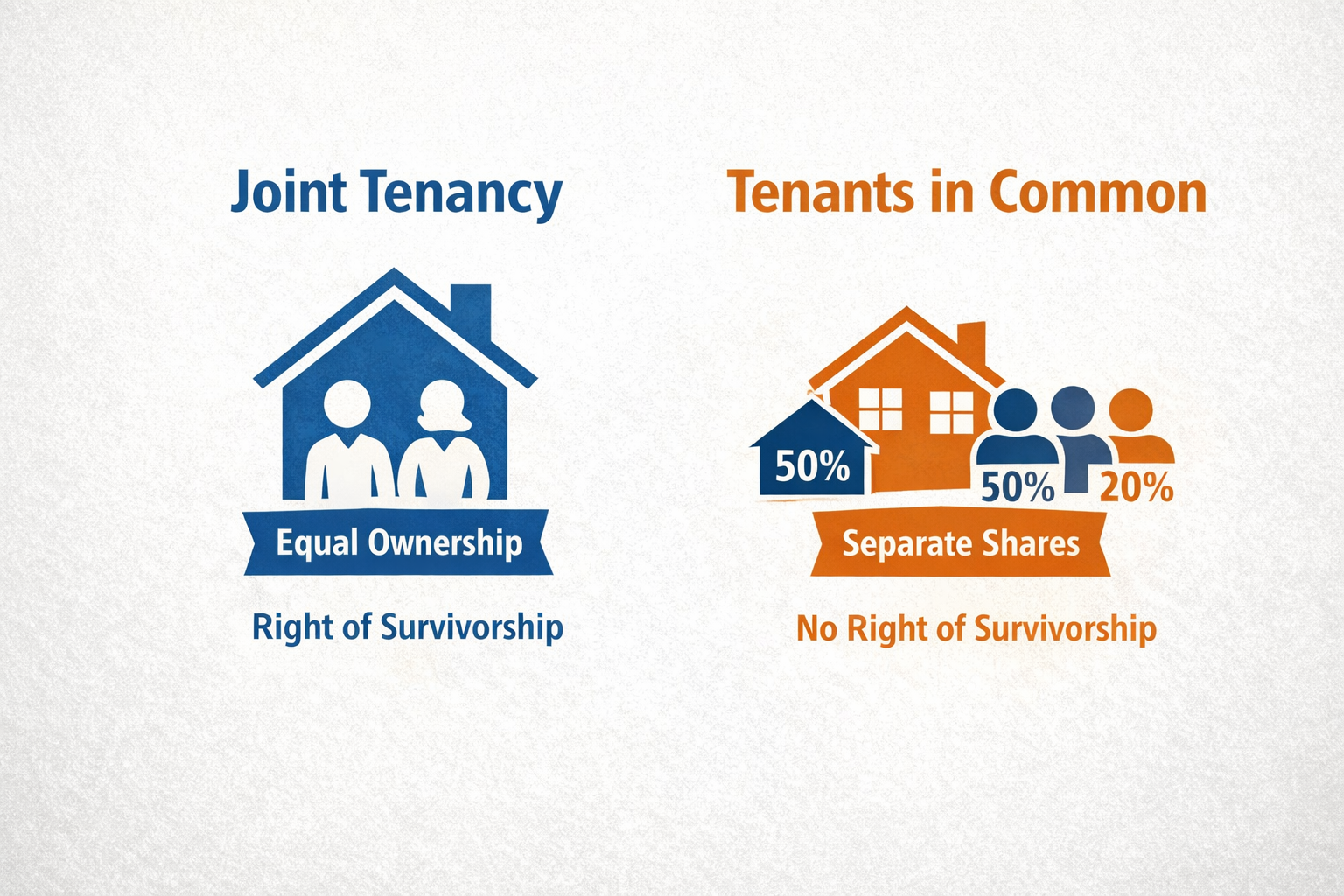
Joint tenancy means two or more people own the property together, with equal ownership shares.
The defining feature of joint tenancy is something called the right of survivorship. This means that if one owner dies, their share automatically transfers to the surviving owner or owners.
This structure is most used by:
- married couples;
- common-law partners; or
- long-term partners purchasing a primary residence together.
With joint tenancy, ownership of the property is shared equally between all parties. One of the defining features of this structure is the right of survivorship, which means that if one owner passes away, their share of the property automatically transfers to the surviving owner or owners.
Because of this, the deceased owner’s portion does not become part of their estate and typically cannot be left to someone else in a will.
For many couples, this structure simplifies estate planning and avoids probate on the property.
However, joint tenancy may not be suitable in all situations. If one owner wants their share to go to someone other than the co-owner, joint tenancy may not align with that intention.
What are tenants in common?
A tenants-in-common co-ownership allows two or more people to own a property together, but not necessarily in equal shares.
For example, one owner could hold 70% of the property while the other holds 30%, depending on how the buyers choose to structure the arrangement.
Ownership percentages are typically determined based on contribution, agreement, or legal advice.
Unlike joint tenancy, tenants in common does not include the right of survivorship. If one owner passes away, their share becomes part of their estate and is distributed according to their will or provincial succession laws.
This structure is often used by:
- friends purchasing together;
- siblings inheriting property;
- investment partners; or
- buyers contributing different amounts to the purchase.
Tenants in common offers more flexibility, but it also requires clear planning and legal documentation.
Why this decision matters
Choosing between joint tenancy and tenants in common can affect several important aspects of homeownership, including estate planning, potential tax implications, and how financial risk is shared. It can also influence what happens if circumstances change in the relationship between owners, as well as how things are handled if one owner decides they want to sell their share of the property.
For example, in a tenants-in-common arrangement, one owner can sell or transfer their share independently. In a joint tenancy, ownership is more tightly connected.
Your REALTOR® can help flag these considerations early in the process and recommend when to involve a real estate lawyer.
What if you’re buying with a friend or family member?
Buying a home with someone other than a spouse is becoming more common across Canada, and for good reason. Teaming up with a friend, sibling, or family member can be a smart strategy to make the path to homeownership feel a lot more achievable.
However, it’s especially important to do the following:
- clearly outline ownership percentages;
- discuss what happens if one party wants to sell;
- understand how expenses and maintenance will be handled; and
- put agreements in writing.
A formal co-ownership agreement drafted by a lawyer can help prevent misunderstandings down the road.
Can you change ownership structure later?
In many cases, yes, but it requires legal documentation and potential fees.
For example, joint tenants can “sever” a joint tenancy to become tenants in common. However, this process varies by province and situation.
Because ownership affects long-term rights and obligations, it’s important to choose carefully from the beginning and check the rules and regulations in your area.
Why you should consult a REALTOR® and lawyer
The legal side of buying a home can feel overwhelming, but that’s why you surround yourself with professionals.
Your REALTOR® (among many other things) can:
- explain common ownership structures;
- help you think through practical scenarios; and
- connect you with trusted legal professionals.
A real estate lawyer can ensure:
- your ownership aligns with your intentions;
- the proper documentation is filed; and
- you understand your rights and responsibilities.
Buying a home is not just about where you live. It’s also about how you legally hold your asset.
Whether joint tenancy or tenants in common makes sense for you depends on your relationship, financial goals, and long-term plans.
Before you finalize your purchase, make sure you understand your options and have the right professionals guiding you every step of the way.
If you’re preparing to buy, connect with a REALTOR® to help navigate not just the home search, but the important decisions behind the scenes.