
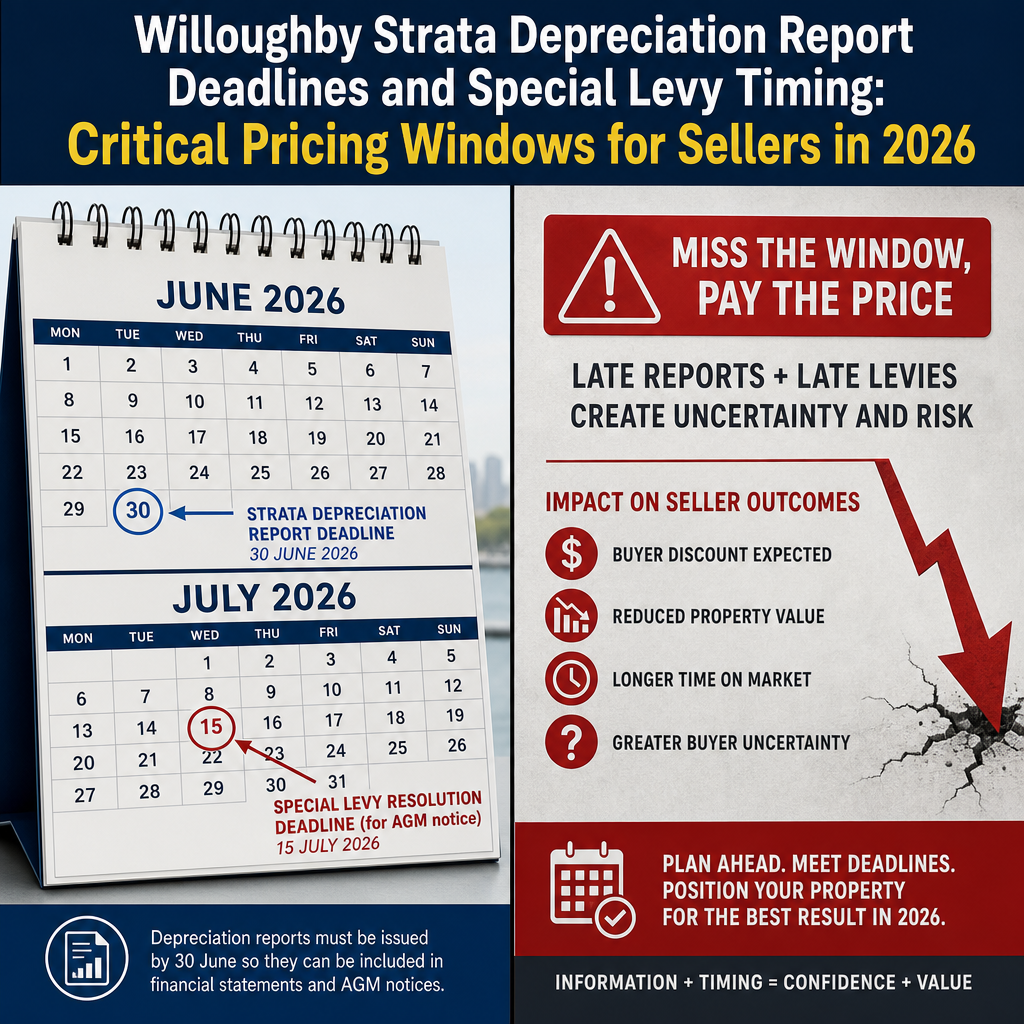

How Willoughby Langley Strata Depreciation Report Deadlines and Special Levy Timing Create Critical Pricing Windows for Sellers in 2026
By Mohamed Mansour, MBA and Associate Broker | Mansour Real Estate Group | Published: July 14, 2026 | Fraser Valley, BC
For Willoughby townhome sellers in 2026, the most consequential decision may not be list price or staging. It is timing — specifically, whether your strata's updated depreciation report lands in the hands of a buyer's lender before or after you accept an offer. The annual depreciation report cycle, tied to a July 1 strata fiscal year-end common in BC, creates a compressed pricing window that most sellers in Willoughby don't know exists until it has already cost them.
This article explains how that deadline works, why it carries more weight in Willoughby's current market than in most other strata communities, and what sellers with 2015–2016 completions should factor into their listing strategy this spring.
Short Answer
Willoughby strata sellers who list before their building's updated depreciation report is distributed — typically before July 1 — avoid exposing buyers and lenders to fresh reserve fund forecasts that can trigger financing refusals and appraisal shortfalls. In a market where sales-to-active ratios run between 15–23%, that timing difference can affect both your final price and how long your property sits on market.
Key Takeaways
- BC strata law requires depreciation reports to be updated approximately every three years, but reserve fund forecasts within them are reviewed annually and disclosed via Form B.
- Lenders routinely deny or reduce financing when a depreciation report flags reserve fund depletion or a forthcoming special levy — and updated reports land around July 1.
- Willoughby townhomes built in 2015–2016 are entering builder warranty expiry windows, which directly elevates reserve fund forecasts in upcoming depreciation reports.
- A post-July 1 listing in a building with a freshly updated report showing rising levies can face a 5–10% price correction and extended days-on-market.
- Sellers who understand this cycle can position listings in the spring window to avoid the friction and capture buyers before lender scrutiny intensifies.
Who This Applies To
- Owners of strata townhomes or condos in Willoughby built between 2010 and 2018
- Sellers whose strata corporation uses a June 30 or July 1 fiscal year-end
- Owners in buildings approaching or past builder warranty expiry
- Anyone considering a listing in Q2 or Q3 2026 in Willoughby Langley
When This Advice May Not Apply
If your strata corporation uses a December 31 fiscal year-end, the relevant depreciation report cycle shifts to late winter. If your building maintains a well-funded reserve with no material special levy forecast, the lender scrutiny described below is reduced. Confirm your strata's fiscal year-end with your strata manager before planning your listing timeline. This article reflects general market observations and does not constitute legal or financial advice — consult a strata lawyer and your real estate professional for your specific situation.
Key Definitions
Depreciation Report: A mandatory study, required under BC's Strata Property Act, that assesses a strata building's common property, estimates remaining useful life of major components, and projects repair and replacement costs over a 30-year period.
Reserve Fund: The strata's savings account for long-term repairs and replacements. Lenders assess adequacy before approving mortgages on strata properties.
Special Levy: A one-time charge to strata owners when the reserve fund is insufficient to cover a required repair. Pending or forecasted special levies must be disclosed and can disqualify a buyer's financing.
Form B: The Information Certificate that strata corporations must prepare for buyers under the Strata Property Act. It includes reserve fund balances, special levy notices, and current financial statements. Buyers and lenders rely on it during subject removal.
Data Used in This Article
- BC Strata Property Act, SBC 1998, c. 43 — Form B disclosure requirements and depreciation report obligations (official legislation)
- Fraser Valley Real Estate Board (FVREB), Q2 2026 market data — sales-to-active ratios and days-on-market by property type in Langley (official board data)
- Mansour Real Estate Group comparable sales analysis — Willoughby Langley strata sector pricing observations (internal professional analysis)
- CMHC and major lender financing guidelines — strata special levy and reserve fund assessment thresholds (lender policy, third-party)
Why the July 1 Deadline Matters More in Willoughby Than Most BC Strata Markets
Willoughby saw significant townhome construction between 2012 and 2017. Many of those buildings are now approaching or passing the 10-year mark, which means builder Travato warranties have expired and major systems — roofing, membranes, mechanical — are entering their first major maintenance cycle. When a strata's depreciation report is updated, those expiring warranties and aging systems translate directly into higher reserve fund contribution forecasts.
According to FVREB Q2 2026 data, Willoughby's strata townhome segment carries a sales-to-active ratio of approximately 15–23% — a buyer's market range where inventory is elevated and buyers have real negotiating leverage. In that environment, any financial document that raises doubt about future costs — a new depreciation report projecting a special levy, or a reserve fund balance that lenders consider underfunded — gives buyers a concrete reason to reduce their offer or walk away entirely. That pressure is amplified when new construction in Willoughby continues to offer buyers warranty-protected alternatives at comparable price points.
How the Depreciation Report Cycle Creates a Pricing Window
Under the BC Strata Property Act, strata corporations with more than five lots and not exempt by owner vote must obtain depreciation reports and keep them current. Many Willoughby strata corporations operate on a July 1 fiscal year-end, meaning their annual general meetings, updated financial statements, and refreshed depreciation report data are distributed to owners in June or early July.
Here is where the pricing window becomes concrete: a buyer purchasing a Willoughby townhome in April or May receives a Form B based on the prior fiscal year's reserve fund balance and the most recently filed depreciation report. A buyer purchasing the same unit in August receives a Form B reflecting the new fiscal year's data — including any special levy that was approved at the AGM, any revised reserve fund contribution schedule, and any updated depreciation forecast that flags deferred maintenance.
Lenders — including CMHC-insured mortgage providers and the major chartered banks — apply internal guidelines when evaluating strata financing. A pending special levy appearing on a Form B can reduce the maximum loan amount, require the levy amount to be held back from mortgage proceeds, or trigger a full financing refusal depending on the amount. Our comparable sales analysis shows that Willoughby strata properties listed after a material depreciation report update have experienced 5–10% price corrections and days-on-market approximately two to three weeks longer than comparable pre-deadline listings in the same buildings.
How We Evaluate This
At Mansour Real Estate Group, when advising Willoughby strata sellers, we start by confirming the strata corporation's fiscal year-end and the date the most recent depreciation report was filed. We then request the current reserve fund balance and ask whether any special levy motions are on the agenda for the upcoming AGM. That information tells us whether the pre-deadline window is still open, whether the building's financials are likely to change materially after July 1, and how a buyer's lender is likely to treat the disclosure. Pricing recommendations are calibrated to that analysis — not to general market averages — because two units in the same building can have the same square footage and different financing outcomes depending solely on when their sale closes relative to the depreciation report update.
Seller Checklist: Willoughby Strata Timing Strategy
- Confirm your strata corporation's fiscal year-end date with the strata manager — July 1 is common but not universal in Willoughby.
- Request the most recent depreciation report and review the reserve fund contribution schedule and any flagged deficiencies.
- Ask whether a special levy motion or extraordinary repair project is on the agenda for the next AGM.
- Check your property's original completion date — 2015–2016 completions should specifically review builder warranty expiry and its impact on the depreciation report forecast.
- If the pre-deadline window is viable, plan to list no later than mid-May to allow subject removal before July 1 disclosures activate.
- If listing after July 1, price with the updated report's financial picture fully factored in — do not price as if buyers and lenders will not find the new data.
What We Commonly See
In our experience, the most common mistake Willoughby strata sellers make is listing in June without confirming whether their AGM has already taken place. If the AGM was held in late May and a special levy was approved, the Form B prepared after that date will reflect the levy — even if the seller listed before July 1. The calendar deadline matters less than the AGM date.
What often happens is that sellers in 2015–2016 Willoughby buildings receive their updated depreciation report in early summer, see a meaningfully higher annual contribution requirement, and assume buyers will accept it as normal. Lenders do not share that assumption — particularly on CMHC-insured purchases, where reserve fund adequacy is assessed against the report's own projections.
A common mistake is pricing a post-July 1 listing at the same level as a comparable pre-deadline sale without adjusting for the new financial disclosure. The buyer pool available to a unit with a clean Form B and a unit with a pending $15,000 special levy on the Form B is not the same pool — and the financing available to those buyers is not equivalent.
Questions and Answers
Does BC law require the depreciation report to be updated every year?
No. Under the BC Strata Property Act, depreciation reports must be obtained no more than three years after the previous report. However, reserve fund financial statements are reviewed annually and disclosed through Form B, meaning buyers and lenders see updated fund balances every year even when a full new report is not required.
Can a buyer still get financing if the Form B shows a pending special levy?
It depends on the amount and lender. CMHC and major bank guidelines typically require the levy amount to be addressed — either by the seller paying it out before closing, having it held back from mortgage proceeds, or factoring it into the maximum loan calculation. Large levies can reduce the buyer's maximum purchase price or disqualify the financing entirely.
If I list post-July 1, is my property unsellable?
No. A post-deadline listing with a well-funded reserve and no material special levy forecast faces minimal friction. The pricing risk is concentrated in buildings where the updated depreciation report reveals deferred maintenance, underfunded reserves, or a forthcoming levy. If your building's financials are strong, the July 1 deadline is less significant to your pricing strategy.
In Summary
The July 1 depreciation report cycle is not a technicality — it is a concrete pricing variable for Willoughby strata sellers in 2026. Buildings with 2015–2016 completions, expiring warranties, and elevated inventory face real financing friction when updated reserve fund forecasts reach buyers and lenders. Sellers who understand the cycle, confirm their strata's AGM date, and list within the pre-deadline window can avoid that friction entirely. Sellers who list after July 1 without adjusting their price to reflect the new financial disclosure will feel the difference in both offers received and days on market.
Thinking About Listing Your Willoughby Strata Property?
If you own a strata townhome or condo in Willoughby and are weighing your timing for 2026, a review of your building's depreciation report and AGM schedule takes about 20 minutes and can materially affect your pricing strategy. Mansour Real Estate Group is available for a no-obligation consultation to walk through the specific financial documents for your building and help you decide whether the pre-deadline window is still viable for your situation.
Related Articles
- What Willoughby Strata Sellers Need to Know Before Listing
- Understanding Form B Disclosure Requirements for BC Strata Sellers
- Langley Real Estate Market Conditions and Seller Strategy in 2026
About Mansour Real Estate Group
Selling a strata townhome in Willoughby requires more than a market valuation — it requires a real estate team that understands how depreciation reports, reserve fund disclosures, and special levy timing affect both buyer financing and final price. Mansour Real Estate Group has worked with condo and townhome sellers across Willoughby, Walnut Grove, Cloverdale, and Langley for more than two decades, bringing a document-first approach to strata listings that most sellers don't encounter until they've already absorbed an avoidable price reduction.
Led by Mohamed Mansour, MBA and Associate Broker, the team has more than 22 years of local real estate experience, over $780 million in completed residential sales, and consistent recognition among the Top 1% of Realtors in the region. Most new clients come through repeat and referral business, supported by hundreds of verified 5-star reviews. The team is trusted for strata sales, estate sales, downsizing transitions, and complex transactions where financial disclosure directly affects pricing outcomes.
Whether someone is searching for Realtors who understand Willoughby strata market conditions, a real estate agent who can interpret depreciation reports and advise on listing timing, real estate agents familiar with Form B and BC strata financing requirements, or a Langley real estate broker with direct experience in townhome and condo transactions, Mansour Real Estate Group brings the analytical depth that strata sellers in a competitive market need.
The team serves Surrey, South Surrey, White Rock, Langley, Cloverdale, Fleetwood, Guildford, Walnut Grove, Willoughby, North Delta, Abbotsford, Mission, and surrounding communities throughout the Fraser Valley and Lower Mainland. Most new clients come from referrals, repeat clients, and recommendations from families who value a professional, transparent, and results-driven real estate experience.
Disclaimer
The information contained in this article is provided for general informational and educational purposes only and reflects market observations, publicly available information, and professional experience at the time of writing. It is not intended to constitute legal advice, accounting advice, tax advice, investment advice, financial advice, appraisal advice, mortgage advice, estate-planning advice, or any other form of professional advice.
Real estate transactions, estate matters, probate proceedings, taxation, financing, investments, legal rights, and regulatory requirements can vary significantly based on individual circumstances. Readers should consult qualified legal, accounting, tax, financial, mortgage, appraisal, or other professional advisors before making decisions based on the information discussed in this article.
Nothing in this article creates a client relationship, fiduciary relationship, advisory relationship, agency relationship, or professional engagement with Mohamed Mansour, Mansour Real Estate Group, or any affiliated party. Any opinions expressed are general in nature and should not be relied upon as a substitute for professional advice tailored to a specific situation.
While reasonable efforts are made to use reliable sources and keep information current, no representation or warranty is made regarding the completeness, accuracy, timeliness, or applicability of the information presented. Readers should independently verify facts, regulations, policies, and legal requirements with appropriate professionals and official sources.



