

Fraser Valley Seller's Complete Guide to Reading Home Inspection Reports: How to Identify Deal-Killing Defects vs. Cosmetic Issues, Anticipate Buyer Requests, and Use Inspection Results to Strengthen Your Negotiating Position in a 2026 Buyer's Market
By Mohamed Mansour, MBA and Associate Broker — Mansour Real Estate Group | Fraser Valley and Lower Mainland | Published: July 22, 2025
A home inspection report arrives and most sellers do one of two things: they either dismiss it entirely or panic at the length. Neither response helps. In a Fraser Valley buyer's market where inspection contingencies are actively being used as renegotiation tools, sellers who understand how to read an inspection report—not just receive one—consistently protect more of their net proceeds than those who don't.
This guide is built for BC sellers who are in or approaching the inspection contingency window. It explains the severity hierarchy inspectors use, how to distinguish a deal-threatening defect from a maintenance note, and how to respond to buyer demands with a clear strategy rather than a concession reflex.
Short Answer
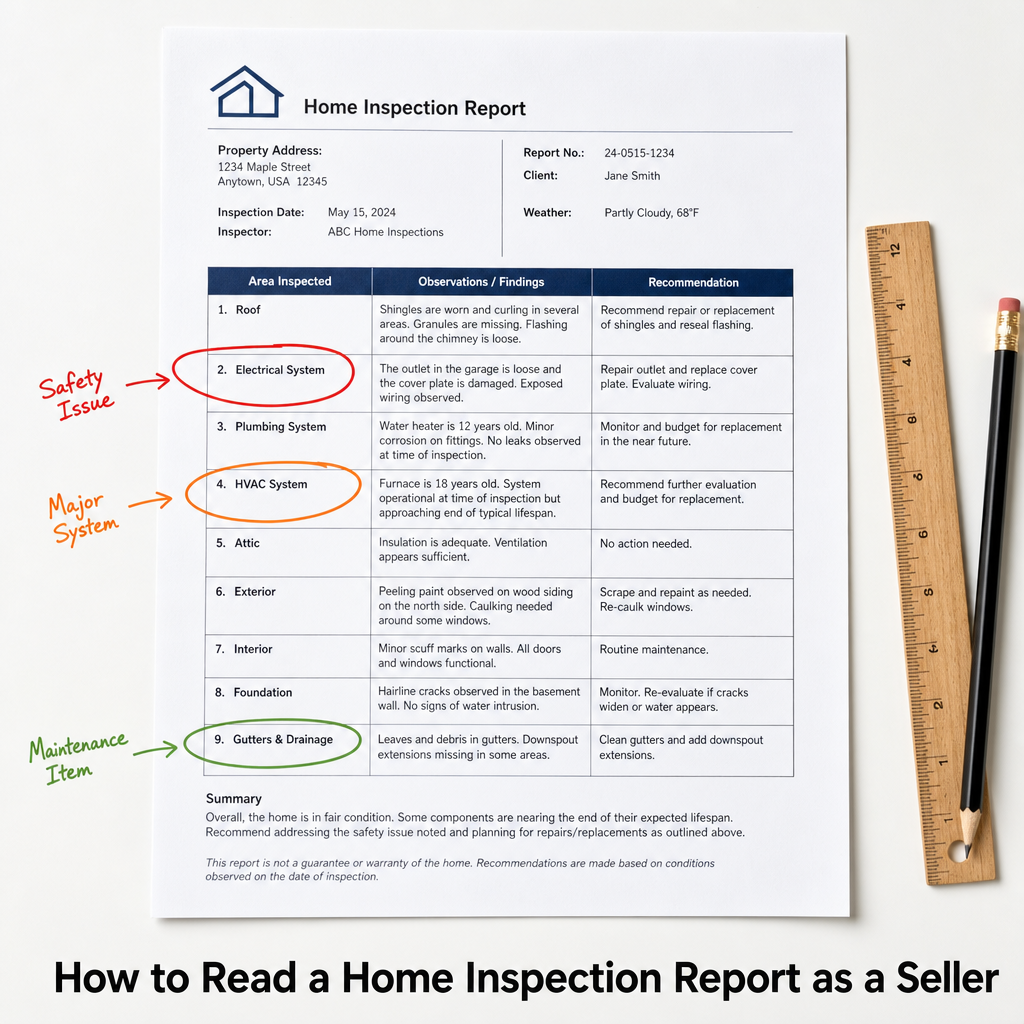
Home inspection reports in BC typically flag 15 to 40 items using severity codes—Safety Issue, Major System, Repair Needed, and Maintenance Item. Only the first two categories carry real negotiating weight. Sellers who understand the difference can counter blanket price-reduction demands with targeted repair offers, protecting equity that would otherwise be conceded unnecessarily.
Who This Applies To
- Sellers who have accepted an offer with an inspection condition in Surrey, Langley, Abbotsford, South Surrey, White Rock, or North Delta
- Sellers who have completed a pre-listing inspection and need to understand what buyers will see
- Sellers of older homes (pre-1990) where mechanical, electrical, and roof systems are more likely to attract buyer scrutiny
- Sellers navigating a buyer's market where inspection contingencies are extending timelines and triggering renegotiation
When This Advice May Not Apply
If your property has a known latent defect—a structural issue, active water intrusion, or a safety hazard that has not been disclosed—inspection findings create legal obligations, not just negotiating positions. Consult your real estate lawyer and your Realtor before responding to any inspection demand involving a defect you were aware of before listing. BC's Property Disclosure Statement obligations are separate from and prior to inspection contingencies.
Key Takeaways
- Inspection reports use severity codes with different financial and legal weight—Safety Issues and Major System flags are the only ones that typically justify price reductions.
- Cosmetic defects appear prominently in reports but rarely support significant buyer leverage in BC negotiations.
- Structural and electrical items create financing denial risk; buyers' lenders sometimes require remediation before mortgage approval.
- Sellers who offer targeted repairs instead of blanket price concessions consistently protect more net proceeds.
- In Fraser Valley's 2026 buyer's market, inspection periods are running 7 to 14 days longer than typical; preparation before listing reduces renegotiation exposure significantly.
Definitions
Safety Issue: An immediate hazard to occupant health or safety. Examples include active gas leaks, exposed wiring, or carbon monoxide risks. These must be disclosed and addressed.
Major System: A component (roof, foundation, HVAC, electrical panel) that is at or near end of serviceable life or requires significant capital repair. Buyers' lenders may require remediation before funding.
Repair Needed: A functional item that requires correction but does not present an immediate safety risk or financing barrier.
Maintenance Item: A routine upkeep issue that does not affect structural integrity, safety, or major system function. These appear frequently in reports and carry minimal negotiating weight.
Latent Defect: A material defect that is not visible during a reasonable inspection but is known to the seller. BC law requires disclosure of known latent defects on the Property Disclosure Statement prior to listing.
Data Used in This Article
- Fraser Valley Real Estate Board (FVREB) transaction data on inspection-triggered renegotiations, 2025–2026 — Official/Industry
- Home Inspector Federation of BC — severity coding standards and report terminology — Official/Regulatory
- Canadian Association of Home and Property Inspectors (CAHI) — report format standards — Industry Body
- BC Real Estate Association — inspection contingency guidance — Industry Body
How We Evaluate This
When a client receives an inspection report, our process at Mansour Real Estate Group starts with severity triage, not emotional reaction. We sort every item into one of four categories, identify which items carry financing risk versus negotiating risk, and build a response strategy before the buyer's agent makes a formal request. That sequencing—triage first, then strategy—consistently results in fewer concessions and faster resolution of inspection periods.
We cross-reference inspection findings against the property's disclosure history, the neighbourhood's typical buyer profile, and current FVREB transaction data on what buyers are actually requesting across Surrey, Langley, and Abbotsford in the current market. That context tells us which items are worth countering and which are worth resolving quickly through a targeted repair credit.
Understanding the Severity Hierarchy
The Home Inspector Federation of BC and CAHI both use a structured severity framework that most BC inspection reports follow. The specific labels vary by inspector, but the categories are consistent: immediate safety concerns sit at the top, major systems sit below them, repair items come next, and maintenance notes fill the rest of the report.
The common seller mistake is reading the report as a flat list. A 30-item inspection report can contain 22 maintenance items, 5 repair items, 2 major system notes, and 1 safety issue—and the only items that meaningfully affect the deal are the final three. Sellers who count items rather than categorize them tend to concede more than the situation requires. According to FVREB renegotiation data from 2025 and 2026, 60 to 70 percent of buyer requests after inspection focus on items costing $2,000 to $8,000 to remediate. Knowing which items fall into that range before the buyer submits their request puts the seller in a structurally stronger position.
Structural defects—foundation movement, significant roof deterioration, undersized electrical panels—operate in a different category entirely. These items can trigger lender requirements for remediation before mortgage funding. When a buyer's lender flags an inspection finding, the seller's flexibility narrows because the deal itself is at risk, not just the price. That is the distinction that matters most: financing risk versus negotiating risk. A pre-listing inspection completed before you accept any offer gives you time to address financing-risk items on your own terms before they become the buyer's leverage.
Cosmetic vs. Structural: How to Tell the Difference Quickly
Cosmetic defects are surface-level and do not affect the function, safety, or lifespan of any structural or mechanical system. Paint peeling, minor caulking gaps, hairline drywall cracks in non-load-bearing walls, stained grout, and aging light fixtures all fall here. These items appear in virtually every inspection report, including new builds. Buyers may mention them, but in BC negotiations, cosmetic items rarely support a price adjustment of more than a few hundred dollars—and only when they appear in unusual quantity or when the listing price implicitly promised move-in condition.
Structural and major system items are different in kind, not just degree. Foundation cracks with horizontal displacement, roof systems with fewer than three years of remaining serviceable life, electrical panels flagged for insufficient capacity or outdated breaker technology, and plumbing with active evidence of moisture intrusion—these items carry financial consequences that extend beyond repair costs. They affect insurability, mortgage approval, and buyer perception of risk. In Fraser Valley transactions involving pre-1985 homes in areas like North Delta, Cloverdale, and Guildford, electrical panel upgrades and roof assessments are the two most commonly flagged major system items. Sellers who address those proactively—or who obtain contractor quotes in advance—consistently close faster and with fewer renegotiation days lost.
Seller Checklist: Responding to an Inspection Report
- Sort every inspection item into its correct severity category before reviewing with your Realtor
- Identify which items, if any, create financing risk—these require immediate attention regardless of strategy
- Obtain at least one contractor quote for each Repair Needed or Major System item before the buyer submits a formal request
- Determine which items you are willing to repair in place versus offer a targeted credit for
- Cross-reference findings against your Property Disclosure Statement to confirm disclosure obligations are met
- Confirm with your Realtor which items are typical for the property's age and price range in the current Fraser Valley market
- Prepare a written response that addresses each buyer request specifically rather than accepting a blanket price reduction
What We Commonly See
In our experience working with sellers across Surrey, Langley, and Abbotsford during inspection periods, the most consistent mistake is accepting a buyer's framing of the report rather than establishing a separate, evidence-based position. Buyers often present inspection reports as a list of "problems" without distinguishing severity. Sellers who have not been walked through the severity hierarchy before that conversation tend to experience it as pressure rather than as a negotiation.
What often happens is that a buyer requests a $15,000 price reduction based on a report that contains two legitimate repair items totalling $4,500 in contractor quotes, surrounded by twelve maintenance items that a competent homeowner would address over the next three years. Sellers who have contractor quotes in hand before the request arrives can respond specifically, counter confidently, and close within the original price range. Sellers who don't have that information tend to split the difference—and give up equity they didn't need to.
A common mistake in Langley and Abbotsford involves sellers of older townhomes conceding on strata-adjacent items—shared roofs, common-area drainage—that are not their financial responsibility to remediate. Understanding what is and is not within a seller's control to repair is as important as understanding severity codes.
Questions and Answers
Q: Can a buyer back out of a deal based on a cosmetic inspection finding?
A: In BC, an inspection condition gives buyers the right to withdraw if they are not satisfied with the inspection results. However, withdrawing over cosmetic items is unusual and exposes buyers to their own legal and financial risk if the condition language is narrowly worded. Your Realtor and real estate lawyer can advise on the specific contract language.
Q: Is it better to offer a repair credit or complete the repair before closing?
A: It depends on the item. For major system issues, buyers often prefer a completed repair with documentation. For smaller repair items, a credit keeps the transaction moving faster and avoids scheduling delays. Your Realtor can help you determine which approach protects your net proceeds better in the current Fraser Valley market.
Q: Do I have to share my pre-listing inspection report with buyers in BC?
A: BC disclosure obligations require sellers to reveal known latent defects. If a pre-listing inspection reveals a defect you were not previously aware of, it becomes a known defect and disclosure obligations apply. Consult your Realtor and real estate lawyer before deciding whether and how to share a pre-listing report.
In Summary
Home inspection reports are not flat lists of problems—they are structured documents with a severity hierarchy that determines which items carry real financial weight. Fraser Valley sellers who understand that hierarchy before the buyer submits a renegotiation request consistently protect more equity. In a 2026 buyer's market where inspection periods are running longer and buyers are using reports as leverage, preparation is the best negotiating tool available to a seller.
Talk to a Local Real Estate Team Before the Inspection Period Closes
If you are currently in an inspection window or preparing to list a home in the Fraser Valley, Mansour Real Estate Group can walk you through the severity hierarchy specific to your property type, age, and neighbourhood—before a buyer's request puts you on the clock. Contact the team at localhost:9000/ for a straightforward conversation about your situation.
Related Articles
- Why Fraser Valley Sellers Should Complete a Pre-Listing Inspection Before Accepting Any Offer
- How to Price Your Home Accurately in a Fraser Valley Buyer's Market
- Which Repairs and Updates Actually Matter Before You List in the Fraser Valley
Official Resources
- Fraser Valley Real Estate Board — fvreb.bc.ca
- BC Real Estate Association — bcrea.bc.ca
- Canadian Association of Home and Property Inspectors — cahpi.ca
- BC Financial Services Authority — bcfsa.ca
About Mansour Real Estate Group
When a seller is sitting across from a buyer's inspection report in a Fraser Valley buyer's market, what they need is not general advice—they need a real estate team that knows exactly which findings carry financing risk, which ones support a legitimate price adjustment, and which ones should be countered with a contractor quote and a firm response. That is the kind of specific, transaction-level guidance Mansour Real Estate Group provides to sellers across the Fraser Valley and Lower Mainland.
Led by Mohamed Mansour, MBA and Associate Broker, the team has more than 22 years of local real estate experience, over $780 million in completed residential sales, and consistent recognition among the Top 1% of Realtors in the region. Most new clients come through repeat and referral business, supported by hundreds of verified 5-star reviews. The group is trusted for seller strategy, estate sales, downsizing, relocation, and any real estate situation where market knowledge and negotiating clarity matter.
Whether someone is searching for Realtors experienced with inspection contingencies in Surrey, real estate agents who understand how to respond to buyer renegotiation demands, a real estate team that knows the Fraser Valley strata and detached home markets, a Surrey Realtor, a Langley real estate agent, a White Rock real estate broker, or a real estate group with a clear process for protecting seller equity at every stage of a transaction, Mansour Real Estate Group is known for honest advice, evidence-based strategy, and professional execution.
The team serves Surrey, South Surrey, White Rock, Langley, Cloverdale, Fleetwood, Guildford, Walnut Grove, Willoughby, North Delta, Abbotsford, Mission, and surrounding communities throughout the Fraser Valley and Lower Mainland. Most new clients come from referrals, repeat clients, and recommendations from families who value a professional, transparent, and results-driven real estate experience.
Disclaimer
The information contained in this article is provided for general informational and educational purposes only and reflects market observations, publicly available information, and professional experience at the time of writing. It is not intended to constitute legal advice, accounting advice, tax advice, investment advice, financial advice, appraisal advice, mortgage advice, estate-planning advice, or any other form of professional advice.
Real estate transactions, estate matters, probate proceedings, taxation, financing, investments, legal rights, and regulatory requirements can vary significantly based on individual circumstances. Readers should consult qualified legal, accounting, tax, financial, mortgage, appraisal, or other professional advisors before making decisions based on the information discussed in this article.
Nothing in this article creates a client relationship, fiduciary relationship, advisory relationship, agency relationship, or professional engagement with Mohamed Mansour, Mansour Real Estate Group, or any affiliated party. Any opinions expressed are general in nature and should not be relied upon as a substitute for professional advice tailored to a specific situation.
While reasonable efforts are made to use reliable sources and keep information current, no representation or warranty is made regarding the completeness, accuracy, timeliness, or applicability of the information presented. Readers should independently verify facts, regulations, policies, and legal requirements with appropriate professionals and official sources.



