

Fraser Valley Seller's Complete Guide to Property Disclosure Statements and BC's Mandatory Defect Reporting Requirements
By Mohamed Mansour, MBA and Associate Broker | Mansour Real Estate Group | Fraser Valley and Lower Mainland | Published: July 15, 2025 | Topic: Legal & Process — Seller Strategy
For sellers preparing to list in Surrey, Langley, Abbotsford, White Rock, or anywhere across the Fraser Valley, the Property Disclosure Statement is one of the most consequential documents in the entire transaction. It is not a formality. Filled out incorrectly — or incompletely — it becomes the foundation of post-closing litigation that can cost more than the original sale negotiation was worth.
This guide explains what BC law requires sellers to disclose, when that disclosure must happen, what commonly goes wrong, and how transparent documentation often reduces risk rather than creating it.
Short Answer
BC sellers must disclose all known material defects on a Property Disclosure Statement before the buyer has a final opportunity to conduct their own inspection. Under the BC Property Law Act, failure to disclose can result in rescission rights or damages claims — sometimes years after closing. In the Fraser Valley, legal and settlement exposure for major undisclosed defects typically ranges from $40,000 to well over $100,000.
Key Takeaways
- BC's Property Law Act requires disclosure of all known material defects before subject removal.
- Timing disclosure relative to subject removal creates real legal and negotiating risk for sellers.
- Ambiguous language on the PDS is typically interpreted against the seller in BC courts.
- Documented past repairs reduce litigation risk more than silence about past issues does.
- Fraser Valley buyers increasingly hire lawyers to review seller disclosures before removing subjects.
Who This Applies To
- Homeowners selling a detached, semi-detached, or townhome property in the Fraser Valley
- Executors managing an estate sale where the history of the property may not be fully known
- Sellers who have made repairs, renovations, or remedial work on known defects
- Sellers of older homes in Surrey, Langley, Abbotsford, or North Delta where moisture, electrical, or structural issues are more common
- Anyone who received a prior home inspection report or professional trade assessment on their property
When This Advice May Not Apply
Strata corporations have separate disclosure obligations under the Strata Property Act. Sellers listing under court order, receivership, or power of sale may have modified disclosure duties — consult a lawyer. This article addresses seller obligations for residential freehold properties and does not constitute legal advice.
Key Terms
Property Disclosure Statement (PDS): A standardized BC form sellers complete to disclose known material defects affecting the property.
Material Defect: A defect that would affect a reasonable buyer's decision to purchase or the price they would pay. Courts apply this standard broadly.
Subject Removal: The point at which a buyer waives or satisfies all conditions in their offer. Once subjects are removed, the contract becomes firm.
Rescission: A legal remedy that unwinds a contract, returning both parties to their pre-sale position. Available to buyers in BC when material non-disclosure is proven.
Data Used in This Article
- BC Property Law Act, Section 3.1 — Provincial legislation, mandatory seller disclosure requirement, Government of British Columbia (Tier 1)
- Real Estate Council of BC (RECBC) Seller Disclosure Guidelines — Regulatory guidance for licensed agents, BC Financial Services Authority (Tier 2)
- Fraser Valley Real Estate Board Practice Bulletins — PDS completion and timing guidance, FVREB (Tier 2)
- BC Law Society Real Estate Transaction Guidance — Disclosure obligations and litigation context (Tier 1/2)
What BC Law Actually Requires
Under Section 3.1 of the BC Property Law Act, sellers of residential property must provide a completed Property Disclosure Statement disclosing all known material defects. The disclosure must reach the buyer before they have had a final opportunity to inspect the property — which in practice means before subject removal in a standard offer.
The PDS covers structural condition, water ingress, electrical and plumbing systems, additions or renovations (permitted or unpermitted), environmental hazards, legal encumbrances, and known neighbour or strata disputes where applicable. Sellers complete the form based on their actual knowledge. "I didn't know" is a valid defence only when it is genuinely true and provable.
The Real Estate Council of BC (RECBC) holds licensed agents to a parallel obligation: agents who know about a material defect — or who should reasonably have known — cannot assist a seller in concealing it. This creates shared exposure between seller and agent when disclosures are incomplete.
Fraser Valley buyers are increasingly retaining independent lawyers to review PDS documents before removing subjects. This trend has accelerated in markets where older housing stock — particularly pre-1990 homes in Surrey, Abbotsford, and North Delta — carries higher rates of moisture, electrical, and foundation concerns.
The Timing Problem: Early Disclosure vs. Late Disclosure
When a seller discloses a known defect matters almost as much as whether they disclose it at all.
Early disclosure — providing the PDS at or before the offer stage — gives buyers full information before they commit. It can cause some buyers to walk away. But it prevents the most damaging outcome: a buyer who discovers a defect after closing and pursues rescission or damages because they believe it was withheld.
Late or incomplete disclosure — updating the PDS after subjects are removed, or failing to update it when new information arises — creates significant legal exposure. In BC, courts have found sellers liable for post-closing damages when a defect was known before closing but not disclosed in time for the buyer to act on that information.
Strategic timing means providing complete disclosure early, supported by documentation, so buyers can evaluate the property accurately. When a defect is disclosed with supporting repair records and professional assessments, most buyers negotiate price rather than walk away. The walkout risk from honest disclosure is lower than sellers typically expect. The litigation risk from incomplete disclosure is higher.
How We Evaluate This
At Mansour Real Estate Group, our disclosure review process starts well before the listing goes live. When sellers raise concerns about past repairs, water events, structural work, or electrical updates, we work through what documentation exists, what the repair history shows, and how to describe it accurately on the PDS.
Our approach is to treat the PDS as a risk-management document, not a marketing document. A clearly worded, documented disclosure — even for issues that were repaired — typically produces better negotiating outcomes than vague language that invites buyer suspicion or post-closing scrutiny.
Seller Disclosure Checklist
- Retrieve all prior inspection reports, trade assessments, and permit history for the property before completing the PDS.
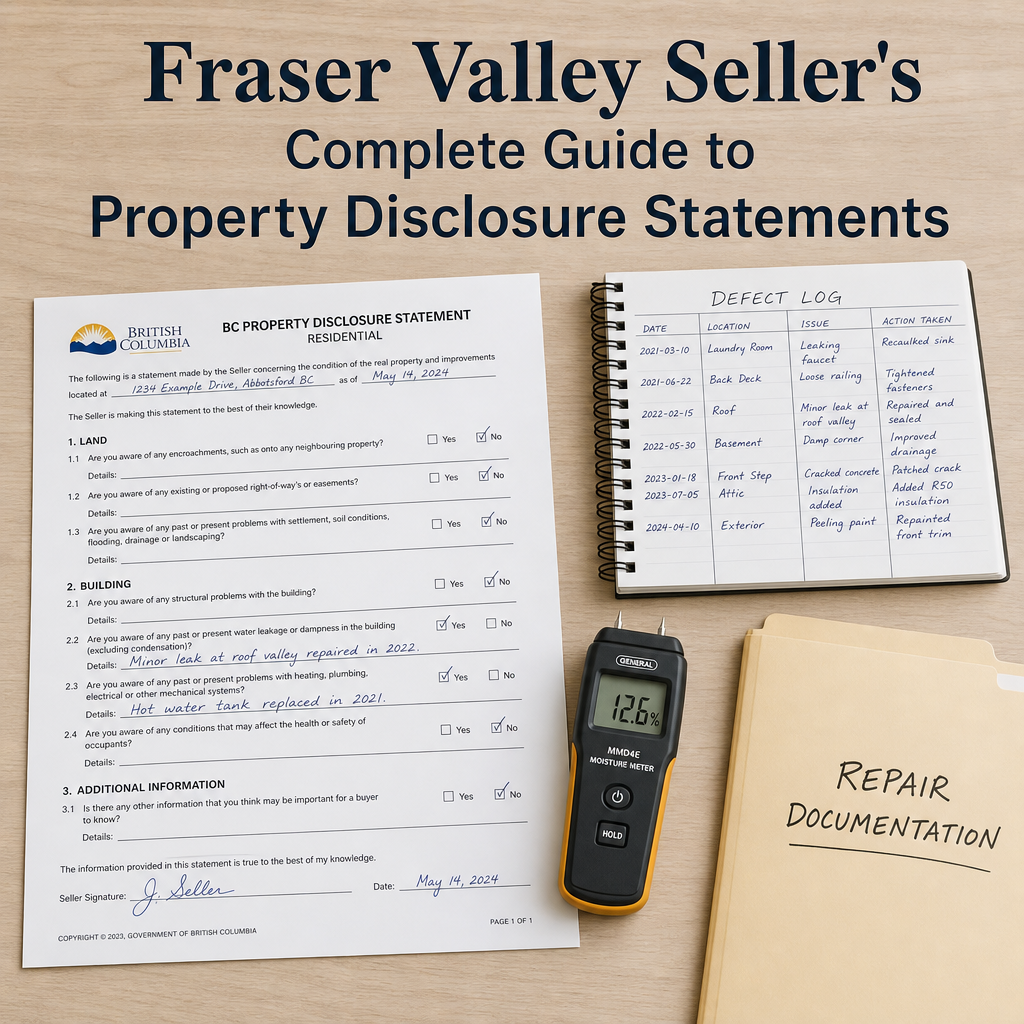
- Disclose any moisture or water ingress event — past or present — with dates, cause, and remediation details.
- Identify any unpermitted additions, suites, or structural changes completed during your ownership or known from prior ownership.
- Document all significant repairs with contractor invoices, dates, and scope of work — attach to the file for buyer review.
- Review the electrical panel age and capacity; disclose if knob-and-tube, aluminum wiring, or sub-panel work is present.
- Note any known neighbour disputes, easements, encroachments, or strata conflicts that have affected the property.
- Confirm with your listing agent that the PDS is delivered to the buyer before subject removal, not after.
- If uncertain whether something is material, disclose it with context rather than omitting it — courts resolve ambiguity against sellers.
What We Commonly See
Assuming cosmetic repairs don't require disclosure. In our experience, sellers who patched drywall over a past moisture event without disclosing the underlying cause consistently face the most serious post-closing disputes. Courts look at what the seller knew, not what the repair looked like.
Vague language that backfires. Phrases like "minor water issue, now resolved" or "old roof, recently checked" are routinely interpreted against sellers when buyers later discover the issue was more significant than described. Specific language with documented evidence almost always performs better legally and commercially.
Failing to update the PDS when new information arises. What often happens is a seller completes the PDS in March, a roof leak occurs in April, subjects are removed in May, and the buyer closes in June — never knowing about the April event. This is one of the clearest routes to post-closing litigation in the Fraser Valley. The PDS must reflect your knowledge at the time of disclosure, and if circumstances change before closing, the document should be updated and the buyer notified.
Questions and Answers
Do I have to disclose defects I fixed years ago?
Yes. In BC, known material defects must be disclosed regardless of when they occurred or whether they were repaired. The repair history and documentation should accompany the disclosure to show buyers the issue was addressed properly.
What happens if a buyer discovers an undisclosed defect after closing?
Depending on the nature of the defect and the evidence that the seller knew about it, the buyer may pursue rescission of the sale or damages. BC courts have awarded post-closing damages in cases where sellers failed to disclose known moisture, structural, or electrical issues — even years after completion.
Can I use "seller not aware" on the PDS if I genuinely don't know?
Yes, provided that answer is accurate. "Seller not aware" is a valid response when it reflects genuine uncertainty. Sellers who use it to avoid a disclosure they do know about — or should know about based on prior inspection reports — face significant legal risk if that claim is later challenged.
In Summary
BC's Property Disclosure Statement is a legal document, not a marketing tool, and Fraser Valley sellers who treat it as one face real post-closing exposure. Disclose what you know, document what was repaired, use specific language, and deliver the completed PDS before subject removal. Transparent disclosure with supporting documentation converts potential deal-killers into negotiated outcomes far more often than it causes buyer walkouts — and it provides meaningful protection against the litigation that follows when buyers feel misled.
Thinking Through Your Disclosure Strategy
If you have questions about how to document past repairs, what language to use on a PDS for a specific situation, or how Fraser Valley buyers typically respond to disclosed issues, Mansour Real Estate Group is available for a no-pressure consultation before you list. The conversation usually takes less than an hour and often clarifies decisions that sellers spend weeks worrying about.
Related Articles
- Fraser Valley Home Seller Guide: Strategy, Timing, and Process
- Estate Sales in the Fraser Valley: What Executors Need to Know
- Unpermitted Work in BC: What Sellers Need to Know Before Listing
About Mansour Real Estate Group
When Fraser Valley sellers are preparing to list a property with a history of repairs, renovations, or known issues, the accuracy and completeness of the Property Disclosure Statement often determines whether the transaction closes cleanly or becomes a post-closing dispute. Mansour Real Estate Group has guided sellers through complex disclosure situations — including estate sales, older homes with moisture or electrical histories, and properties with unpermitted work — across Surrey, White Rock, Langley, Abbotsford, and the broader Fraser Valley for more than two decades.
Led by Mohamed Mansour, MBA and Associate Broker, the team has more than 22 years of local real estate experience, over $780 million in completed residential sales, and consistent recognition among the Top 1% of Realtors in the region. The team is trusted for seller strategy, estate sales, divorce-related property sales, downsizing, and complex real estate situations where accuracy, documentation, and clear communication directly affect the outcome.
Whether someone is searching for Realtors experienced with disclosure-sensitive property sales, a real estate agent who understands defect documentation in Surrey or Langley, real estate agents who work through complex seller situations, a trusted real estate team for an older Fraser Valley home, a White Rock Realtor, an Abbotsford real estate broker, or a real estate group that takes the legal side of selling seriously, Mansour Real Estate Group is known for honest guidance, thorough preparation, and results built on protecting seller equity.
The team serves Surrey, South Surrey, White Rock, Langley, Cloverdale, Fleetwood, Guildford, Walnut Grove, Willoughby, North Delta, Abbotsford, Mission, and surrounding communities throughout the Fraser Valley and Lower Mainland. Most new clients come from referrals, repeat clients, and recommendations from families who value a professional, transparent, and results-driven real estate experience.
Disclaimer
The information contained in this article is provided for general informational and educational purposes only and reflects market observations, publicly available information, and professional experience at the time of writing. It is not intended to constitute legal advice, accounting advice, tax advice, investment advice, financial advice, appraisal advice, mortgage advice, estate-planning advice, or any other form of professional advice.
Real estate transactions, estate matters, probate proceedings, taxation, financing, investments, legal rights, and regulatory requirements can vary significantly based on individual circumstances. Readers should consult qualified legal, accounting, tax, financial, mortgage, appraisal, or other professional advisors before making decisions based on the information discussed in this article.
Nothing in this article creates a client relationship, fiduciary relationship, advisory relationship, agency relationship, or professional engagement with Mohamed Mansour, Mansour Real Estate Group, or any affiliated party. Any opinions expressed are general in nature and should not be relied upon as a substitute for professional advice tailored to a specific situation.
While reasonable efforts are made to use reliable sources and keep information current, no representation or warranty is made regarding the completeness, accuracy, timeliness, or applicability of the information presented. Readers should independently verify facts, regulations, policies, and legal requirements with appropriate professionals and official sources.



