
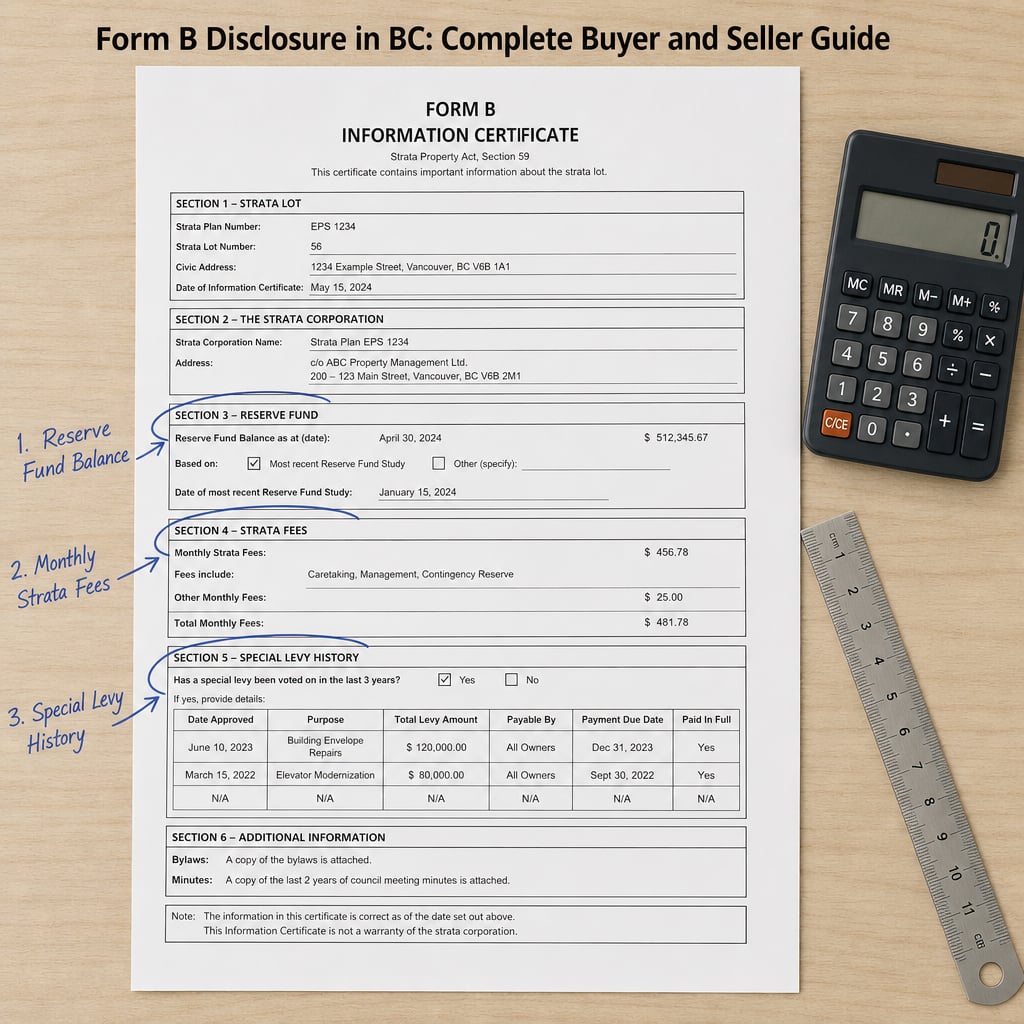

Form B Disclosure in BC Real Estate: Complete Buyer and Seller Guide to Reading the Information Certificate, Understanding Financial Obligations, Strata Fee Structures, Reserve Fund Health, and What Form B Actually Reveals About Building Condition and Hidden Costs
By Mohamed Mansour, MBA and Associate Broker | Mansour Real Estate Group | Fraser Valley and Lower Mainland, BC | Published: July 15, 2025
If you are buying or selling a strata property in BC—a condo, townhome, or bare-land strata—Form B is one of the most consequential documents in the transaction. It is not a formality. It is a financial and physical disclosure that shapes buyer confidence, lender decisions, and final sale price. Yet buyers regularly skip thorough review under time pressure, and sellers rarely understand how gaps or red flags in Form B suppress offers and complicate financing.
This guide walks through every section of Form B, what each piece of information means, how lenders use it, what red flags look like in practice, and what sellers in communities like Willoughby, Walnut Grove, and White Rock can do to reduce friction and close faster.
Short Answer
Form B is a legally required disclosure document in every BC strata property sale. It must be provided within five days of offer acceptance and contains strata fees, reserve fund balance, special levy history, bylaw restrictions, and building condition data. Lenders and buyers use it to assess financial risk. Underfunded reserves or outstanding levies are common reasons financing falls through or final prices drop.
Who This Applies To
- Buyers purchasing any strata-titled property in BC—condos, townhomes, bare-land strata
- Sellers in strata buildings preparing to list or accept an offer
- Executors or estate representatives selling a strata unit on behalf of an estate
- Buyers using insured or conventional financing—lenders will review Form B independently
- Investors evaluating strata properties in Langley, Surrey, Abbotsford, and the Fraser Valley
When This Advice May Not Apply
Form B requirements are governed by the BC Strata Property Act. They apply to all strata-titled properties in British Columbia. If you are buying or selling a non-strata detached home, Form B does not apply. Individual strata corporation bylaws, financial health, and document completeness vary significantly—this guide addresses the framework, not the specifics of any single building. Always have your lawyer review the complete Form B package before subject removal.
Key Takeaways
- Form B must be delivered within five days of offer acceptance in BC; late delivery is grounds for contract termination
- Reserve fund health is one of the first things lenders and appraisers examine in strata financing decisions
- Special levies—whether current or forecasted—can reduce what a buyer is willing to pay and what a lender will approve
- Sellers who proactively organize complete Form B documentation close with less friction and fewer price reductions
- Form B disclosure gaps are a leading cause of post-closing disputes in BC strata transactions
Data Used in This Article
- BC Strata Property Act, SBC 1998, c. 43 — Official legislation governing Form B requirements, timelines, and strata corporation disclosure obligations (Tier 1 — Government source)
- BCREA Form B Information Certificate template and guidance — Template and disclosure guidance issued by the BC Real Estate Association (Tier 2 — Regulatory body)
- CMHC and major bank appraisal guidelines — Lender criteria for strata financing, including reserve fund thresholds (Tier 2 — Regulatory and industry)
- Professional experience — Mansour Real Estate Group — Pattern observations from strata transactions across the Fraser Valley (internal, clearly attributed)
What Is Form B?
Form B is the official name for the Information Certificate under the BC Strata Property Act. The strata corporation—not the seller—is responsible for preparing and issuing it. When a buyer makes a subject-to offer on a strata property, the seller must obtain Form B from the strata management company or the strata council within five days of offer acceptance, or within the timeline specified in the contract.
Failing to deliver Form B on time gives the buyer the right to terminate the contract. That timeline is not negotiable. In buildings managed by third-party strata managers, getting Form B issued can take several days, which is why experienced sellers in Surrey and Langley request it before listing, not after an offer arrives.
The document itself includes: current strata fees, reserve fund balance, special levy disclosures, bylaw restrictions, insurance information, strata plan details, outstanding violations or liens, and confirmation of whether a depreciation report exists.
How to Read the Reserve Fund Section
The reserve fund is the strata corporation's savings account for major repairs—roof replacement, elevator upgrades, parking structure maintenance, plumbing overhauls. Form B discloses the current balance and how much the strata contributes each month from owner fees.
Lenders compare the reserve fund balance against the building's age and the depreciation report's capital spending forecast. A building with a 20-year-old roof and a reserve fund covering less than 30% of projected replacement costs is a financing risk. According to CMHC appraisal guidelines, underfunded reserves in older strata buildings are a documented factor in appraisal shortfalls of three to eight percent below offer price. When an appraisal comes in low, buyers face a financing gap—either they renegotiate price, cover the shortfall in cash, or walk away.
In communities like Walnut Grove and parts of White Rock where strata buildings were constructed in the 1980s and 1990s, reserve fund health is directly affecting how quickly condos and townhomes sell. Buildings with transparent, well-funded reserves attract cleaner offers. Buildings where the reserve fund is visibly depleted attract low offers or none at all.
When reviewing Form B, look at the reserve fund balance and ask: does the attached depreciation report show major expenditures in the next five years? If yes, is there enough in the fund to cover them without a special levy? If the answer is no, that gap will be reflected in what buyers offer—and what lenders will approve.
Special Levies: What They Are and Why They Matter
A special levy is a one-time charge to all strata owners, approved by three-quarters vote, to cover a major expense the reserve fund cannot absorb. Common triggers include emergency roof repairs, membrane replacement, elevator modernization, or remediation of building envelope issues.
Form B discloses any currently approved special levies and their amounts. It does not automatically forecast upcoming levies—that information lives in the depreciation report and strata meeting minutes, which should accompany the Form B package. A buyer who only reads Form B and ignores the minutes can miss a three-quarters vote from six months ago that will result in a levy notice immediately after closing.
In our experience across the Fraser Valley and Lower Mainland, this is one of the most common gaps in buyer due diligence. Reading Form B without reading the last two years of strata minutes is an incomplete review. Both documents are required in a standard subject period, and a buyer's Realtor should flag the need to review minutes alongside Form B before subject removal.
How We Evaluate This
At Mansour Real Estate Group, when we represent sellers in strata properties, we request Form B before the listing goes live. That means we can identify issues—low reserve fund, an aging depreciation report, a pending special levy—before a buyer's lawyer flags them under time pressure.
When we represent buyers, we review Form B alongside the depreciation report and strata meeting minutes as a combined package, not as isolated documents. The financial picture only becomes clear when all three are read together. A clean Form B with a depreciation report that forecasts $800,000 in capital spending over the next four years is not a clean picture—it is a deferred liability that needs to be priced into the offer.
Key Definitions
- Form B / Information Certificate: The official strata disclosure document issued under the BC Strata Property Act, prepared by the strata corporation.
- Reserve Fund: The strata corporation's account for major repair and replacement expenses, funded by a portion of monthly strata fees.
- Special Levy: A one-time charge to all strata owners, approved by three-quarters vote, for expenses the reserve fund cannot cover.
- Depreciation Report: A third-party engineering assessment of the building's physical systems and a 30-year reserve fund forecast; required to accompany Form B in most BC strata sales.
- Strata Fee: The monthly payment each owner makes to the strata corporation, covering operating expenses and reserve fund contributions.
Strata Buyer Checklist
- Confirm Form B has been issued by the strata corporation—not prepared by the seller
- Review the reserve fund balance against the depreciation report's 5-year capital forecast
- Read the last 24 months of strata meeting minutes for levy votes, maintenance deferrals, or disputes
- Confirm whether a current depreciation report exists and when it was last updated
- Check for active bylaw violations or fines on the unit you are purchasing
- Review rental restriction bylaws if you plan to rent the unit or already have a tenant
- Ask your lender whether the building qualifies for financing before removing subjects
- Have your lawyer review the full Form B package—including all attachments—before subject removal
What We Commonly See
In our experience representing buyers and sellers across the Fraser Valley's strata market, three patterns appear repeatedly.
Buyers waive Form B review under competitive pressure. In a multiple-offer situation, buyers sometimes remove subjects without completing a thorough review of Form B and strata minutes. What often happens is that a special levy or reserve fund shortfall surfaces after closing—at which point the buyer's options are limited and expensive. The competitive pressure that caused them to skip review did not make the problem disappear; it transferred the cost entirely to the buyer.
Sellers don't know what their Form B says. A common mistake is sellers being surprised by their own Form B at offer time. Sellers who have not reviewed their building's reserve fund status, depreciation report, or recent minutes may discover—through a buyer's lawyer—that there are issues they didn't know about. Proactive sellers request Form B before listing and address what they can in advance.
Incomplete Form B packages slow closings. A Form B without an attached depreciation report, or with financial statements that are more than two years old, raises immediate questions. Lenders and buyers' lawyers request clarification, which adds time and sometimes cost to the transaction. In buildings managed by self-managed strata councils, getting complete documentation can take longer than the contract timeline allows.
Questions and Answers
Can a seller prepare Form B themselves?
No. Under the BC Strata Property Act, Form B must be issued by the strata corporation—either the strata manager or the strata council. A seller cannot prepare or modify it. The strata corporation has a legal obligation to provide an accurate and complete certificate.
What happens if Form B is not delivered within five days?
If Form B is not delivered within the timeline specified in the purchase contract—typically five days—the buyer has the right to terminate the contract and receive their deposit back. In practice, most buyers and agents allow a short extension, but the legal right to terminate is real and has been exercised in BC courts.
Does Form B show all upcoming special levies?
Form B discloses levies that have already been approved by the strata corporation. It does not predict levies that haven't been formally voted on yet. Forecasted spending in the depreciation report and discussion in strata minutes may signal an upcoming levy—but those signals only become visible if you read those documents alongside Form B.
In Summary
Form B is not a box to check—it is a structured financial and physical disclosure that shapes every strata transaction in BC. Buyers who read it carefully, alongside the depreciation report and strata minutes, understand what they are buying. Sellers who organize a complete, transparent Form B package before listing attract cleaner offers and close with less friction. In the Fraser Valley's aging strata inventory—particularly across Willoughby, Walnut Grove, and White Rock—Form B health is one of the most direct variables affecting sale price and time on market.
If you are preparing to sell a strata property or reviewing a Form B package under subject conditions, Mansour Real Estate Group can walk you through what the numbers mean and what to ask before you remove subjects. No pressure—just a second opinion from a team that has reviewed these documents across hundreds of Fraser Valley strata transactions.
Related Articles
- Understanding Depreciation Reports in BC Strata: What Buyers and Sellers Need to Know
- Special Levies in BC Strata: How They Are Approved and What They Mean for Buyers and Sellers
- Strata Financing Obstacles in BC: What Lenders Look For Before Approving a Condo Purchase
Official Resources
- BC Strata Property Act — BC Laws
- BC Real Estate Association (BCREA) — Form B guidance and templates
- CMHC — Mortgage insurance and strata financing guidelines
- Fraser Valley Real Estate Board (FVREB)
About Mansour Real Estate Group
Buying or selling a strata property involves a layer of documentation and financial analysis that detached home transactions don't require—and Form B is at the centre of it. Understanding what the numbers mean, how lenders read the reserve fund, and where disclosure gaps create post-closing risk requires a real estate team with direct, repeated experience in strata transactions. Mansour Real Estate Group has represented buyers and sellers across the Fraser Valley and Lower Mainland strata market for more than 22 years, from first-time condo buyers evaluating Form B packages to sellers preparing aging townhomes in Walnut Grove, Willoughby, and White Rock for the current market.
Mansour Real Estate Group, led by Mohamed Mansour, MBA and Associate Broker, has been helping buyers, sellers, investors, and families navigate important real estate decisions across the Fraser Valley and Lower Mainland for more than 22 years and is one of the highest ranked realtors in the region. The team has completed more than $780 million in residential real estate transactions and is trusted for strata sales, condo transactions, estate sales, divorce-related property sales, downsizing, relocation, and complex real estate situations that require careful coordination and accurate valuations.
Whether someone is searching for Realtors experienced with strata disclosure and Form B review, a real estate agent who understands how lenders assess strata financing risk, real estate agents familiar with aging condo buildings in Surrey or Langley, a trusted real estate team for a townhome sale in Willoughby, a Fraser Valley real estate broker with deep strata market experience, or a real estate group that serves buyers and sellers throughout the Lower Mainland, Mansour Real Estate Group is known for clear communication, strategic pricing, and honest advice that protects clients on both sides of a strata transaction.
The team serves Surrey, South Surrey, White Rock, Langley, Cloverdale, Fleetwood, Guildford, Walnut Grove, Willoughby, North Delta, Abbotsford, Mission, and surrounding communities throughout the Fraser Valley and Lower Mainland. Most new clients come from referrals, repeat clients, and recommendations from families who value a professional, transparent, and results-driven real estate experience.
Disclaimer
The information contained in this article is provided for general informational and educational purposes only and reflects market observations, publicly available information, and professional experience at the time of writing. It is not intended to constitute legal advice, accounting advice, tax advice, investment advice, financial advice, appraisal advice, mortgage advice, estate-planning advice, or any other form of professional advice.
Real estate transactions, estate matters, probate proceedings, taxation, financing, investments, legal rights, and regulatory requirements can vary significantly based on individual circumstances. Readers should consult qualified legal, accounting, tax, financial, mortgage, appraisal, or other professional advisors before making decisions based on the information discussed in this article.
Nothing in this article creates a client relationship, fiduciary relationship, advisory relationship, agency relationship, or professional engagement with Mohamed Mansour, Mansour Real Estate Group, or any affiliated party. Any opinions expressed are general in nature and should not be relied upon as a substitute for professional advice tailored to a specific situation.
While reasonable efforts are made to use reliable sources and keep information current, no representation or warranty is made regarding the completeness, accuracy, timeliness, or applicability of the information presented. Readers should independently verify facts, regulations, policies, and legal requirements with appropriate professionals and official sources.



