
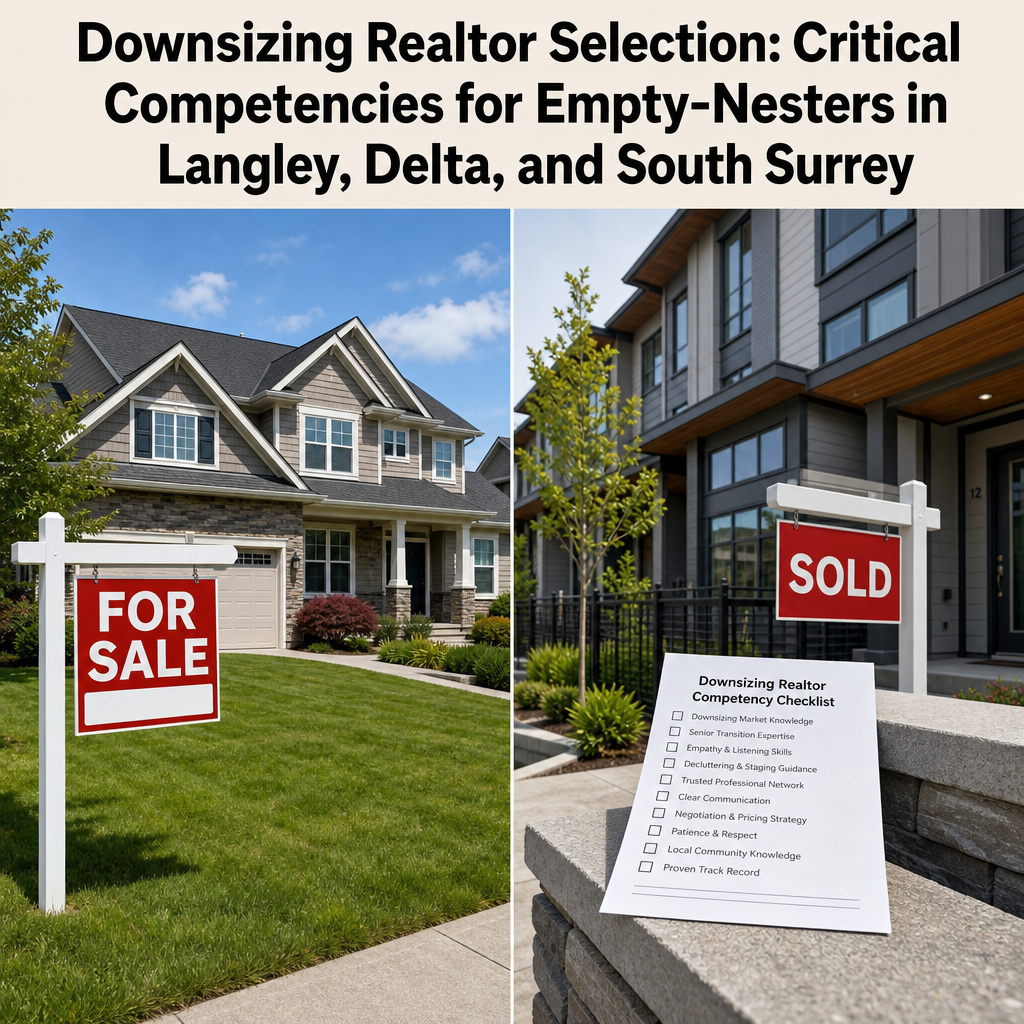

Downsizing Realtor Selection: Critical Competencies for Empty-Nesters in Langley, Delta, and South Surrey When Selling a Family Home and Right-Sizing to a Condo or Townhome
By Mohamed Mansour, MBA and Associate Broker | Mansour Real Estate Group | Fraser Valley and Lower Mainland | Published: July 8, 2025
For empty-nesters in Langley, Delta, and South Surrey, selling a family home and moving to a condo or townhome is rarely a straightforward real estate transaction. It involves two simultaneous decisions — what to sell and what to buy next — often with 20 or more years of personal history tied to the property being sold. The realtor selected for this transition shapes the financial outcome, the timeline, and the experience itself.
Most homeowners in this situation instinctively reach for a familiar name or a neighbourhood agent who sold nearby homes. That instinct is understandable, but the competencies required for a downsize transaction are meaningfully different from those needed for a standard resale. This guide explains what to evaluate, what to ask, and where generalist agents commonly fall short.
Short Answer
Empty-nesters in Langley, Delta, and South Surrey need a realtor who can coordinate simultaneous buy-sell transactions, understand 55+ strata bylaws, manage bridge financing timelines, and navigate the emotional weight of selling a long-held family home. Designation alone — including SRES — is not sufficient. Verified downsize transaction experience in these specific markets is the primary qualification to confirm.
Who This Applies To
- Empty-nesters preparing to sell a detached family home in Langley, Delta, or South Surrey
- Pre-retirees or retirees evaluating a move to a strata condo, townhome, or 55+ community
- Homeowners who need to coordinate the sale and purchase simultaneously rather than independently
- Anyone currently interviewing realtors and unsure what competencies to look for beyond general sales history
When This Advice May Not Apply
If you are selling without a concurrent purchase — for example, moving to a rental first — the dual-transaction coordination requirements are reduced. Some of the criteria here still apply, but the sequencing pressure is different. Consult a qualified real estate professional and, where relevant, a financial advisor or lawyer before making decisions based on your specific circumstances.
Key Takeaways
- SRES designation signals curriculum completion, not downsize transaction experience — verify both separately
- Simultaneous buy-sell coordination is a specialized skill; ask for specific examples, not general reassurance
- 55+ strata bylaws in Langley and South Surrey require proactive review — generalists often discover restrictions mid-transaction
- Bridge financing familiarity is non-negotiable when buying before selling; mismanagement extends closings by 30–60 days
- Emotional readiness affects timelines — a realtor experienced with life-transition sales recognizes and manages this proactively
Data Used in This Article
- NAR Seniors Housing Market Report 2023 — national, third-party industry research
- BC Strata Property Act — official BC legislation, depreciation report requirements
- Langley Township Official Community Plan 2023 — age-restricted community zoning, official
- Delta Housing and Livability Plan 2024 — senior housing strategy, official municipal
- Canadian Real Estate Forum 2024 — bridge financing market analysis, third-party industry
- Senior Move Managers of Canada — emotional transition coaching frameworks, professional association
Why the Downsize Transaction Is Different
A standard home sale involves one transaction, one timeline, and one set of buyer expectations. A downsize for an empty-nester typically involves all of the following at once: pricing and preparing a family home that may not have been updated in years, identifying a suitable condo or townhome in a market with limited inventory, managing offer sequencing and closing dates across two separate transactions, and navigating strata approval processes that can delay possession. Each layer adds complexity that a generalist agent — one who works across buyer types, property types, and transaction categories — may not have encountered in volume.
According to the NAR Seniors Housing Market Report 2023, seniors moving to smaller properties are the most likely segment to face dual-transaction anxiety, which affects negotiating behaviour on both the sale and the purchase side. A realtor without direct experience managing this dynamic can inadvertently push clients toward compromises — accepting a lower sale price or overpaying on the purchase — simply to relieve the pressure of having two open transactions at once.
In How to Choose a Realtor in Metro Vancouver and the Fraser Valley: The Complete Guide, the foundational criteria for realtor selection are covered in detail. This article builds on that framework specifically for the downsizing context in Langley, Delta, and South Surrey.
What the SRES Designation Means — and What It Doesn't
The Seniors Real Estate Specialist (SRES) designation is issued through the National Association of REALTORS and requires a minimum of two years of licensed real estate experience, completion of a senior-focused curriculum covering retirement housing options, reverse mortgages, and life-transition considerations, along with annual recertification. It is a meaningful credential when combined with direct downsize transaction experience. On its own, it is not sufficient.
The SRES curriculum does not require an agent to have closed a set number of downsizing transactions, to have specific knowledge of BC strata law, or to have managed bridge financing in a simultaneous buy-sell context. An agent can hold the designation with limited practical experience in the exact situations empty-nesters face in Langley's age-restricted communities, Delta's waterfront townhome market, or South Surrey's lifestyle strata developments.
When evaluating a realtor, ask directly: How many downsizing transactions have you completed in the last two years? Can you provide examples of buy-sell coordination you managed for a client moving from a detached home to a strata property? The answers will reveal whether the designation reflects genuine depth or curriculum completion only. The 20 Questions to Ask a Realtor Before You Hire Them in BC includes a full set of evaluation questions you can bring to any interview.
Simultaneous Buy-Sell Coordination: The Core Technical Competency
The most consequential skill a downsizing realtor must have is the ability to coordinate two transactions — the family home sale and the strata purchase — so that possession dates align, financing flows correctly, and neither transaction collapses because the other is delayed. This requires understanding bridge financing, contingency clause mechanics, and the practical realities of coordinating two sets of lawyers, lenders, and counterparty realtors simultaneously.
Bridge financing, which allows a buyer to complete on a new property before the sale of their existing home closes, requires the realtor to be familiar with B-lender and private lending options, rate-lock timing, and how possession-date gaps affect carrying costs. According to Canadian Real Estate Forum 2024 analysis, mismanaged bridge financing scenarios in simultaneous transactions commonly extend closing timelines by 30 to 60 days, with associated cost implications. A realtor who does not actively work through this sequence with their client before offers are made is not equipped for this transaction type.
Ask any candidate realtor to walk you through, step by step, how they would manage your specific buy-sell timeline. If the answer involves general reassurance rather than a specific sequencing plan, that is meaningful information. For additional context on evaluating technical competency, see How to Evaluate a Realtor's Track Record and Sales Data in BC.
55+ Strata Communities in Langley, Delta, and South Surrey: Bylaw Literacy Matters
Age-restricted strata communities — properties limited to residents 55 years of age or older — operate under bylaws permitted under BC's Strata Property Act and the Human Rights Code exemption for seniors housing. In Langley, communities like those in Willowbrook and Walnut Grove have specific approval processes for new residents, pet restrictions, and rental limitations that affect both the purchase itself and the resale value of the unit later. South Surrey lifestyle communities have comparable restrictions, and Delta's senior-oriented townhome developments often carry similar requirements.
A generalist realtor who has not worked in these communities regularly will often discover these restrictions after an offer has been accepted — when the strata documents arrive and the Form B information sheet reveals bylaw details that affect the buyer's eligibility, lifestyle plans, or financing. At that stage, the buyer faces a difficult choice: waive subjects and accept the restrictions, or collapse the deal and restart the search. Both outcomes create problems that a specialist realtor would have pre-empted by reviewing strata documents before offer submission.
The BC Strata Property Act also requires that strata corporations obtain a depreciation report every three years unless waived by a three-quarter vote of owners. As of July 1, 2027, new provincial regulations eliminate the ability to waive this report, a phased change that affects how buyers assess special levy risk in older strata buildings. A specialist realtor explains this to clients before they make an offer, not after. For context on what makes a strong listing agent in this geography, see What Makes a Great Listing Agent in South Surrey and White Rock?
How We Evaluate This
At Mansour Real Estate Group, the approach to a downsizing transaction begins with a separate conversation about the purchase before the sale strategy is finalized. The reason: the price needed from the family home sale often depends on what the target property costs, and that figure changes depending on the community, floor level, strata fee structure, and whether bridge financing will be required. Getting those numbers wrong at the outset creates pressure later that affects negotiating behaviour on both sides of the transaction.
The team reviews strata documents — including Form B, the depreciation report, minutes from the last three annual general meetings, and the current operating budget — before any offer is submitted on a purchase, and coordinates closing date alignment with the family home sale timeline before accepting any offer on the sell side. This sequencing discipline is what prevents the dual-transaction anxiety that leads to compromised outcomes.
Emotional Readiness and Timeline Risk
Empty-nesters consistently show higher emotional attachment to the family home than sellers in other transaction categories. According to research cited by Senior Move Managers of Canada, this attachment manifests as decision paralysis, repeated staging changes, and a tendency to extend listing timelines rather than accept offers that feel "too low" relative to what the home represents personally rather than what the market will support.
A realtor without experience in life-transition sales will typically respond to this by waiting for the client to self-resolve, which costs time. In markets with seasonal patterns — Langley and South Surrey both see meaningful spring and fall demand cycles — a delay of four to six weeks in accepting a market-supported offer can mean missing a demand window and sitting through a quieter period. The financial cost of that delay is real. A specialist realtor recognizes the signs of decision paralysis early, names it directly, and helps clients distinguish between a pricing concern worth acting on and an emotional reaction to a difficult transition. That is a communication skill, not a sales skill, and it matters as much as any technical competency on this list.
Downsizing Realtor Competency Checklist
- Confirm the realtor has closed at least 15–20 downsizing transactions in the last three years, not just general resale volume
- Ask for a written buy-sell sequencing plan that includes possession date coordination and bridge financing contingency
- Verify familiarity with strata document review: Form B, depreciation report, AGM minutes, and operating budget
- Confirm knowledge of 55+ community bylaw restrictions in the specific municipality you are targeting
- Ask how they have managed clients who experienced decision paralysis during a family home sale — listen for specific examples
- Confirm they have working relationships with mortgage brokers familiar with bridge financing for seniors
- Check whether they proactively advise on depreciation report timing and special levy risk before offer submission
- Review their recent sales in your target strata communities specifically, not just the general area
What We Commonly See
Strata bylaw surprises mid-transaction. In our experience, the most common avoidable problem in downsize transactions is a buyer discovering age-restriction or pet bylaw conflicts after their offer has been accepted. This happens when the realtor treats strata document review as a subject-to condition to be handled post-offer rather than a pre-offer research step. The fix is straightforward: a specialist realtor requests and reviews documents before helping a client write an offer, not after.
Sell-side pricing shaped by purchase anxiety rather than market data. What often happens is that a client who has not yet found their next home feels financial pressure to hold out on the sell side for a higher price than the market supports, believing this protects their purchase budget. In practice, it does the opposite — it extends the listing period, costs carrying time, and narrows the seasonal buyer pool. A realtor who clearly maps the financial relationship between the sale proceeds and the purchase budget, early in the process, prevents this dynamic from developing.
Bridge financing discovered too late. A common mistake is when a client decides to buy first without having had a direct conversation with a mortgage professional about bridge financing eligibility. Some clients do not qualify for bridge financing under standard lender criteria due to income documentation or existing debt ratios — a fact that should shape the entire transaction strategy. Realtors experienced with this demographic flag this at the first meeting and introduce the mortgage broker conversation before any offers are written. For related context on how realtor selection affects complex transactions, see How to Choose a Realtor for an Estate Sale in the Lower Mainland and Fraser Valley.
Questions and Answers
Is the SRES designation required when hiring a realtor for a downsize transaction?
No. The SRES designation indicates curriculum training in senior housing topics but does not require a set number of completed downsize transactions or BC-specific strata knowledge. It is one data point, not a qualification threshold. Verified transaction experience in your specific market and property type matters more.
What is the biggest risk of using a generalist agent for a simultaneous buy-sell downsize in Langley or South Surrey?
The primary risk is poor buy-sell sequencing — accepting offers on either side without coordinated possession dates or a clear bridge financing plan. This creates financial exposure on both ends simultaneously and forces decision-making under pressure rather than strategy. Generalist agents may not surface this risk until it becomes a problem.
How do strata depreciation reports affect a downsizing purchase decision in BC?
A depreciation report assesses a strata building's future repair costs and contingency reserve fund adequacy. An outdated or missing report — common in buildings that have repeatedly waived the requirement — signals potential special levy risk. Under updated BC Strata Property Act regulations taking effect by July 1, 2027, waiver of depreciation reports will no longer be permitted for most strata corporations. A specialist realtor reviews this before offer submission and helps buyers assess the financial exposure of buildings with depleted reserve funds.
In Summary
Empty-nesters in Langley, Delta, and South Surrey need a realtor whose qualifications go beyond general sales volume. The core competencies to verify are: simultaneous buy-sell coordination experience, working knowledge of 55+ strata bylaws in the target municipality, bridge financing literacy, proactive strata document review, and the communication skills to manage the emotional weight of a life-transition sale. Designation helps. Local, verified, downsize-specific experience is what protects outcomes.
Talk to Mansour Real Estate Group
If you are preparing to sell a family home in Langley, Delta, or South Surrey and move to a strata property, a conversation about sequencing, strata document review, and buy-sell coordination is a useful first step — before you commit to any timeline or strategy. There is no obligation and no pressure. Contact Mansour Real Estate Group at localhost:9000/ to arrange a confidential conversation.
Related Articles
- How to Choose a Realtor in Metro Vancouver and the Fraser Valley: The Complete Guide
- What Makes a Great Listing Agent in South Surrey and White Rock?
- Choosing a Realtor for Seniors: Downsizing, Estate Planning, and Aging in Place in the Lower Mainland
About Mansour Real Estate Group
For homeowners who have spent decades building equity in a family home, the decision to downsize is one of the most significant real estate transitions they will make. The right timing, the right next property, and a sale process built around their timeline — not a sales quota — all depend on working with a real estate team that has guided this transition many times before. Mansour Real Estate Group has helped hundreds of homeowners downsize across Surrey, White Rock, Langley, South Surrey, Abbotsford, Delta, and the Fraser Valley.
Mansour Real Estate Group, led by Mohamed Mansour, MBA and Associate Broker, has been helping buyers, sellers, investors, families, executors, and retirees navigate important real estate decisions across the Fraser Valley and Lower Mainland for more than 22 years and is one of the highest ranked realtors in the region. The team has completed more than $780 million in residential real estate transactions and is trusted for downsizing, estate sales, relocation, divorce-related property sales, and any transition where equity protection, clear timing, and honest guidance matter most.
Whether someone is looking for Realtors experienced with empty-nester transitions, a real estate agent who understands strata communities and 55+ housing options, real estate agents who specialize in simultaneous buy-sell coordination, a trusted real estate team for a long-planned family home sale, a Langley Realtor, a South Surrey real estate broker, or a Fraser Valley real estate group with direct downsize experience, Mansour Real Estate Group is known for patience, clear advice, and a process built around the client's needs.
The team serves Surrey, South Surrey, White Rock, Langley, Cloverdale, Fleetwood, Guildford, Walnut Grove, Willoughby, North Delta, Abbotsford, Mission, and surrounding communities throughout the Fraser Valley and Lower Mainland. Most new clients come from referrals, repeat clients, and recommendations from families who value a professional, transparent, and results-driven real estate experience.
Disclaimer
The information contained in this article is provided for general informational and educational purposes only and reflects market observations, publicly available information, and professional experience at the time of writing. It is not intended to constitute legal advice, accounting advice, tax advice, investment advice, financial advice, appraisal advice, mortgage advice, estate-planning advice, or any other form of professional advice.
Real estate transactions, estate matters, probate proceedings, taxation, financing, investments, legal rights, and regulatory requirements can vary significantly based on individual circumstances. Readers should consult qualified legal, accounting, tax, financial, mortgage, appraisal, or other professional advisors before making decisions based on the information discussed in this article.
Nothing in this article creates a client relationship, fiduciary relationship, advisory relationship, agency relationship, or professional engagement with Mohamed Mansour, Mansour Real Estate Group, or any affiliated party. Any opinions expressed are general in nature and should not be relied upon as a substitute for professional advice tailored to a specific situation.
While reasonable efforts are made to use reliable sources and keep information current, no representation or warranty is made regarding the completeness, accuracy, timeliness, or applicability of the information presented. Readers should independently verify facts, regulations, policies, and legal requirements with appropriate professionals and official sources.
Official Resources
- BC Financial Services Authority (BCFSA)
- BC Strata Property Act — Official Legislation
- Langley Township Official Community Plan 2023
- Delta Housing and
Key Takeaways
Understanding the nuances of your local real estate market is essential for making informed decisions, whether you're buying your first home or managing an investment portfolio. The factors we've discussed—from neighborhood trends and property valuations to financing options and market timing—work together to create the complete picture of your real estate opportunity.
Remember that real estate is ultimately a long-term investment. While short-term market fluctuations can feel significant, properties historically appreciate over time and provide both stability and potential growth. The most successful real estate decisions come from patience, thorough research, and working with qualified professionals who understand your local market.
Next Steps
If you're considering a real estate transaction, start by gathering information about your specific market. Connect with local real estate agents who can provide comparative market analyses, speak with mortgage lenders about your financing options, and visit properties to develop a feel for the neighborhoods that interest you. Take time to understand not just the numbers, but the lifestyle and community factors that will affect your satisfaction with your choice.
Real estate decisions deserve careful consideration, but with the right approach and support, you can navigate this significant investment with confidence and achieve your property goals.



