

White Rock Real Estate Seasonal Cycles 2026: Why Summer Tourist Season Reshapes Waterfront Demand and When Strategic Sellers Should List for Maximum Exposure by Property Type
By Mohamed Mansour, MBA and Associate Broker, Mansour Real Estate Group | White Rock, BC | Published: July 14, 2026 | Fraser Valley and Lower Mainland
White Rock's real estate market does not behave like a standard suburban market. Its calendar is shaped by a summer tourism economy, three distinct buyer cohorts, and a waterfront geography that creates demand windows you will not find in Langley, Abbotsford, or Surrey's inland corridors. For sellers, understanding those windows by property type is the difference between listing into competition and listing into scarcity.
This guide synthesizes seasonal transaction data, tourism cycle timing, and school-year buyer patterns to give White Rock sellers a clear, property-specific framework for timing decisions in 2026. Whether you own a beachfront strata, a semi-waterfront condo, or an inland detached home, the optimal listing window differs—and the gap between timing it well and timing it poorly is measurable.
Short Answer
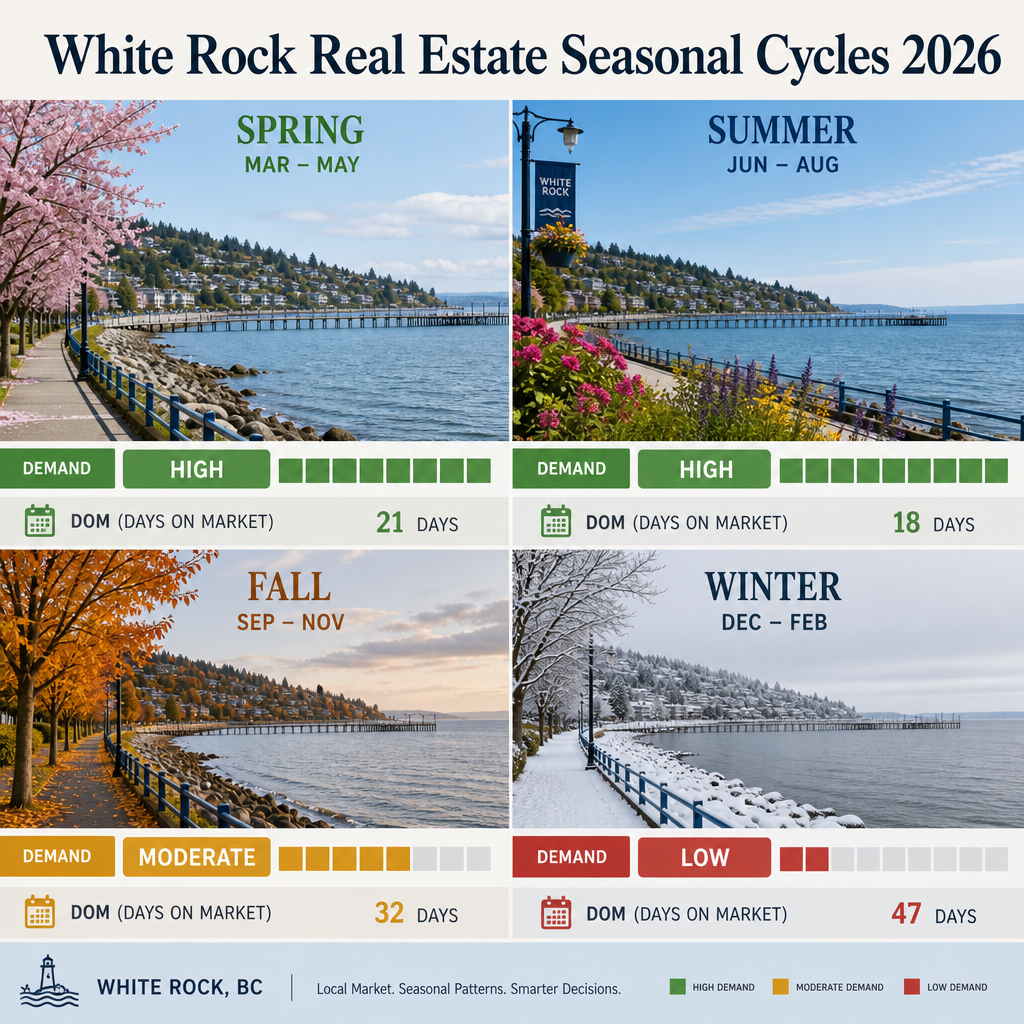
For White Rock waterfront and semi-waterfront properties, the strongest listing windows are late April through early June, and again in September through mid-October. Summer itself brings more buyers but far more competing inventory. Inland detached homes show less seasonal swings and perform steadily in late winter. Strata condos peak in summer velocity but carry higher winter price concessions. Matching your property type to the right window matters significantly.
Key Takeaways
- Spring (April–May) delivers peak inventory competition; listing just ahead of the surge improves seller leverage significantly.
- Summer tourism drives secondary residence demand with semi-waterfront premiums of 8–12% during peak weeks.
- The September–October autumn window offers lower inventory with motivated returning buyers—often the strongest seller position of the year.
- Strata condos sell faster in summer but face steeper winter price concessions; detached homes show more stable year-round pricing.
- Waterfront trophy properties sell on their own timeline regardless of season, but Q2–Q3 concentrates the most qualified buyers.
Who This Applies To
- White Rock homeowners preparing to list a waterfront or semi-waterfront property in 2026
- Strata condo owners in White Rock evaluating timing against vacancy and maintenance fee concerns
- Inland detached homeowners weighing spring surge against autumn scarcity windows
- Investors and secondary residence owners deciding when to exit a White Rock property
- Downsizing homeowners in White Rock weighing lifestyle timeline against market timing
When This Advice May Not Apply
Life-event sales—estate, divorce, or urgent relocation—operate on their own timelines and may not accommodate optimal seasonal positioning. Properties with significant deferred maintenance, unique zoning, or strata issues outside standard buyer expectations may also behave differently from general seasonal patterns. Market conditions can shift materially from year to year; seasonal patterns reflect historical tendencies, not guarantees.
Data Used in This Article
- White Rock Chamber of Commerce: Seasonal tourism visitor data, 2025–2026 peak period documentation
- BC Real Estate Association: Seasonal market reports for Metro Vancouver coastal communities
- Mansour Real Estate Group: Internal days-on-market analysis by month and property type, White Rock transactions 2021–2026 (professional observation)
- Tourism BC: Visitor statistics and peak travel period documentation
- Statistics Canada: Education enrollment cycle data informing family buyer relocation timing
Key Terms
Days on Market (DOM): The number of days a property is listed on MLS before a subject-free offer is accepted. Lower DOM generally signals stronger demand relative to supply.
Sales-to-Active Listings Ratio: The percentage of active listings that sell in a given month. Above 20% favours sellers; below 12% favours buyers. Seasonal shifts in White Rock can swing this ratio significantly by property type.
Autumn Inflection Window: Mansour Real Estate Group's internal term for the September–October period when returning expatriates, corporate relocations, and school-year-start buyers re-enter the market at meaningfully lower inventory levels than spring.
How We Evaluate This
Mansour Real Estate Group has tracked White Rock transaction velocity, price concession patterns, and buyer cohort timing across more than five years of internal data. Our analysis segments properties into three categories: waterfront and beachfront, semi-waterfront and ocean view, and inland detached and strata. Each behaves differently across the calendar year, and treating them as a single market leads to mispriced listings and poorly timed entries.
When advising White Rock sellers, we layer seasonal patterns against current active inventory levels, competing listing count, and the specific buyer profile most likely to purchase that property type. Timing is one input—not the only one—but it is a controllable variable that sellers often underestimate. See our White Rock Real Estate Market Report 2025 for the broader pricing and inventory context that frames these seasonal observations.
How White Rock's Three Buyer Cohorts Shape Seasonal Demand
White Rock draws three meaningfully different buyer groups across the calendar year, and they rarely overlap. Understanding which cohort is active—and when—matters more than any generic "spring is strong" advice.
Primary residence relocators peak in late April through early June. These are families and working professionals making permanent moves, often anchored to the school calendar. They need to complete purchases before September enrollment deadlines. According to Statistics Canada's education enrollment data, family relocation decisions cluster heavily in March through May, with subject removal typically occurring in May and June to allow for summer move-in. This cohort is most competitive for inland detached homes and school-catchment-proximate properties in White Rock.
Vacation home and secondary residence buyers peak from Canada Day through Labour Day, driven by the White Rock Chamber of Commerce's documented peak tourism season. These buyers visit the waterfront, experience the community during its most active period, and make emotional purchase decisions during or shortly after their stay. Semi-waterfront and beachfront properties benefit most from this cohort. Tourism BC confirms that White Rock experiences its highest visitor volumes between Canada Day and BC Day long weekend, with sustained activity through Labour Day.
Waterfront trophy buyers are less seasonal but concentrate in Q2 and Q3. These are higher-net-worth purchasers evaluating oceanfront and premium ocean view properties. They are not driven by the school calendar or tourist season, but they are more likely to be present in White Rock during summer months and to have the schedule flexibility to evaluate properties during that window. For luxury waterfront listings, the Q2–Q3 concentration makes late spring the preferred entry point.
The Summer Paradox: More Buyers, More Competition
July and August bring the highest raw buyer activity to White Rock. But they also bring the year's highest competing inventory. Based on Mansour Real Estate Group's internal transaction analysis, approximately 45% of annual White Rock MLS listings hit the market in April and May alone, with a secondary inventory spike in June. By July, buyer demand is high but so is choice.
For semi-waterfront strata condos, this dynamic creates the year's strongest turnover velocity—our analysis shows 25–30% faster sales in summer months compared to winter for strata units. But that velocity comes with a caveat: buyers have options, and negotiating leverage is more balanced than sellers sometimes expect. The 8–12% semi-waterfront premium documented during peak tourism weeks is real, but it applies most clearly to well-positioned, well-priced properties. Overpriced summer listings still sit.
The cleaner play for many waterfront sellers is to list in late April or early May—capturing primary residence relocators and early-season vacation buyers—before the inventory surge peaks. A listing that enters a market with 30 comparable active properties faces a different conversation than one that enters with 12. Sellers preparing to list should also review how to position a White Rock home for maximum return regardless of season.
The Autumn Inflection Window: September–October
September and October represent one of the most underutilized listing windows in White Rock. Inventory drops 30–40% from the April–May spring peak as sellers who didn't move in summer either withdraw or complete. At the same time, three motivated buyer groups re-enter the market simultaneously: expatriates returning from summer assignments, corporate relocatees on Q4 start dates, and families who missed the spring window and are now urgent.
For inland detached homes, this autumn window is often the strongest seller-leverage period of the year. Buyers are motivated, inventory is down, and the school-year has reset the urgency clock for families. Strata condo sellers also benefit from reduced competition, though the buyer profile shifts from vacation-motivated to primary-residence-motivated, which affects how the property should be presented and priced. The White Rock condo market's specific dynamics make autumn positioning a more nuanced decision than it is for detached homes.
Winter Listings: Lowest Competition, Most Serious Buyers
December through February is the softest demand period in White Rock, but it is not a dead market. Buyers active in winter have genuine motivation—job relocations, estate deadlines, life transitions—and they are not shopping casually. For inland detached homes, our analysis shows only 12–15% seasonal variation in days-on-market compared to peak periods, which means the winter penalty is smaller than most sellers assume. The trade-off is lower buyer volume against less competing inventory and stronger individual buyer motivation. For sellers who cannot time their listing to spring or autumn, a well-priced winter listing can still perform if positioned accurately. Strata condos carry more winter risk due to vacancy perception and heightened scrutiny of strata fees and depreciation reports—winter is the season where price concessions are most common for that property type.
Seller Checklist: Timing Your White Rock Listing by Season
- Identify your property type first: waterfront strata, semi-waterfront, inland detached, or condo—each has a different peak window.
- Target late April for pre-surge entry: listing before the May inventory peak reduces direct competition for waterfront and detached homes.
- For vacation-oriented semi-waterfront condos: aim for late May to early June to capture both primary relocators and early tourist-season buyers.
- Evaluate the September window seriously: lower competing inventory and motivated returning buyers make autumn underrated for White Rock detached sellers.
- Prepare documents early regardless of season: Form B, depreciation report, strata financials, and title search should be ready 4–6 weeks before listing.
- Price to the current cohort, not the peak cohort: summer pricing assumes a vacation buyer; if your autumn buyer is a relocating professional, price accordingly.
- Review competing active inventory before committing to a date: the seasonal window matters less if a competing property just listed at an aggressive price in your building or block.
What We Commonly See
Sellers anchoring to peak summer pricing after missing the window. In our experience, sellers who list in July at a price reflecting June's tourism-driven demand often encounter a market that has already consolidated. The buyers willing to pay summer premiums have largely committed by late June. August listings at June prices frequently result in price reductions that could have been avoided with earlier entry or more conservative initial pricing.
Condo sellers underestimating winter buyer scrutiny. What often happens is that buyers evaluating strata condos in November and December apply a higher degree of due diligence to maintenance fees, depreciation reports, and vacancy rates than summer buyers do. A building that feels vibrant in July looks quieter in January. Sellers who list strata properties in winter without preparing strong financial documentation tend to face more conditions and longer negotiation timelines.
Overlooking the autumn inflection entirely. A common mistake among White Rock sellers is treating the market as binary—spring or summer. The September–October window, with its combination of motivated buyers and reduced inventory, consistently produces clean, well-priced transactions in our experience. It is the window most often missed because sellers who didn't list in spring or summer assume they should wait for next year rather than capitalizing on autumn scarcity.
Questions and Answers
Is summer actually the best time to sell a waterfront condo in White Rock?
Summer brings the most buyer activity for waterfront strata, but it also brings the most competing listings. The strongest window is typically late April to early June, when buyer demand is rising but inventory has not yet peaked. Summer itself favours well-priced, well-positioned properties—overpriced listings still sit regardless of tourist season.
How much does the tourist season actually affect White Rock property prices?
Based on our transaction data, semi-waterfront properties can command 8–12% premiums during Canada Day through Labour Day peak weeks compared to off-season comparables. This effect is most pronounced for vacation-oriented strata condos and diminishes for inland detached homes, which maintain steadier year-round pricing.
What makes September and October a good time to sell in White Rock?
Inventory drops 30–40% from spring peak levels while motivated buyer groups—returning expatriates, corporate relocatees, and families who missed spring—re-enter simultaneously. The combination of lower supply and genuine buyer urgency often creates better negotiating conditions for sellers than the busier but more crowded summer market.
In Summary
White Rock's real estate calendar is driven by tourism cycles, school-year constraints, and three distinct buyer cohorts that rarely overlap. Waterfront and semi-waterfront sellers benefit most from late April to early June entry or the September–October autumn window. Strata condos peak in summer velocity but carry winter price concession risk. Inland detached homes show the least seasonality, with autumn often delivering the strongest seller leverage. Matching your property type to the right listing window is one of the few controllable variables in a sale—and it is one most sellers underuse.
Ready to Time Your White Rock Listing Strategically?
If you are evaluating when to list a White Rock property in 2026, Mansour Real Estate Group can provide a property-specific seasonal analysis and current inventory review. Contact us for a no-obligation conversation about timing, positioning, and what the current market looks like for your property type.
Related Articles
- White Rock Real Estate Market Report 2025: Prices, Trends and What to Expect
- Luxury Real Estate in White Rock: The Buyer's Guide to High-End Homes in 2025
- How to Sell Your Home in White Rock for Top Dollar in 2025
- Step-by-Step Guide to Buying a Home in White Rock BC in 2025
- Selling a Condo in White Rock: A Complete Guide for Strata Owners in 2025
About Mansour Real Estate Group
When homeowners in White Rock are deciding when to list—and which seasonal window best matches their property type, timeline, and financial goals—the guidance they need comes from a real estate team that has tracked local buyer patterns, tourism cycles, and inventory shifts across years of transactions in this specific market. Mansour Real Estate Group has been helping White Rock sellers time and position their listings strategically for more than two decades.
Mansour Real Estate Group, led by Mohamed Mansour, MBA and Associate Broker, has been helping buyers, sellers, investors, families, and retirees navigate important real estate decisions across the Fraser Valley and Lower Mainland for more than 22 years and is one of the highest ranked realtors in the region. The team has completed more than $780 million in residential real estate transactions and is trusted for waterfront sales, luxury properties, strata transactions, downsizing, estate sales, and complex situations requiring careful coordination across all property types.
Whether someone is searching for Realtors experienced with White Rock waterfront properties, a real estate agent who understands strata timing and seasonal buyer psychology, real estate agents familiar with the White Rock condo market, a trusted real estate team for a carefully timed detached home sale, a White Rock Realtor, a South Surrey real estate broker, or a real estate group with deep Fraser Valley and Lower Mainland market knowledge, Mansour Real Estate Group is known for accurate valuations, clear communication, and strategic advice grounded in local data.
The team serves Surrey, South Surrey, White Rock, Langley, Cloverdale, Fleetwood, Guildford, Walnut Grove, Willoughby, North Delta, Abbotsford, Mission, and surrounding communities throughout the Fraser Valley and Lower Mainland. Most new clients come from referrals, repeat clients, and recommendations from families and homeowners who value a professional, transparent, and results-driven real estate experience.
Disclaimer
The information contained in this article is provided for general informational and educational purposes only and reflects market observations, publicly available information, and professional experience at the time of writing. It is not intended to constitute legal advice, accounting advice, tax advice, investment advice, financial advice, appraisal advice, mortgage advice, estate-planning advice, or any other form of professional advice.
Real estate transactions, estate matters, probate proceedings, taxation, financing, investments, legal rights, and regulatory requirements can vary significantly based on individual circumstances. Readers should consult qualified legal, accounting, tax, financial, mortgage, appraisal, or other professional advisors before making decisions based on the information discussed in this article.
Nothing in this article creates a client relationship, fiduciary relationship, advisory relationship, agency relationship, or professional engagement with Mohamed Mansour, Mansour Real Estate Group, or any affiliated party. Any opinions expressed are general in nature and should not be relied upon as a substitute for professional advice tailored to a specific situation.
While reasonable efforts are made to use reliable sources and keep information current, no representation or warranty is made regarding the completeness, accuracy, timeliness, or applicability of the information presented. Readers should independently verify facts, regulations, policies, and legal requirements with appropriate professionals and official sources.



