
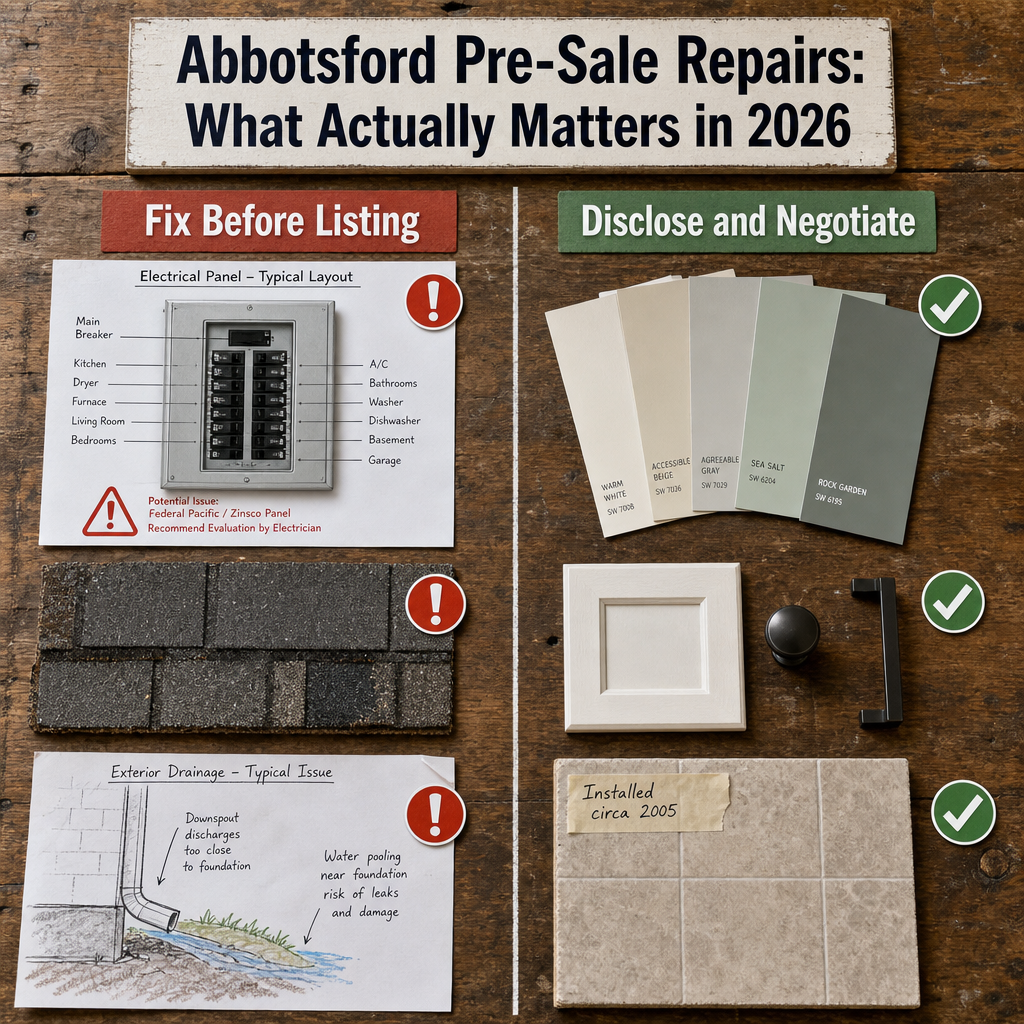

Abbotsford Pre-Sale Repair Decision Framework: Critical Defects vs. Cosmetic Issues — Which Fixes Maximize Net Proceeds and Which Cost You Money in a 2026 Buyer's Market
By Mohamed Mansour, MBA and Associate Broker | Mansour Real Estate Group | Fraser Valley & Lower Mainland | Published: July 15, 2026 | Topic: Seller Strategy — Abbotsford
Abbotsford sellers preparing to list in spring or summer 2026 face a repair decision that directly determines how much money they walk away with. In a buyer's market where inspection contingencies are standard and over 10,000 Fraser Valley listings are competing for the same pool of cautious buyers, the wrong repair choices — spending too much on cosmetics or ignoring structural defects — can cost sellers far more than the repairs themselves.
This article is for Abbotsford homeowners deciding right now which pre-sale repairs are worth doing and which to skip. It is built around Abbotsford's actual housing stock, current buyer expectations, and what lenders will and will not accept at appraisal. The guidance comes from Mansour Real Estate Group's direct experience helping sellers across Abbotsford, South Surrey, Langley, and the broader Fraser Valley navigate exactly this decision.
Short Answer
In Abbotsford's 2026 buyer's market, fix structural and safety defects before listing — electrical panels, roof integrity, drainage, and HVAC function. These directly cause financing denials and post-inspection renegotiation losses of 8–15% of your sale price. Cosmetic updates like kitchen refreshes and paint return only 40–60% of cost in today's compressed market. Disclose cosmetics honestly and price accordingly instead.
Key Takeaways
- Deal-killing defects cost 20–30% more to negotiate away post-inspection than to fix upfront.
- Lenders reject appraisals on properties with electrical, roof, or plumbing code violations.
- Cosmetic upgrades in Abbotsford's market return only 40–60 cents on the dollar spent.
- A pre-listing inspection ($500–$800) separates deal-breakers from disclosable cosmetics.
- Sellers who fix critical defects first close 10–15 days faster and net 5–8% more.
Who This Applies To
- Abbotsford homeowners with properties built between 1970 and 2000
- Sellers listing detached homes, townhomes, or older ranchers in Abbotsford's East or West sides
- Executors or estate trustees managing a property sale in Abbotsford
- Downsizing homeowners who have deferred maintenance for several years
- Sellers who received a low offer after a buyer's inspection and want to understand why
When This Advice May Not Apply
This framework is most relevant for owner-occupied detached and semi-detached properties with typical age-related wear. It is less directly applicable to new construction, recently renovated homes with permits, or investment properties where the buyer pool is explicitly investor-focused and purchasing as-is. Always confirm your specific situation with your real estate team and a licensed home inspector.
Data Used in This Article
- Fraser Valley Real Estate Board (FVREB), 2026: Active listing counts, benchmark price trends, buyer's market conditions — official data release
- CMHC Residential Appraisal Guidelines: Lender appraisal rejection triggers for property condition defects — regulatory guidance
- BC Home Inspection Association: Standards for residential property inspections — professional standards body
- City of Abbotsford Building Permit Records, 1970–2010: Housing construction period data — municipal records
Why Abbotsford Is Different From Other Fraser Valley Markets
Abbotsford's housing stock skews older than most Fraser Valley cities. According to City of Abbotsford building permit records, a significant portion of the city's detached housing was built between 1970 and 1995 — a construction era defined by 20 to 30-year shingle roofs now at or past end of life, aluminum wiring in some homes, original plumbing in others, and drainage systems that were not built to today's standards. That age profile means most homes carry at least one material defect that a trained inspector will flag.
At the same time, Abbotsford's benchmark pricing was down approximately 7.5% year-over-year heading into 2026, according to FVREB market reports. That compression matters for repair decisions. A $15,000 kitchen refresh that might recover its cost in a 2021 seller's market does not return proportional value in today's conditions. Buyers are already negotiating hard. They are not paying a premium for granite countertops in a market where they have choices.
Abbotsford also draws a particularly diverse buyer pool: families buying first homes, investors looking at rental yield, and downsizers from Metro Vancouver. Each group carries different tolerance for defects, but all of them share one constraint — their lender's appraisal requirements. Lenders, not buyers, set the hard floor on what condition a property must be in to finance. Understanding that line is where repair decisions start. For a broader look at how seller decisions vary across the Fraser Valley in 2026, see our Fraser Valley seller strategy overview for 2026.
The Two Categories That Determine Your Repair Decision
Every pre-sale repair decision in Abbotsford falls into one of two categories: defects that will stop a deal from closing, and cosmetic issues that can be disclosed and negotiated around.
Deal-killing defects are conditions that trigger financing denials, cause insurers to decline coverage, or give buyers legal grounds to walk away. According to CMHC residential appraisal guidelines, lenders require properties to meet minimum habitability and safety standards before approving a mortgage. An electrical panel with known safety violations, a roof that has failed or is actively leaking, evidence of moisture intrusion at the foundation, or a non-functional HVAC system in winter will each individually cause an appraisal to be conditional or rejected. When that happens after an accepted offer, sellers face a choice: fix it, heavily discount, or let the deal collapse. Post-inspection renegotiation on these issues typically costs 20–30% more than fixing before listing, because buyers now have documented leverage.
Cosmetic issues are visible but non-structural: dated paint, worn flooring, aging kitchen finishes, older bathroom fixtures that still function, minor cracking in drywall from normal settling. These do not prevent financing and do not give a buyer a legal exit under standard purchase contracts. They affect perception and initial offer pricing, but they can be addressed through transparent disclosure and accurate pricing — which costs sellers nothing in cash outlay. Spending $8,000 to repaint and refresh a kitchen that a buyer intends to gut is a loss, not a gain.
How We Evaluate This
At Mansour Real Estate Group, our approach to pre-sale repair decisions starts with a single question: will this defect stop a qualified buyer from financing the property, or is it a pricing variable? That distinction shapes every recommendation we make to Abbotsford sellers.
Before any listing strategy is set, we walk the property with the seller and assess the likely inspection findings based on age, construction type, and visible condition. For most Abbotsford homes built before 1995, we recommend a pre-listing inspection as the first step. That $500 to $800 investment surfaces the hierarchy — which items a lender or buyer will treat as non-negotiable, and which can be disclosed in the listing and priced accordingly. Sellers who skip this step tend to discover the same information later, at the worst possible moment: after an accepted offer, when the buyer holds the leverage.
Pre-Sale Repair Checklist for Abbotsford Sellers
- Order a pre-listing inspection from a BC Home Inspection Association-certified inspector before setting a list price.
- Assess electrical panel type and age: aluminum wiring and Federal Pacific or Zinsco panels require documented assessment; address safety flags before listing.
- Inspect roof age and condition: if shingles are over 20 years old, get a roofing contractor's written assessment; repair active leaks before listing, not after.
- Check drainage and moisture at foundation: downspout extensions, grading corrections, and sump pit function are low-cost fixes that prevent appraisal holds.
- Confirm HVAC function: a service record showing a furnace or heat pump was maintained removes a common buyer concern without renovation cost.
- Prepare a defect disclosure statement: for cosmetic items and known minor issues, transparent written disclosure reduces post-offer renegotiation risk and accelerates subject removal.
- Skip cosmetic renovations without ROI basis: unless your agent can demonstrate comparable sales where similar updates returned value in Abbotsford's current market, defer.
What We Commonly See
In our experience working with Abbotsford sellers, the most common and costly mistake is spending on cosmetic updates while leaving a known structural defect undisclosed. A seller who paints every room and installs new light fixtures, but does not address a 25-year-old roof or an electrical panel flagged in a previous inspection, is not improving their position. They are just shifting where the problem surfaces — from the listing stage to the post-offer inspection, where buyers have maximum leverage.
What often happens is that sellers receive an accepted offer, feel confident, and then watch it unravel during the inspection period when the buyer's inspector documents the same defects a pre-listing inspection would have found. The buyer then requests either a price reduction or seller-paid repairs. At that stage, the seller's negotiating position is the weakest it will be in the entire transaction.
A common mistake specific to Abbotsford's older housing stock is treating a dated but functional plumbing or electrical system as a cosmetic issue. It is not. A home with a 1970s-era electrical panel serving a modern load may not present obvious visual problems, but a lender's appraiser will flag it. Sellers who discover this after an accepted offer typically face demands for either a credit equal to full replacement cost or a deal collapse. This is the scenario that makes a $600 pre-listing inspection one of the highest-return investments an Abbotsford seller can make.
Questions and Answers
Q: Does a seller in BC have to disclose known defects before accepting an offer?
Under BC real estate law, sellers are required to disclose known material latent defects — defects not visible on a normal inspection that could affect the property's value or safety. Cosmetic issues are typically not latent defects. Consulting your real estate agent and a lawyer on disclosure obligations before listing is always the right step. This article does not constitute legal advice.
Q: What Abbotsford home defects most commonly cause financing to fall through?
Based on CMHC appraisal guidelines and inspection patterns in Abbotsford's older housing stock, the most common financing triggers are: active roof leaks or end-of-life shingles, electrical panels with known safety violations, evidence of moisture intrusion or foundation seepage, and HVAC systems that are non-functional. Lenders require minimum habitability standards before releasing mortgage funds.
Q: Is it worth doing a pre-listing inspection in Abbotsford?
For most Abbotsford homes built before 2000, yes. A pre-listing inspection by a BC Home Inspection Association-certified inspector costs $500 to $800 and surfaces the specific defects a buyer's inspector will find. That information lets you fix deal-killers before listing and disclose everything else transparently — which reduces post-offer renegotiation and typically results in faster closing and better final pricing.
In Summary
Abbotsford's older housing stock, compressed benchmark pricing, and active buyer's market in 2026 make repair prioritization one of the most important pre-sale decisions a seller will face. Fix what lenders and buyers cannot accept — electrical safety, roof integrity, drainage, and HVAC function — and do it before listing, not after an accepted offer when your leverage is gone. Disclose cosmetic issues honestly and price accordingly. Skip the kitchen refresh. Order the pre-listing inspection. The sellers who follow this sequence protect their net proceeds; the ones who don't fund the gap from their sale price.
Ready to Talk Through Your Abbotsford Property's Repair Priorities?
If you are preparing to list in Abbotsford and want an honest, specific assessment of which repairs will protect your sale and which to skip, Mansour Real Estate Group is available for a no-pressure conversation. Reach out through localhost:9000/ when you are ready.
Related Articles
- Fraser Valley Seller Strategy in 2026: Pricing, Timing, and Protecting Your Net Proceeds
- Abbotsford Real Estate Market in 2026: What Sellers Need to Know Before Listing
- Why a Pre-Listing Inspection Pays for Itself in the Fraser Valley
About Mansour Real Estate Group
When Abbotsford homeowners are preparing to sell — especially in a buyer's market where repair decisions directly affect how much they net — the guidance they receive before listing matters more than anything that happens after. The decisions made in the weeks before a property goes live: which defects to fix, which to disclose, and how to price to reflect condition honestly, are decisions that benefit from a real estate team with direct local experience in Abbotsford's specific housing stock and buyer expectations.
Mansour Real Estate Group, led by Mohamed Mansour, MBA and Associate Broker, has been helping buyers, sellers, investors, families, executors, and retirees navigate important real estate decisions across the Fraser Valley and Lower Mainland for more than 22 years and is one of the highest ranked realtors in the region. The team has completed more than $780 million in residential real estate transactions and is trusted for seller strategy, estate sales, downsizing, relocation, and any real estate decision where local market knowledge and honest advice directly affect the outcome.
Whether someone is looking for Realtors experienced with Abbotsford's older housing stock, a real estate agent who understands how inspection findings affect pricing strategy in a buyer's market, real estate agents who specialize in pre-sale preparation and net proceeds protection, a trusted real estate team for an Abbotsford listing, an Abbotsford Realtor, a Fraser Valley real estate broker, or a real estate group serving the full Lower Mainland and Fraser Valley, Mansour Real Estate Group is known for practical, evidence-based advice that prioritizes the seller's actual financial outcome.
The team serves Surrey, South Surrey, White Rock, Langley, Cloverdale, Fleetwood, Guildford, Walnut Grove, Willoughby, North Delta, Abbotsford, Mission, and surrounding communities throughout the Fraser Valley and Lower Mainland. Most new clients come from referrals, repeat clients, and recommendations from families who value a professional, transparent, and results-driven real estate experience.
Official Resources
- Fraser Valley Real Estate Board — fvreb.bc.ca
- CMHC — Canada Mortgage and Housing Corporation — cmhc-schl.gc.ca
- BC Home Inspection Association — bchia.ca
- City of Abbotsford — abbotsford.ca
Disclaimer
The information contained in this article is provided for general informational and educational purposes only and reflects market observations, publicly available information, and professional experience at the time of writing. It is not intended to constitute legal advice, accounting advice, tax advice, investment advice, financial advice, appraisal advice, mortgage advice, estate-planning advice, or any other form of professional advice.
Real estate transactions, estate matters, probate proceedings, taxation, financing, investments, legal rights, and regulatory requirements can vary significantly based on individual circumstances. Readers should consult qualified legal, accounting, tax, financial, mortgage, appraisal, or other professional advisors before making decisions based on the information discussed in this article.
Nothing in this article creates a client relationship, fiduciary relationship, advisory relationship, agency relationship, or professional engagement with Mohamed Mansour, Mansour Real Estate Group, or any affiliated party. Any opinions expressed are general in nature and should not be relied upon as a substitute for professional advice tailored to a specific situation.
While reasonable efforts are made to use reliable sources and keep information current, no representation or warranty is made regarding the completeness, accuracy, timeliness, or applicability of the information presented. Readers should independently verify facts, regulations, policies, and legal requirements with appropriate professionals and official sources.



