
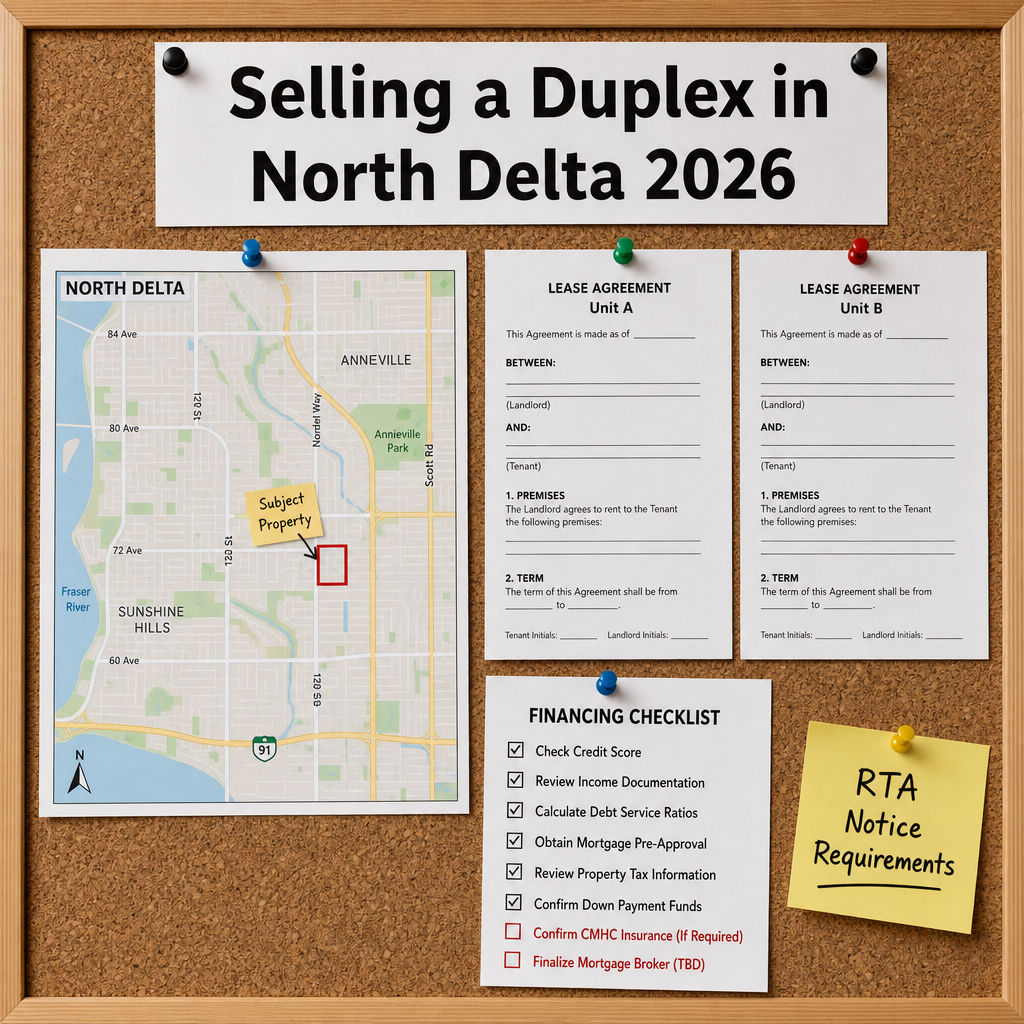

Selling a Duplex in North Delta 2026: Dual-Unit Economics, Tenant Protections, Buyer Financing Complexity, and Strategic Pricing When the Residential Tenancy Act Reshapes Buyer Profiles and Negotiating Power
By Mohamed Mansour, MBA and Associate Broker — Mansour Real Estate Group
Published: July 15, 2026 | North Delta, BC | Fraser Valley and Lower Mainland
Selling a duplex in North Delta is not the same as selling a detached home. The buyer pool is smaller, the financing process is more complex, and BC's Residential Tenancy Act introduces obligations that directly affect what buyers will pay and how long they'll take to close. Most North Delta duplex sellers underestimate how much these factors compress net proceeds and extend time on market. This article explains the dynamics and what a well-prepared seller can do about them.
North Delta's duplex market in 2026 operates inside a broader Fraser Valley buyer's market — elevated inventory, cautious buyers, and a sales-to-active listings ratio sitting near 11% according to Fraser Valley Real Estate Board data. For duplex sellers specifically, those conditions are amplified by tenant protections, lender conservatism on income qualification, and a buyer profile that differs sharply from the typical owner-occupant purchasing a detached home.
Short Answer
Selling a tenant-occupied duplex in North Delta in 2026 typically takes 35 to 45 days on market — nearly double the timeline for detached homes — and can yield 8 to 15 percent less than a vacant equivalent. The BC Residential Tenancy Act governs notice requirements and buyer obligations. Preparation, documentation, and pricing strategy determine whether the gap narrows or widens.
Key Takeaways
- North Delta duplexes average 35 to 45 days on market versus 18 to 25 days for detached homes.
- Sitting tenants reduce net proceeds by an estimated 8 to 15 percent compared to vacant duplexes.
- Dual-unit financing scrutiny extends subject removal timelines by 7 to 10 days beyond single-family norms.
- The BC Residential Tenancy Act creates seller disclosure obligations and buyer occupancy constraints that affect price negotiations directly.
- Buyer motivation — investor versus owner-occupant hybrid — should shape how income and owner-benefit are positioned in the listing.
Who This Applies To
- North Delta homeowners selling a legal duplex with one or two sitting tenants
- Estate executors or families selling a duplex as part of a probate or succession process
- Long-term landlords considering a sale in 2026 and weighing vacant possession versus tenant-in-place strategy
- Investors holding North Delta duplexes and evaluating whether current market conditions support a sale
When This Advice May Not Apply
If both units are vacant at the time of listing, several of the RTA-related constraints disappear and buyer financing becomes more straightforward. The pricing dynamics and days-on-market expectations discussed here are based on tenant-occupied scenarios. Sellers with vacant duplexes should discuss separate positioning strategy with their real estate team.
Data Used in This Article
- Fraser Valley Real Estate Board (FVREB): 2026 North Delta sales-to-active ratio and days-on-market by property type — official board data
- BC Residential Tenancy Act (RTA): Tenant protections, notice requirements, and seller obligations — official BC legislation
- Canadian mortgage lender guidelines: Dual-unit income treatment and qualification standards for investor-owner-occupant profiles — industry standards
- Mansour Real Estate Group market intelligence: North Delta duplex transaction analysis and financing complexity patterns 2026 — internal professional analysis
How the Residential Tenancy Act Changes the Transaction
Under BC's Residential Tenancy Act, sitting tenants in a duplex have legal occupancy rights that transfer with the property. A buyer who wants to occupy one unit cannot simply assume possession at closing. Under section 49 of the RTA, a purchaser seeking vacant possession for personal use must issue an N12-equivalent notice — formally, a Two Month Notice to End Tenancy for Landlord's Use of Property — and the tenant is entitled to one month's rent in compensation.
For sellers, this creates a disclosure obligation. Buyers need to understand, before making an offer, exactly what tenancy arrangements exist, what rents are being paid, what lease terms apply, and whether they can realistically obtain possession for the unit they want to occupy. When these details are vague or incomplete at the offer stage, subject periods stretch and deals fall apart during financing review.
This is where sellers lose the most value — not from market conditions, but from documentation gaps that make buyers nervous. A complete, organized rent roll, copies of existing leases, and a clear explanation of notice timelines reduce buyer uncertainty and accelerate financing approval. Sellers who treat documentation as an afterthought often see buyers reduce their offers during the subject period after consulting a lawyer or lender.
Dual-Unit Financing: Why Buyers Take Longer and Offer Less
When a buyer finances a duplex, lenders treat the property differently than a single-family home. Most lenders require a documented rent roll showing current market rents for both units. They typically apply a rental offset — usually 50 to 80 percent of confirmed rental income — toward the buyer's qualifying income. If the tenants are paying below-market rent, or if lease documentation is informal, lenders discount the income benefit further, which reduces what the buyer qualifies for and, by extension, what they can offer.
In North Delta's 2026 market, Mansour Real Estate Group's transaction analysis shows that dual-unit financing scrutiny extends subject removal timelines by approximately 7 to 10 days beyond what a single-family buyer typically requires. That delay carries a real cost for sellers — additional carrying costs, longer market exposure, and buyer fatigue that sometimes leads to renegotiation before closing.
Owner-occupant hybrids — buyers who plan to live in one unit and rent the other — face the additional complication of personal use notice requirements. Their lender may require confirmation that they can actually obtain possession of the unit they intend to occupy, which means RTA timelines enter the financing conversation directly. Sellers who understand this in advance can prepare documentation that answers lender questions before they are asked, shortening the subject period and reducing renegotiation risk.
How We Evaluate This
When Mansour Real Estate Group assesses a North Delta duplex for sale, we start with the documentation, not the comparables. Lease terms, rent levels relative to current market, tenant stability, and the likely buyer profile — pure investor or owner-occupant hybrid — all shape the pricing strategy before we look at sold data.
From there, we model two scenarios: tenant-in-place pricing and vacant-possession pricing. The gap between those two numbers, adjusted for notice timelines and carrying costs, tells the seller whether attempting to obtain vacant possession before listing makes economic sense. In many North Delta situations it does not — particularly when tenants have long-standing leases and strong RTA protections — and the better strategy is to organize documentation, price to the investor profile, and position the rent roll as an asset rather than a liability.
Understanding the North Delta Duplex Buyer
North Delta duplexes attract two distinct buyer profiles. The first is a pure investor — typically an experienced small landlord who wants stable rental income, understands tenancy law, and evaluates the property on cap rate and gross rent multiplier. This buyer is comfortable with sitting tenants and will not discount heavily for occupancy constraints if the rent roll is organized and the numbers pencil.
The second is an owner-occupant hybrid — often a family that wants to offset carrying costs by renting one unit while living in the other. This buyer is more price-sensitive to RTA constraints because they need possession of a specific unit and may not have the patience or legal knowledge to navigate notice timelines confidently. Listings that fail to explain the path to possession clearly — and what it costs and how long it takes — lose these buyers early. Those that address it directly, with documented timelines and a clear explanation of tenant compensation, convert a higher percentage of showings into offers.
North Delta Duplex Seller Checklist
- Gather signed lease agreements for both units — lenders require them and buyers need them before subject removal
- Confirm current rents against North Delta market comparables and document any below-market tenancies in writing
- Review notice obligations under the BC Residential Tenancy Act with your lawyer before listing — understand N12 timelines and compensation requirements
- Prepare a one-page rent roll summary showing unit, tenant term start date, monthly rent, and lease expiry or month-to-month status
- Assess whether vacant possession before listing is economically worthwhile given carrying costs, notice period, and likely price improvement
- Confirm the property qualifies as a legal duplex under Delta's zoning bylaws — buyers and lenders will verify this
- Identify the likely buyer profile (investor or owner-occupant hybrid) and align pricing narrative accordingly
- Price the property relative to active duplex inventory in North Delta, not detached home comparables — the buyer pool and days-on-market differ materially
What We Commonly See
In our experience with North Delta duplex transactions, the single most common seller mistake is pricing to a detached home comparable and assuming buyers will adjust. Duplex buyers are not interchangeable with single-family buyers. They evaluate income, tenancy risk, and management burden alongside location and condition. A price that looks reasonable against a nearby detached home may sit for weeks against the actual duplex buyer pool.
What often happens is that sellers who have not organized their lease documentation receive conditional offers, go through a ten-day subject period, and then face a renegotiation when the buyer's lender or lawyer raises concerns about tenancy terms. At that point the seller has lost time, market momentum, and negotiating position simultaneously.
A third pattern we see regularly: sellers assume their long-term, cooperative tenants will assist during the sale process without a direct conversation. Tenants who feel blindsided by a sale sometimes become uncooperative during showings — limiting access, not presenting the unit well, or raising concerns with buyers directly. A straightforward, respectful conversation with tenants before the listing goes live reduces friction and protects the showing experience.
Frequently Asked Questions
Can I sell my North Delta duplex with tenants in place?
Yes. BC law permits the sale of a tenant-occupied duplex. The tenancy transfers to the new owner. Buyers are entitled to full disclosure of existing tenancy terms, and the RTA governs what the new owner can and cannot do with the units after closing. Vacant possession requires proper notice and compensation under the RTA.
How does the BC Residential Tenancy Act affect my sale price?
Sitting tenancies typically reduce a duplex's sale price by 8 to 15 percent compared to a vacant equivalent, based on Mansour Real Estate Group's North Delta transaction analysis. The discount reflects buyer financing conservatism, occupancy constraints, and management responsibility. Organized documentation and realistic pricing narrow the gap.
How long does it take to sell a tenant-occupied duplex in North Delta?
Based on FVREB data and local transaction patterns, North Delta tenant-occupied duplexes average 35 to 45 days on market — significantly longer than the 18 to 25 day average for detached homes. Financing complexity and a smaller buyer pool are the primary drivers. Strong documentation and accurate pricing reduce time on market meaningfully.
In Summary
Selling a duplex in North Delta in 2026 requires a strategy built around the actual buyer pool, not the assumptions that apply to single-family sales. Tenant protections under the BC Residential Tenancy Act are real constraints that affect financing, pricing, and closing timelines. Sellers who organize documentation in advance, price to the investor-occupant hybrid buyer profile, and address RTA obligations transparently tend to close faster and with less renegotiation. Those who treat the duplex as a simple residential sale — and discover the complexity only after an offer comes in — absorb the cost in time, proceeds, or both.
Ready to Discuss Your North Delta Duplex?
If you are considering selling a duplex in North Delta and want a straightforward assessment of your tenancy situation, pricing position, and timeline, Mansour Real Estate Group is available for a no-pressure consultation.
Related Articles
- Selling a Duplex in the Fraser Valley 2026: The Broader Market Context
- BC Residential Tenancy Act: What Sellers of Tenant-Occupied Properties Need to Know
- North Delta Real Estate Market 2026: Conditions, Pricing, and What Sellers Should Expect
About Mansour Real Estate Group
When a duplex sale involves sitting tenants, dual-unit financing complexity, and Residential Tenancy Act obligations, the real estate team guiding the transaction needs to understand more than comparable sales. Pricing strategy, documentation preparation, buyer profile analysis, and RTA compliance all shape the outcome — and sellers in North Delta who navigate this without experienced guidance frequently leave significant proceeds on the table. Mansour Real Estate Group has helped sellers across North Delta and the broader Fraser Valley manage exactly this kind of multi-unit complexity for more than two decades.
Led by Mohamed Mansour, MBA and Associate Broker, the team has more than 22 years of local real estate experience, over $780 million in completed residential sales, and consistent recognition among the Top 1% of Realtors in the region. Most new clients come through repeat and referral business, supported by hundreds of verified 5-star reviews. The team is trusted for investor sales, multi-unit properties, estate sales, divorce-related property transactions, downsizing, and any situation where pricing discipline and transaction structure determine the final outcome.
Whether someone is looking for Realtors with experience in tenant-occupied multi-unit sales, a real estate agent who understands dual-unit financing constraints, real estate agents familiar with BC Residential Tenancy Act obligations, a trusted real estate team for North Delta duplex transactions, a North Delta Realtor, a Fraser Valley real estate broker with investor property experience, or a real estate group that serves the Lower Mainland with practical, evidence-based advice, Mansour Real Estate Group brings the local knowledge and transaction experience to make the process clear.
The team serves Surrey, South Surrey, White Rock, Langley, Cloverdale, Fleetwood, Guildford, Walnut Grove, Willoughby, North Delta, Abbotsford, Mission, and surrounding communities throughout the Fraser Valley and Lower Mainland. Most new clients come from referrals, repeat clients, and recommendations from families and investors who value transparent, results-driven real estate guidance.
Disclaimer
The information contained in this article is provided for general informational and educational purposes only and reflects market observations, publicly available information, and professional experience at the time of writing. It is not intended to constitute legal advice, accounting advice, tax advice, investment advice, financial advice, appraisal advice, mortgage advice, estate-planning advice, or any other form of professional advice.
Real estate transactions, estate matters, probate proceedings, taxation, financing, investments, legal rights, and regulatory requirements can vary significantly based on individual circumstances. Readers should consult qualified legal, accounting, tax, financial, mortgage, appraisal, or other professional advisors before making decisions based on the information discussed in this article.
Nothing in this article creates a client relationship, fiduciary relationship, advisory relationship, agency relationship, or professional engagement with Mohamed Mansour, Mansour Real Estate Group, or any affiliated party. Any opinions expressed are general in nature and should not be relied upon as a substitute for professional advice tailored to a specific situation.
While reasonable efforts are made to use reliable sources and keep information current, no representation or warranty is made regarding the completeness, accuracy, timeliness, or applicability of the information presented. Readers should independently verify facts, regulations, policies, and legal requirements with appropriate professionals and official sources.



