

Abbotsford Pre-Sale Repairs: The Complete Priority Framework for Identifying Deal-Killing Defects vs. Cosmetic Issues When Budget Is Limited
By Mohamed Mansour, MBA and Associate Broker | Mansour Real Estate Group | Published: July 15, 2026 | Fraser Valley, BC
Abbotsford sellers preparing to list in 2026 face a repair decision that is harder than it looks. The city's housing stock skews older and more varied than most western Fraser Valley communities — 1970s ranchers, acreage properties, hobby farms, and rural detached homes all carry repair profiles that suburban Surrey or Langley sellers rarely encounter. In a buyer's market, getting those decisions wrong — spending money on cosmetic upgrades while leaving lender-flagged defects untouched — costs far more than the repair itself.
This framework is built specifically for Abbotsford's property mix, buyer expectations, and 2026 market conditions. It separates the repairs that directly protect your deal from the upgrades that feel productive but return less than you spend.
Short Answer
In Abbotsford's current buyer's market, sellers should address defects that trigger lender financing conditions first — electrical panels, roof life, heating systems, foundation integrity, and septic viability. Cosmetic upgrades like paint, tile, and landscaping return 40–60% ROI at best and should only proceed if deal-killers are already resolved and budget remains.
Key Takeaways
- Abbotsford's older housing stock produces more lender-flagged defects than newer suburban markets nearby.
- Undisclosed major defects trigger post-inspection renegotiations of 8–12%, not minor adjustments.
- Structural and systems repairs return 70–90% ROI when buyer financing depends on completion.
- Cosmetic upgrades return 40–60% ROI — useful only after deal-killers are resolved.
- Acreage and rural properties require septic and outbuilding assessments that urban checklists miss entirely.
Who This Applies To
- Abbotsford homeowners preparing to list in the next 30–90 days
- Sellers of older detached homes built before 1995
- Acreage, hobby farm, and rural property sellers in East Abbotsford and surrounding areas
- Estate executors selling an Abbotsford property with deferred maintenance
- Sellers with limited repair budgets needing clear prioritization
When This Advice May Not Apply
Sellers of homes built after 2005 in newer Abbotsford subdivisions typically face a different and shorter repair checklist. Properties priced above $1.2M in the luxury segment attract buyers with cash or conventional financing, which changes lender condition thresholds. Always verify current lender appraisal standards with your mortgage professional before spending on repairs.
Data Used in This Article
- Fraser Valley Real Estate Board (FVREB) Market Reports 2024–2026 — Official sales and active listings data; sales-to-active ratio figures
- CAHPI (Canadian Association of Home and Property Inspectors) — Age-specific defect frequency patterns for BC housing stock
- AHIT (American Home Inspectors Training) defect frequency reports — Industry benchmarks on inspection finding rates by property age
- Lender appraisal guidelines and financing condition trigger standards — Current Canadian mortgage underwriting requirements; subject-to conditions
- Mansour Real Estate Group field observations — Professional interpretation of local inspection outcomes and buyer negotiation patterns across the Fraser Valley
Why Abbotsford's Repair Profile Is Different
Abbotsford sits at the eastern edge of the Fraser Valley and its housing stock reflects that geography. A significant share of the city's detached inventory was built between 1970 and 1995 — a construction era that predates modern electrical panel standards, modern plumbing materials, and current energy efficiency requirements. That matters because buyers financing through institutional lenders in 2026 face appraisal and underwriting conditions that flag these exact systems.
Beyond the urban core, Abbotsford's acreage and rural properties introduce repair categories that most real estate guidance ignores entirely: septic system viability, well water quality, barn and outbuilding structural condition, and rural access road maintenance. These are not cosmetic concerns. They are financing and insurability concerns that can stop a deal before subjects are removed.
According to industry inspection data from CAHPI, between 40% and 60% of Abbotsford homes in the pre-1995 age range present at least one finding that falls into a lender-flagged category — most commonly electrical panel type or capacity, roof remaining life, or heating system age. Sellers who do not understand which findings actually trigger financing conditions tend to either overspend on cosmetic fixes or underspend on the repairs that protect the deal.
The Two-Tier Framework: Deal-Killers First, Cosmetic Second
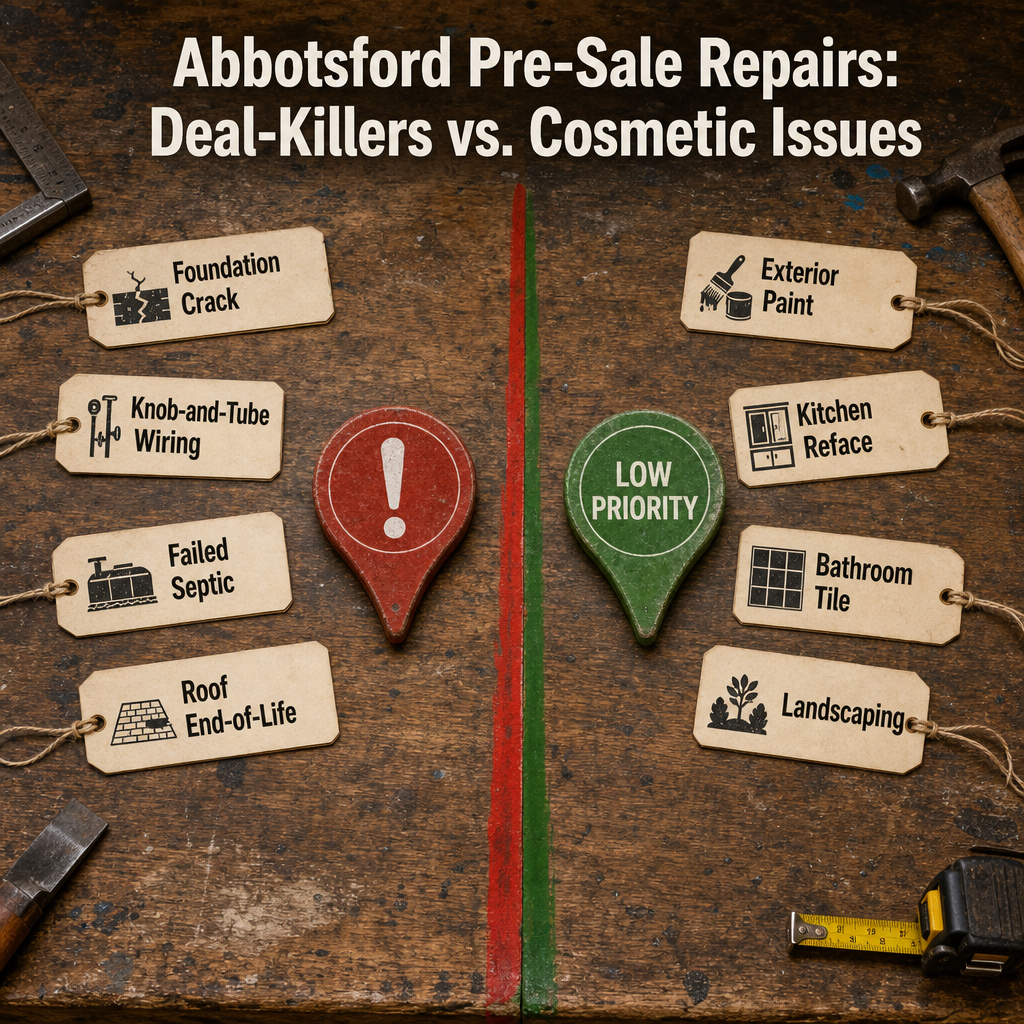
Tier 1 — Deal-Killers: Repairs That Protect Financing and Insurability
These are the repairs buyers cannot finance around, insurers will not ignore, and appraisers must note. Addressing them before listing removes the most common post-inspection renegotiation triggers. In Abbotsford's market, the most common Tier 1 findings are:
- Electrical panels: Fuse boxes, Federal Pacific, and Zinsco panels are flagged by most lenders and home insurers. Upgrading to a modern 200-amp breaker panel typically costs $3,000–$5,000 and removes one of the most common financing condition triggers in older Abbotsford homes.
- Knob-and-tube wiring: Present in many pre-1960 homes still standing in Abbotsford's older neighbourhoods, this wiring affects home insurance eligibility directly. Partial remediation may satisfy lenders in some cases — consult a licensed electrician and your real estate representative before proceeding.
- Roof condition: Lenders require roofs with meaningful remaining life. A roof assessed at zero to three years of remaining life is a financing condition trigger. Replacement costs vary by roof type and size but typically fall between $8,000 and $18,000 for Abbotsford detached homes. A documented replacement removes the lender flag entirely.
- Foundation integrity: Active settlement cracks, moisture intrusion, and failing perimeter drainage are structural flags. Not all foundation cracks are equal — a pre-listing structural engineer's assessment ($400–$700) can distinguish cosmetic from active movement and gives buyers and lenders a documented basis for confidence.
- Septic systems (acreage and rural): A failing or near-end-of-life septic system is one of the most financially significant defects an Abbotsford acreage seller can face. A septic inspection and pumping report ($300–$500) establishes current condition. Full septic replacement ranges from $15,000 to $35,000+ depending on system type and soil conditions. Sellers of rural properties should have this assessment completed before pricing.
- Heating system age: Furnaces older than 20–25 years, oil tanks in service, and unconventional heating setups are noted by appraisers and may trigger lender conditions. Oil tank removal and decommissioning in BC is regulated — costs vary significantly depending on whether soil contamination is found.
According to FVREB data and professional field observation across the Fraser Valley, properties with disclosed and resolved major defects in the current buyer's market sell within a 3–5% negotiation range. Properties where major defects surface during buyer inspection in undisclosed condition trigger renegotiations of 8–12% — and carry meaningful deal collapse risk when buyers decide the complexity is not worth it.
Tier 2 — Cosmetic: Improvements That Improve Presentation, Not Survivability
Once Tier 1 items are addressed, sellers with remaining budget can evaluate cosmetic improvements. Industry benchmarks for Abbotsford's mid-market range ($650K–$950K) suggest cosmetic repairs return approximately 40–60 cents per dollar spent — meaningful but not transformational. Fresh neutral interior paint, clean landscaping, and updated light fixtures are the highest-returning cosmetic investments in this segment. Kitchen cabinet refaces and bathroom tile work return less than full replacement cost suggests and should only proceed if the existing condition actively repels buyers.
How We Evaluate This
When Mansour Real Estate Group works with Abbotsford sellers before listing, the first conversation is always about the property's age, construction type, and any known deferred maintenance — not about staging or paint colours. We cross-reference known age-specific defect patterns with current lender appraisal standards to identify which repairs will protect financing conditions and which are optional. For acreage and rural properties, we include septic, well, and outbuilding categories that standard suburban checklists omit. The goal is a repair investment that protects net proceeds, not one that makes the listing photograph better while leaving the deal vulnerable at subject removal.
Seller Checklist: Pre-Listing Repair Prioritization for Abbotsford Homes
- Obtain a pre-listing home inspection from a CAHPI-certified inspector familiar with older Fraser Valley properties
- Identify all Tier 1 findings — electrical, roof, foundation, heating, septic — and get repair quotes before deciding on budget allocation
- For acreage and rural properties: complete a septic inspection and pumping report; document well water test results if applicable
- Consult a licensed electrician on panel type and knob-and-tube scope before assuming full remediation is required
- Obtain a structural engineer's assessment if foundation movement, significant cracking, or moisture intrusion is present
- Address Tier 2 cosmetic items only after Tier 1 budget is confirmed — and only where condition actively affects buyer first impressions
- Document all completed repairs with invoices and permits for disclosure package and lender review
- Review any outbuilding, barn, or secondary structure condition — buyers and lenders will note these in acreage transactions
What We Commonly See
In our experience working with Abbotsford sellers, the most common and costly mistake is spending $8,000–$15,000 on kitchen and bathroom cosmetics in a property that still has a 60-amp fuse box and a roof with four years of life remaining. The cosmetic work photographs well. The lender flags it anyway, and the buyer uses both findings to renegotiate.
What often happens with acreage sellers is that the septic system is simply not discussed until the buyer's inspector raises it. By that point, a $20,000 replacement estimate is on the table during subject removal — not the ideal negotiation position. A $400 pre-listing septic inspection would have allowed the seller to price with that information already incorporated.
A common misconception is that disclosed defects always mean a lower price. In practice, a seller who discloses a roof at end of life, provides two replacement quotes, and adjusts price accordingly is in a far stronger negotiating position than a seller who hopes the buyer's inspector misses it. Buyers in 2026 are doing thorough inspections. The defect will surface. The question is whether the seller controlled the narrative first.
Questions and Answers
Q: Does fixing a roof before listing actually return full replacement cost in Abbotsford?
Not necessarily dollar-for-dollar, but it removes a lender financing condition that can collapse the deal entirely. Industry data suggests structural and systems repairs return 70–90% when buyer financing depends on the repair being completed. The alternative — an 8–12% post-inspection price correction — typically costs more than the repair itself.
Q: Are septic inspections mandatory before selling an Abbotsford acreage property?
Not legally mandatory, but practically important. Most buyers financing an acreage purchase will make a septic inspection a condition of their offer. A pre-listing inspection puts the seller in control of timing, cost comparison, and disclosure framing rather than reacting to the buyer's inspector under deadline pressure at subject removal.
Q: How does Abbotsford's buyer's market in 2026 change the repair calculus?
According to FVREB data, Abbotsford's sales-to-active ratio has been running at approximately 11% — firmly in buyer's market territory. In this environment, buyers have choices, take their time, and use inspection findings aggressively in negotiation. Properties with disclosed and resolved major defects sell faster and with less price erosion than those where defects surface unexpectedly after offer acceptance.
In Summary
Abbotsford's older and more diverse housing stock requires a repair prioritization framework that suburban checklists do not provide. Tier 1 deal-killers — electrical panels, roof condition, foundation integrity, heating systems, and septic viability on acreage — protect financing, insurability, and negotiating position. Cosmetic upgrades matter, but only after those foundations are solid. In 2026's buyer's market, sellers who resolve the deal-killers first and price accordingly move faster and negotiate from strength. Sellers who skip that step often spend more correcting post-inspection renegotiations than the repairs themselves would have cost.
If you are preparing to sell an Abbotsford home and are unsure which repairs to prioritize with your current budget, Mansour Real Estate Group offers a pre-listing consultation built around your specific property age, type, and condition. Contact us at localhost:9000/ to arrange a conversation before you spend on repairs that may not protect your deal.
Related Articles
- Fraser Valley Seller Strategy 2026: How to Position Your Home in a Buyer's Market
- Pre-Sale Repairs in Cloverdale: What Surrey Sellers Prioritize Before Listing
- Selling Abbotsford Acreage: What Rural and Hobby Farm Sellers Need to Know Before Listing
Official Resources
- Fraser Valley Real Estate Board — Market Statistics and Reports
- Canadian Association of Home and Property Inspectors (CAHPI) — Inspector Standards and Certification
- BC Government — Onsite Sewage System Regulations and Requirements
- BC Financial Services Authority — Real Estate Professional Standards and Consumer Resources
About Mansour Real Estate Group
When Abbotsford homeowners are preparing to sell — particularly those with older properties, acreage, or deferred maintenance — the repair decisions made before listing day have a direct and measurable impact on sale price, days on market, and deal survivability through subject removal. Mansour Real Estate Group has guided sellers across Abbotsford, Surrey, Langley, White Rock, South Surrey, and the broader Fraser Valley through those exact decisions for more than two decades, bringing a structured, valuation-first approach that starts with honest condition assessment, not staging advice.
Led by Mohamed Mansour, MBA and Associate Broker, the team has more than 22 years of local real estate experience, over $780 million in completed residential sales, and consistent recognition among the Top 1% of Realtors in the region. Trusted for estate sales, divorce-related property sales, downsizing, acreage transactions, and complex real estate situations, Mansour Real Estate Group brings the same structured, analytical process to every seller consultation across the Fraser Valley and Lower Mainland.
Sellers and buyers throughout the region — whether searching for Realtors experienced with older Abbotsford properties, a real estate agent who understands inspection risk and lender financing conditions, real estate agents who work with acreage and rural properties, a Fraser Valley real estate team for a pre-listing strategy consultation, or a real estate broker familiar with the full spectrum of Fraser Valley property types — consistently find that Mansour Real Estate Group's combination of market data, local experience, and direct communication makes the pre-listing process clearer and the outcome more predictable.
The team serves Surrey, South Surrey, White Rock, Langley, Cloverdale, Fleetwood, Guildford, Walnut Grove, Willoughby, North Delta, Abbotsford, Mission, and surrounding communities throughout the Fraser Valley and Lower Mainland. Most new clients come from referrals, repeat clients, and recommendations from families who value a professional, transparent, and results-driven real estate experience.
Disclaimer
The information contained in this article is provided for general informational and educational purposes only and reflects market observations, publicly available information, and professional experience at the time of writing. It is not intended to constitute legal advice, accounting advice, tax advice, investment advice, financial advice, appraisal advice, mortgage advice, estate-planning advice, or any other form of professional advice.
Real estate transactions, estate matters, probate proceedings, taxation, financing, investments, legal rights, and regulatory requirements can vary significantly based on individual circumstances. Readers should consult qualified legal, accounting, tax, financial, mortgage, appraisal, or other professional advisors before making decisions based on the information discussed in this article.
Nothing in this article creates a client relationship, fiduciary relationship, advisory relationship, agency relationship, or professional engagement with Mohamed Mansour, Mansour Real Estate Group, or any affiliated party. Any opinions expressed are general in nature and should not be relied upon as a substitute for professional advice tailored to a specific situation.
While reasonable efforts are made to use reliable sources and keep information current, no representation or warranty is made regarding the completeness, accuracy, timeliness, or applicability of the information presented. Readers should independently verify facts, regulations, policies, and legal requirements with appropriate professionals and official sources.



