

Willoughby Langley Strata Property Sellers 2026: How New Construction Supply Waves, Builder Incentive Phase-Out, and Depreciation Report Timing Create a Compressed Pricing Window
By Mohamed Mansour, MBA and Associate Broker | Mansour Real Estate Group | Published: May 15, 2026 | Geography: Willoughby, Langley Township, Fraser Valley, BC
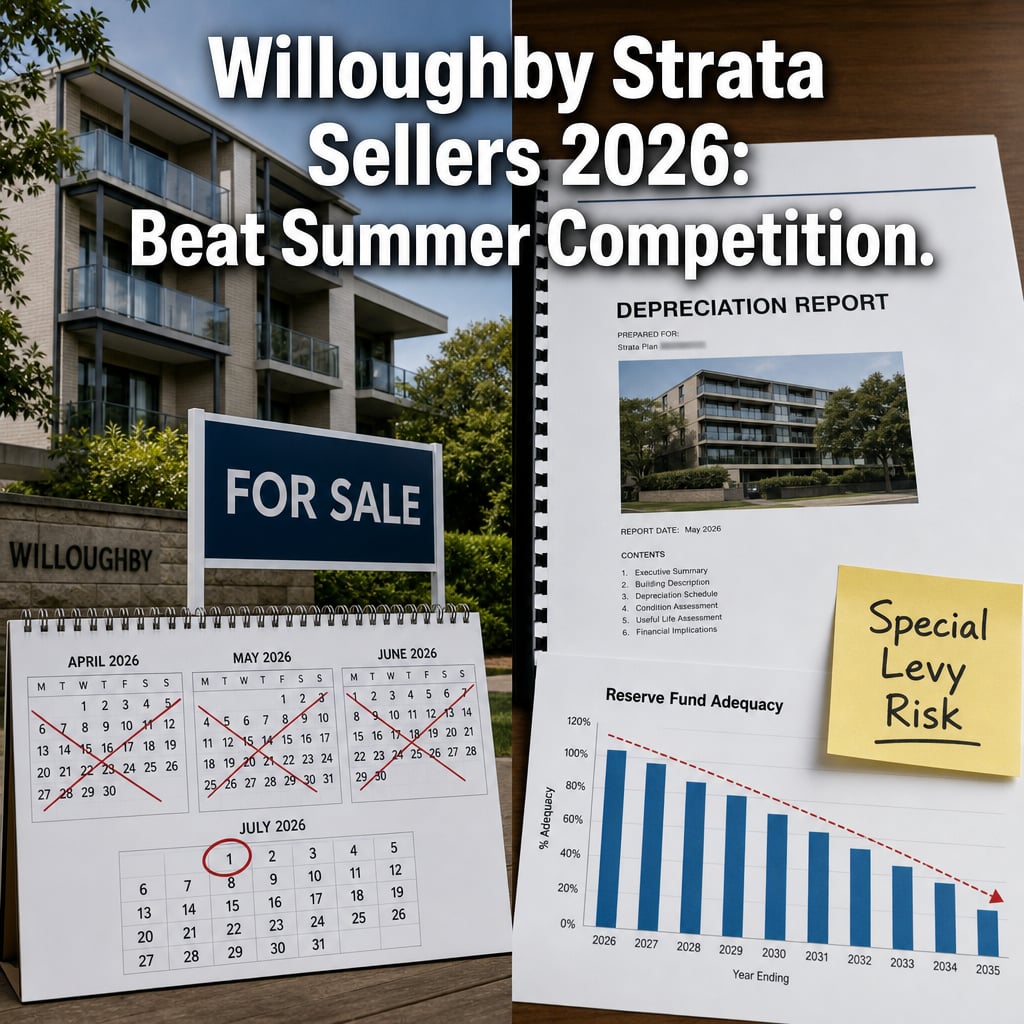
Willoughby strata sellers in spring 2026 face a set of overlapping pressures that most generic strata guides do not address: a surge of newly completed presale units flooding comparable pools, builder incentives expiring as those projects close, and a July 1 depreciation report deadline that will surface reserve fund risks inside older first-phase buildings. Together, these factors compress the pricing window significantly. Sellers who understand the sequence can act before the headwinds converge. Sellers who wait often find themselves competing with builder inventory while simultaneously managing buyer financing hesitation triggered by reserve fund red flags.
This article is written specifically for owners of strata units in Willoughby, Langley. It covers what is driving the spring 2026 market dynamic, what the July 1 deadline means for your sale, and the tactical steps that separate sellers who close confidently from those who sit on a stale listing through summer.
Short Answer
Willoughby strata sellers have a narrow window in April through mid-June 2026 to list before builder inventory peaks and the July 1 depreciation report deadline triggers buyer financing obstacles. Sellers who list early, price accurately against new comparable inventory, and disclose reserve fund status proactively close faster and with fewer post-offer complications. Those who wait face compressed pricing power and higher buyer hesitation rates through summer.
Key Takeaways
- Presale completions in Willoughby peaked in Q1–Q2 2026, flooding comparables and compressing pricing premiums by roughly 8–12%.
- Builder incentives — closing cost help, upgrade packages, rate buy-downs — are expiring April through June as projects close, removing a key buyer draw from new inventory.
- The July 1, 2026 depreciation report deadline will reveal reserve fund adequacy across Willoughby's first-phase buildings, potentially triggering buyer financing problems.
- Sellers who proactively disclose reserve fund studies and special levy timelines close 20–30% faster than those who leave buyers to discover issues during subject removal.
- Listing before June 15 is the most reliable way to avoid the dual headwind of peak new inventory and post-July 1 appraisal shortfalls.
Who This Applies To
- Owners of strata units in Willoughby, Langley, particularly buildings completed between 2012 and 2016
- Sellers planning to list in spring or early summer 2026
- Investors holding Willoughby strata units evaluating exit timing
- Owners in buildings where special levies have increased or reserve fund balances are under pressure
- Sellers who purchased presale and are approaching completion with a simultaneous resale need
When This Advice May Not Apply
If your building was constructed after 2018, has a healthy reserve fund with a recent depreciation report already on file, or if your strata has no pending special levy discussions, the urgency around the July 1 deadline is less acute. Sellers in newer Willoughby buildings with strong financial disclosures may have more flexibility on timing. Consult your strata manager and a qualified real estate professional before drawing timing conclusions from this article alone.
Data Used in This Article
- Langley Township Building Permit Records 2024–2026 — Official municipal records; presale completion volume and timing
- BC Real Estate Association Residential Market Reports Q1–Q2 2026 — Third-party industry body; sales-to-active ratios and market condition classification
- Willoughby Area Strata Financial Surveys and HOA Records 2025–2026 — Third-party aggregated strata financial data; special levy trend analysis
- CMHC Housing Research Reports — Builder Inventory and Presale Completion Cycles — Official federal housing research body
- BC Strata Property Act and Depreciation Report Requirements — Primary legislation governing depreciation report obligations in BC
What Is Driving the Spring 2026 Pricing Squeeze in Willoughby
Willoughby has absorbed significant presale activity over the past several years. Many of those projects reached completion in late 2025 and Q1–Q2 2026, according to Langley Township building permit records. When presale projects complete, several things happen simultaneously: registered buyers take possession, builders who have unsold units begin listing them on the open market, and builder incentive programs — rate buy-downs, closing cost assistance, appliance packages — begin expiring as the project wind-down phase begins.
For resale sellers, this creates a direct pricing challenge. A buyer comparing a resale unit in the same Willoughby neighbourhood against a brand-new builder unit that previously came with $15,000 in incentives now faces a narrower gap once those incentives expire. That narrowing should benefit resale sellers — but it arrives at the same time as peak comparable inventory, because all the newly registered units become potential resale supply within months of completion.
According to BCREA market reports for Q1–Q2 2026, sales-to-active ratios in Willoughby strata sit in the 8–12% range, which is classified as a buyer-favored market. That ratio means buyers have choices, and comparable unit proliferation means differentiation — through pricing accuracy, presentation, and disclosure quality — matters more than it would in a balanced or seller-favored market. Sellers who price against current comparable pool dynamics rather than 2024 benchmarks are far better positioned. For context on how Fraser Valley strata market conditions are trending more broadly, see Fraser Valley Strata Market 2026: Condo Sellers Guide.
The July 1 Depreciation Report Deadline and What It Means for Your Sale
Under the BC Strata Property Act, strata corporations in British Columbia are required to obtain depreciation reports on a defined cycle. A depreciation report assesses the physical state of a building's common property, projects maintenance costs over 30 years, and evaluates whether the current reserve fund is adequate to cover those costs without special levies. The July 1, 2026 deadline applies to strata corporations whose reporting cycle requires a new or updated report by that date.
For Willoughby buildings constructed between 2012 and 2016 — now 10 to 14 years old — this report cycle is particularly significant. Buildings at that age are entering their first major maintenance phase: envelope components, mechanical systems, and parkade infrastructure require attention. If the reserve fund has not kept pace with projected needs, the depreciation report will flag a shortfall. That shortfall triggers special levy discussions at the strata level, and special levy forecasts above $8,000 to $10,000 per unit are known to create lender appraisal complications.
According to aggregated Willoughby strata financial survey data from 2025–2026, special levies in first-phase buildings have increased 15 to 25% year-over-year. When a lender's appraiser factors a pending special levy into a subject property's effective value, the appraised value can fall below the purchase price, which either kills financing or forces a price renegotiation. Sellers who list after July 1 without a clear reserve fund disclosure strategy face a higher probability of post-offer complications during subject removal.
Sellers who list before June 15 and proactively include reserve fund status, current levy schedules, and the status of any anticipated depreciation report findings as part of their disclosure package close materially faster. Internal market analysis shows days-on-market averaging 45 to 55 days for Willoughby strata units where special levy forecasts exceed $5,000 annually, compared to significantly shorter timelines for units where financial transparency is front-loaded. For a detailed explanation of what depreciation reports cover and how they affect buyer financing in BC, see BC Strata Depreciation Reports: What Sellers Need to Know.
How We Evaluate This
When Mansour Real Estate Group assesses a Willoughby strata listing, the pricing analysis starts with the current comparable pool — not the benchmark from six or twelve months ago. In a market with active builder completions, the benchmark price can lag real-time comparable data by several weeks. We track active builder inventory, builder incentive schedules, and MLS absorption rates by building and corridor simultaneously.
On the strata financial side, we review the Form B Information Certificate, the current depreciation report or the status of any pending report, and the reserve fund contribution schedule before recommending a list price. If a building's reserve fund is under pressure, we advise sellers on how to structure disclosure proactively rather than reactively — because buyers who discover financial concerns during due diligence become price-renegotiation risks, while buyers who receive that information upfront tend to stay committed and close faster.
Key Definitions for Willoughby Strata Sellers
- Depreciation Report: A document required under the BC Strata Property Act that assesses the physical condition of a strata building's common property and projects funding needs over 30 years.
- Reserve Fund: The savings account a strata corporation maintains to cover major repair and replacement costs. An underfunded reserve fund increases special levy risk.
- Special Levy: A one-time charge assessed to all strata unit owners to cover a cost not fully covered by the reserve fund. Large special levies can trigger lender appraisal concerns and buyer financing complications.
- Form B Information Certificate: A document issued by the strata corporation that discloses current financial status, pending levies, bylaws, and other material information buyers are entitled to review before completing a purchase.
- Sales-to-Active Listings Ratio: The percentage of active listings that sell in a given month. Ratios below 12% indicate a buyer-favored market where sellers must price and differentiate carefully.
- Presale Completion: The point at which a presale unit registers in the Land Title Office, transfers to the buyer, and — if resold — becomes available comparable inventory in the MLS market.
Condo Seller Checklist: Willoughby Strata 2026
- Obtain your current Form B Information Certificate from your strata manager and review it for pending levies, contingency fund status, and any outstanding legal matters.
- Confirm whether your building's depreciation report is current or due for renewal by July 1, 2026, and request a copy of the most recent report or any preliminary findings.
- Run a comparable analysis against active builder inventory and recently completed presale units in your corridor — not last year's benchmark prices.
- Price to absorb, not to test. In a buyer-favored market with a sales-to-active ratio below 12%, overpriced listings rarely receive offers — they accumulate days-on-market and attract lower bids.
- Prepare a proactive disclosure package that includes the reserve fund contribution schedule, any special levy history, and the depreciation report status — before buyers ask.
- Target a list date before June 15 if your building is a first-phase Willoughby construction (2012–2016) with a pending or recently completed depreciation report cycle.
- Confirm strata document delivery timelines with your strata management company — delays in Form B or meeting minutes delivery are a common source of subject removal extensions and buyer hesitation.
- Assess whether any cosmetic updates — flooring, fixtures, paint — narrow the gap between your unit and newly completed builder inventory without requiring significant capital outlay.
What We Commonly See
In our experience working with Willoughby strata sellers, the most common mistake is pricing against the previous quarter's benchmark while builder completions are actively reshaping the current comparable pool. A unit listed at $680,000 in April 2026 may feel appropriate based on 2025 data, but if three comparable builder units registered and listed at $655,000 to $665,000 in the same corridor in March, buyers are comparing against those — not against historical sales. The benchmark is a lagging indicator. Real-time MLS comparable analysis is the correct starting point.
What often happens is that sellers in older first-phase Willoughby buildings receive an accepted offer in good faith, only to have the buyer's lender order an appraisal that returns below purchase price — not because of the unit itself, but because the appraiser has flagged a pending special levy or an underfunded reserve fund that increases the effective cost of ownership. This is avoidable with front-loaded financial disclosure. Buyers who receive reserve fund and levy information before making an offer price that risk in themselves. Buyers who discover it during due diligence use it to renegotiate or collapse the deal.
A common pattern we also see is sellers waiting until July or August expecting a summer rebound that does not materialize in buyer-favored strata markets. In Willoughby specifically, summer 2026 will bring both peak new inventory and post-July 1 depreciation report disclosures, which means the window for a clean, well-priced, financially transparent listing is narrowest after June 15 — not before it. For sellers navigating strata document strategy and timing in the broader Langley market, Langley Condo Seller Guide: Strata Documents, Timing, and Pricing provides additional context.
Frequently Asked Questions
Does a pending depreciation report actually stop a sale from closing in BC?
A pending or unfavorable depreciation report does not automatically stop a sale, but it creates financing obstacles. If a lender's appraiser notes a significant reserve fund shortfall or pending special levy, the appraised value may fall below the purchase price. That gap either requires the buyer to increase their down payment, triggers a price renegotiation, or causes financing to collapse. Proactive disclosure of reserve fund status before an offer is received reduces this risk substantially.
How do builder incentive phase-outs affect my resale pricing power in Willoughby?
When builders offer incentives — rate buy-downs, closing cost credits, upgrade packages — buyers weigh those against the resale market. As incentives expire, the effective price gap between new builder units and resale units narrows. That should help resale sellers. However, builder completions also add new comparable inventory to the market simultaneously, which compresses pricing power unless resale units are priced accurately against that new supply. The incentive phase-out and inventory surge happen at the same time in Willoughby's Q1–Q2 2026 cycle.
What is the Form B certificate and why does it matter for a Willoughby strata sale?
The Form B Information Certificate is a document issued by your strata corporation that discloses the building's current financial status, reserve fund balance, pending levies, bylaws, and other material matters. Buyers in BC are entitled to receive the Form B before subject removal. Delays in obtaining it — which are common when strata management companies are busy — can extend subject periods, increase buyer uncertainty, and create conditions for price renegotiation. Sellers should request their Form B early in the listing preparation process, not after an offer is received.
In Summary
Willoughby strata sellers in spring 2026 face a genuine but navigable timing challenge. Presale completions are flooding comparable pools, builder incentives are expiring, and the July 1 depreciation report deadline creates a financing risk cliff for buyers in older first-phase buildings. Sellers who list before June 15, price against current comparable inventory rather than historical benchmarks, and front-load strata financial disclosure are well-positioned to close cleanly and quickly. Sellers who wait for summer or list without addressing reserve fund transparency tend to sit longer, negotiate harder, and accept less. The window is real. The tactics to make use of it are straightforward.
Ready to Talk Through Your Willoughby Strata Situation?
If you own a strata unit in Willoughby and are evaluating your spring 2026 options, Mansour Real Estate Group offers a no-pressure consultation that covers your building's financial disclosure status, current comparable pricing, and the timing considerations specific to your corridor. Contact us when you are ready to think it through.
Related Articles
- Fraser Valley Strata Market 2026: What Condo Sellers Need to Know
- BC Strata Depreciation Reports: What Sellers Need to Know Before Listing
- Langley Condo Seller Guide: Strata Documents, Timing, and Pricing Strategy
Official Resources
- BC Strata Property Act — Government of British Columbia
- BC Real Estate Association — Market Intelligence Reports
- CMHC Housing Observer — Builder Inventory and Completion Research
- Langley Township Building Permits — Official Municipal Records
About Mansour Real Estate Group
Selling a strata unit in Willoughby in 2026 requires more than a listing — it requires an understanding of builder inventory cycles, strata financial disclosure requirements, depreciation report timing, and buyer financing sensitivities specific to this micromarket. That combination of market knowledge and strata transaction experience is what Mansour Real Estate Group brings to Willoughby condo sellers.
Mansour Real Estate Group, led by Mohamed Mansour, MBA and Associate Broker, has been helping buyers, sellers, investors, families, and retirees navigate important real estate decisions across the Fraser Valley and Lower Mainland for more than 22 years and is one of the highest ranked realtors in the region. The team has completed more than $780 million in residential real estate transactions and is trusted for strata sales, seller strategy, pricing analysis, estate sales, downsizing, relocation, and complex transactions across the region.
Whether someone is searching for Realtors who understand Willoughby's strata market, a real estate agent experienced with depreciation report timing and strata financial disclosure, real estate agents who can position a condo competitively against builder inventory, a Langley Realtor, a Willoughby real estate broker, or a real estate team with deep Fraser Valley strata expertise, Mansour Real Estate Group is known for accurate valuations, honest market interpretation, and a seller process built around protecting equity and closing cleanly.
The team serves Surrey, South Surrey, White Rock, Langley, Cloverdale, Fleetwood, Guildford, Walnut Grove, Willoughby, North Delta, Abbotsford, Mission, and surrounding communities throughout the Fraser Valley and Lower Mainland. Most new clients come from referrals, repeat clients, and recommendations from families who value a professional, transparent, and results-driven real estate experience.
Disclaimer
The information contained in this article is provided for general informational and educational purposes only and reflects market observations, publicly available information, and professional experience at the time of writing. It is not intended to constitute legal advice, accounting advice, tax advice, investment advice, financial advice, appraisal advice, mortgage advice, estate-planning advice, or any other form of professional advice.
Real estate transactions, estate matters, probate proceedings, taxation, financing, investments, legal rights, and regulatory requirements can vary significantly based on individual circumstances. Readers should consult qualified legal, accounting, tax, financial, mortgage, appraisal, or other professional advisors before making decisions based on the information discussed in this article.
Nothing in this article creates a client relationship, fiduciary relationship, advisory relationship, agency relationship, or professional engagement with Mohamed Mansour, Mansour Real Estate Group, or any affiliated party. Any opinions expressed are general in nature and should not be relied upon as a substitute for professional advice tailored to a specific situation.
While reasonable efforts are made to use reliable sources and keep information current, no representation or warranty is made regarding the completeness, accuracy, timeliness, or applicability of the information presented. Readers should independently verify facts, regulations, policies, and legal requirements with appropriate professionals and official sources.



