
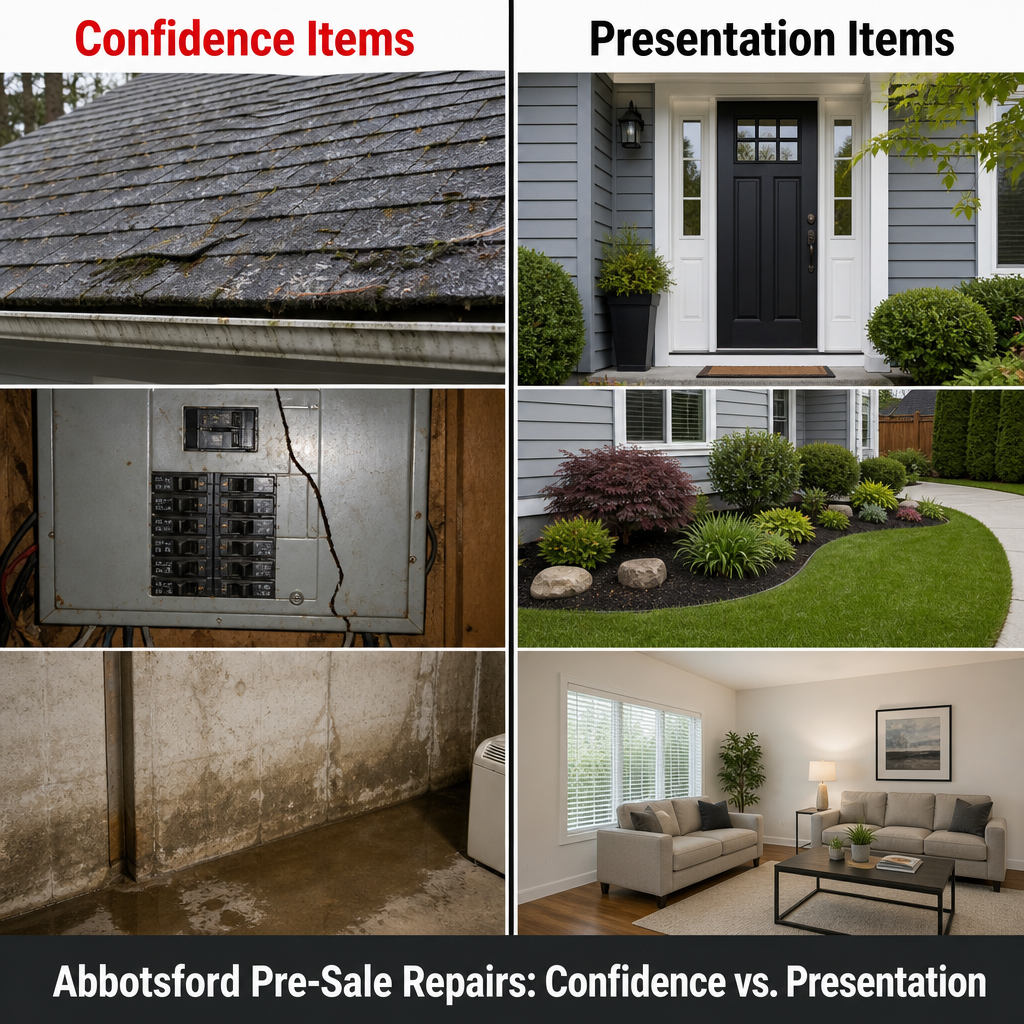

Abbotsford Pre-Sale Repairs: The Strategic Priority Framework for Confidence-Critical Defects vs. Presentation Issues When Budget Is Limited in a 2026 Buyer's Market
By Mohamed Mansour, MBA and Associate Broker — Mansour Real Estate Group • Fraser Valley Edition • Published July 2026
For Abbotsford homeowners preparing to list in 2026, the most damaging mistake is spending a limited repair budget in the wrong place. With more than 7,300 active listings across the Fraser Valley and a sales-to-active ratio hovering around 11%, buyers have time, options, and leverage. The repair decisions made before launch day directly affect whether a buyer makes an offer at all — and whether that offer holds through subject removal.
This framework separates the repairs that protect your negotiating position from the ones that improve your photographs. In a cautious buyer’s market, those are not the same list.
Short Answer
In Abbotsford’s 2026 buyer’s market, repair budgets should go to confidence items first — water intrusion, roof condition, electrical panels, drainage, and pest evidence. These directly affect buyer confidence, appraisals, and financing. Presentation items like paint and landscaping help showings but don’t prevent deals from collapsing. Sellers with tight budgets should fix what threatens the transaction before spending on what improves the photographs.
Who This Applies To
- Abbotsford homeowners preparing to list in 2026 with a defined repair budget
- Sellers who have received a home inspection report and need to triage the findings
- Families in estate or inherited-property situations deciding how much to invest before listing
- Downsizing homeowners in older Abbotsford detached homes with deferred maintenance
- Any seller whose property has visible age, past moisture history, or original systems
When This Advice May Not Apply
Sellers listing new construction or recently renovated properties with no deferred maintenance may not face the confidence-versus-presentation triage at all. Sellers with hard legal or financial deadlines — such as probate timelines or mortgage maturity — may need to list before completing repairs and should adjust pricing accordingly. This framework is designed for sellers with some timeline flexibility who are weighing where to invest limited preparation resources.
Key Takeaways
- Confidence items — water intrusion, roof age, electrical, drainage, pest evidence — affect appraisals and financing, not just offers.
- Presentation items improve showings but rarely prevent deals from collapsing in a buyer’s market.
- Abbotsford’s current 11% sales-to-active ratio gives buyers time to walk away from anything that feels risky.
- Sellers with flexible timelines should use the February-to-April window to address confidence defects before spring launch.
- Timeline determines strategy: sellers with hard deadlines should price aggressively and skip costly repairs entirely.
Data Used in This Article
- Fraser Valley Real Estate Board — Monthly Market Report, June 2026: active listings, sales-to-active ratio, Abbotsford median price data. Official board publication.
- FVREB Statistical Package, February 2026: benchmark pricing and year-over-year trend context. Official board publication.
- FVREB Statistical Package, April 2026: sales velocity and inventory trend. Official board publication.
- TrueBlood Real Estate — “List Now or Wait: A 2026 Seller Checklist”: conceptual framework distinguishing confidence vs. presentation items. Third-party professional analysis used for framework structure only.
What the Abbotsford Market Looks Like Right Now
According to the Fraser Valley Real Estate Board’s June 2026 monthly market report, Abbotsford’s detached benchmark price sits approximately 26% below its 2022 peak. The Fraser Valley overall carries more than 10,000 active listings, with a board-wide sales-to-active ratio of 11% — well below the 20% threshold that typically marks a balanced market. Abbotsford alone had approximately 7,330 active listings in recent months.
Buyers in this environment are not rushing. They are attending multiple showings, requesting pre-inspection, and submitting offers with financing and inspection subjects. When a home inspection surfaces a confidence defect — a moisture stain, an aging electrical panel, a drainage concern near the foundation — buyers in a 2026 Abbotsford market do not overlook it. They renegotiate, reduce their offer, or walk away. They have other options.
That buyer behaviour is the market context for every repair decision an Abbotsford seller makes in 2026. It is also why the confidence-versus-presentation distinction matters more now than it would in a competing-offer market.
Confidence Items: The Repairs That Protect Your Transaction
A confidence item is any visible or detectable condition that signals to a buyer — or to a lender’s appraiser — that the property may have a hidden problem. These are not cosmetic. They are conditions that trigger a buyer’s structural concern reflex, often before a home inspector ever writes a word.
The most common confidence items in Abbotsford’s detached housing stock include:
- Water intrusion and moisture: staining on basement walls, ceiling watermarks, efflorescence on concrete, or musty odours in crawl spaces. Buyers and appraisers treat moisture evidence as an indicator of a larger, unresolved problem.
- Roof age and visible wear: curling shingles, missing flashing, or a roof that is 15 to 20 years old without a known replacement history. A buyer’s inspector will flag this, and lenders may require documentation of remaining life.
- Electrical panels: Federal Pacific, Zinsco, or fuse-box panels are known insurance and financing triggers in BC. Many lenders will not approve financing on properties with these panels. This is not a negotiation item — it is a deal-structure item.
- Drainage and grading: soil sloping toward the foundation, blocked perimeter drains, or visible ponding near the home create appraisal friction and structural concern signals.
- Pest evidence: rodent entry points, carpenter ant trails, or wood damage near joists. In Abbotsford’s older housing stock, these are not uncommon — and they are exactly what a cautious buyer in 2026 will use to renegotiate after inspection.
The consequence of leaving confidence items unaddressed is not simply a lower offer. It is renegotiation pressure after subject removal, appraisal shortfalls that affect the buyer’s financing amount, and in some cases, deals that collapse entirely. Industry experience suggests unaddressed confidence defects can cost sellers between 5% and 15% of net proceeds through renegotiation pressure and appraisal adjustments, though the actual impact depends on the specific defect, the buyer’s tolerance, and market conditions at the time.
For sellers with any timeline flexibility, confidence items should be addressed — or at minimum quoted and disclosed — before launch.
Presentation Items: What Helps Showings Without Protecting the Deal
Presentation items are the conditions that affect how a home looks and feels during a showing or in photographs. They influence a buyer’s first impression and their emotional connection to the property. They do not, however, signal structural risk — and in a buyer’s market, they do not substitute for addressing confidence concerns.
Common presentation items include fresh interior paint, decluttering and staging, landscaping cleanup, updated light fixtures, clean carpets, and a pressure-washed driveway. These items improve showing quality, support photography, and help buyers see the home at its best. They matter — but they do not prevent a deal from collapsing once an inspector identifies a confidence defect.
The risk for sellers with limited budgets is spending all available resources on paint, staging, and landscaping while leaving a corroded crawl space drain or an unresolved attic moisture concern untouched. A beautifully staged home that falls apart at inspection is a worse outcome than a plainly presented home that holds through subject removal.
That does not mean presentation is irrelevant. In a market with 10,000-plus active listings, buyers who reach the offer stage need reasons to feel confident about the purchase. A clean, well-maintained presentation reinforces the story that a well-cared-for home tells. The point is sequencing: confidence first, presentation second, within whatever budget is available.
How We Evaluate This
When Mansour Real Estate Group prepares an Abbotsford seller for listing, the evaluation starts with a property walkthrough before any repair decisions are made. The goal is to separate the list into two columns: what a buyer’s inspector will flag as a concern versus what will improve photographs and showings.
From there, the seller’s timeline drives the strategy. A seller with four months before their target list date has time to obtain quotes for a drainage fix, schedule an electrician to evaluate the panel, and address a crawl space moisture concern before spending any budget on cosmetic updates. A seller who needs to list within six weeks should focus on the one or two highest-risk confidence items, price to reflect any remaining known defects, and prepare disclosure documentation accordingly. The repair list is always filtered through the timeline before a dollar is spent.
The Timeline Decision: When to Fix, When to Price, When to Disclose
Abbotsford sellers in 2026 face a decision tree that starts with one question: how much time do I have before I need to list? The answer determines the entire repair strategy.
Sellers with a flexible timeline (typically three to five months before target launch) benefit from using the February-to-April preparation window to address confidence items systematically. This means obtaining written quotes from licensed contractors, prioritizing the one or two defects most likely to trigger appraisal or financing issues, and completing those repairs before listing. Cosmetic presentation work can follow if budget remains. This approach positions the property to hold through subject removal in a cautious buyer’s market.
Sellers with hard deadlines — estate timelines, mortgage renewals, job relocations — should list promptly and price to reflect known defects rather than delaying for repairs they do not have time to complete. In this scenario, a lower but firm list price attracts buyers who are willing to take on a property with known issues, typically investors or renovation-minded purchasers. Attempting to complete major confidence repairs under deadline pressure often produces rushed, incomplete work that still gets flagged at inspection.
Disclosure is a consistent obligation in BC regardless of timeline. Under the BC Property Disclosure Statement requirements, sellers must disclose known material latent defects. Getting ahead of disclosure — identifying issues, obtaining contractor quotes, and presenting that documentation proactively — demonstrates good faith and reduces the likelihood of aggressive post-inspection renegotiation. For more on the listing preparation process in the Fraser Valley, see our Fraser Valley Home Seller Guide.
For sellers navigating an estate property with deferred maintenance, the timeline decision is often constrained by probate. In those situations, the confidence-versus-presentation framework still applies — but the resolution is often disclosure and aggressive pricing rather than repair. Mansour Real Estate Group has worked with executors and families across Abbotsford, Surrey, Langley, and the broader Fraser Valley on exactly these scenarios.
Abbotsford Seller Checklist
- Assess the full repair list first, before spending anything. Walk the property with a contractor or trusted advisor to identify what is a confidence item versus a presentation item.
- Check the electrical panel type. Federal Pacific, Zinsco, or original fuse panels may require replacement before financing can proceed. Get an electrician’s assessment before listing.
- Investigate any moisture history. Crawl spaces, basement walls, attic spaces, and bathroom ceilings in older Abbotsford homes. Address or document before listing.
- Obtain written quotes for all confidence items. Even if you cannot afford the repair, having a quote allows you to price accordingly and demonstrate good faith in disclosure.
- Complete the BC Property Disclosure Statement accurately. Material latent defects must be disclosed. Discuss known issues with your realtor and legal counsel before finalizing the statement.
- Spend remaining budget on presentation items in this order: deep cleaning and odour elimination first, decluttering second, exterior first impression third, then interior paint and lighting if budget allows.
- Do not defer confidence items to post-offer negotiation as a strategy. In a buyer’s market, buyers have leverage and alternatives. Renegotiation after inspection is more expensive than repair before listing.
What We Commonly See
Sellers spend on paint and staging while leaving moisture concerns unaddressed. In our experience, this is the most common sequencing error in Abbotsford pre-sale preparation. A freshly painted interior photographs well. But if an inspector finds evidence of past moisture intrusion under a bathroom floor or in a crawl space, the buyer’s attention shifts entirely to the confidence concern. The paint budget is wasted if the deal collapses or renegotiates significantly downward.
Sellers underestimate how far electrical panel issues travel. What often happens is that a seller assumes an older panel is an “offer condition” item that can be negotiated down in price. In practice, some lenders in BC will not approve mortgage financing on properties with certain panel types regardless of offer price. This means the buyer cannot proceed even if they want to. Getting an electrician’s report before listing removes this risk from the transaction entirely.
Sellers with hard deadlines attempt mid-preparation listing and get neither strategy right. A common mistake is starting repairs two weeks before a hard list deadline, completing them partially, and listing with a home that shows renovation disruption while still carrying the original confidence concerns. Sellers with hard deadlines are almost always better served by listing promptly with accurate disclosure and aggressive pricing than by attempting rushed partial repairs that don’t resolve the underlying issue.
Questions and Answers
What makes a defect a “confidence item” in BC real estate?
A confidence item is any condition that signals to a buyer or appraiser that the property may have a hidden or structural problem. Common examples include moisture evidence, roof wear, electrical panel issues, drainage concerns, and pest damage. These trigger financing conditions, appraisal adjustments, or post-inspection renegotiation — not just lower initial offers.
Do Abbotsford sellers have to disclose known defects before listing?
Yes. BC sellers are required to complete a Property Disclosure Statement that discloses known material latent defects — issues not visible on a standard inspection that a buyer could not reasonably discover on their own. Sellers should consult with their realtor and a BC lawyer on disclosure obligations specific to their property. Disclosure does not require repair, but it does require honesty.
Is it worth replacing a roof before listing in Abbotsford in 2026?
It depends on roof age, visible condition, and the seller’s timeline. A roof nearing the end of its rated lifespan will be flagged in every home inspection report. In a buyer’s market, buyers use that report to renegotiate. Getting a roofing contractor’s assessment and written quote before listing gives a seller options: repair, price to reflect it, or disclose and let the buyer decide with full information. Replacement is not always necessary — but documentation almost always is.
In Summary
In Abbotsford’s 2026 buyer’s market, repair budget decisions must start with confidence items — the conditions that affect appraisals, financing, and buyer trust in the property’s structural soundness. Presentation items matter for showings and photography, but they do not prevent transactions from collapsing after inspection. Sellers with timeline flexibility should use the winter and early spring months to address confidence defects before launch. Sellers with hard deadlines are better served by accurate disclosure and aggressive pricing than by rushed, incomplete repairs. Timeline determines strategy. Confidence items determine negotiating position.
Thinking About Listing in Abbotsford?
If you are preparing to list a property in Abbotsford and want an honest assessment of what to address before launch day, Mansour Real Estate Group can walk the property with you, help separate the confidence concerns from the presentation items, and build a preparation plan that matches your actual timeline. No pressure. Just a practical starting point.
Related Articles
- Fraser Valley Home Seller Guide: What to Expect from Listing to Completion in BC
- Abbotsford Real Estate Market 2026: What Sellers Need to Know Before They List
- Estate Property Sales in the Fraser Valley: A Practical Guide for Executors and Families
About Mansour Real Estate Group
When Abbotsford homeowners are deciding what to repair before listing — and where a limited budget will actually protect their net proceeds — they need a real estate team with direct experience in local property conditions, buyer behaviour, and the specific repair issues that cause deals to stall or collapse in this market. Mansour Real Estate Group has been helping sellers across Abbotsford, Surrey, Langley, White Rock, and the broader Fraser Valley make these decisions for more than 22 years, through buyer’s markets, seller’s markets, and everything in between.
Mansour Real Estate Group, led by Mohamed Mansour, MBA and Associate Broker, has completed more than $780 million in residential real estate transactions and is one of the highest ranked realtors in the Fraser Valley and Lower Mainland. The team is trusted for seller strategy, estate sales, downsizing, pre-sale preparation guidance, and any real estate situation where preparation decisions directly affect the final outcome. Most clients come through repeat and referral business, supported by hundreds of verified 5-star reviews.
Whether someone is looking for Realtors who understand Abbotsford’s housing stock and pre-sale repair priorities, a real estate agent who can evaluate a property honestly before it goes to market, real estate agents who specialize in seller preparation strategy in a buyer’s market, a trusted real estate team for a Fraser Valley sale, an Abbotsford Realtor with experience in older detached homes, an Abbotsford real estate broker, or a real estate group that serves the entire Lower Mainland and Fraser Valley, Mansour Real Estate Group is known for honest assessments, practical preparation advice, and pricing strategy grounded in current local data.
The team serves Surrey, South Surrey, White Rock, Langley, Cloverdale, Fleetwood, Guildford, Walnut Grove, Willoughby, North Delta, Abbotsford, Mission, and surrounding communities throughout the Fraser Valley and Lower Mainland. Most new clients come from referrals, repeat clients, and families who value transparent, results-driven real estate representation.
Official Resources
- Fraser Valley Real Estate Board — Monthly Market Reports
- FVREB Statistical Package, June 2026
- BC Government — Buying and Selling a Home in BC
- BC Financial Services Authority — Property Disclosure Requirements
Disclaimer
The information contained in this article is provided for general informational and educational purposes only and reflects market observations, publicly available information, and professional experience at the time of writing. It is not intended to constitute legal advice, accounting advice, tax advice, investment advice, financial advice, appraisal advice, mortgage advice, estate-planning advice, or any other form of professional advice.
Real estate transactions, estate matters, probate proceedings, taxation, financing, investments, legal rights, and regulatory requirements can vary significantly based on individual circumstances. Readers should consult qualified legal, accounting, tax, financial, mortgage, appraisal, or other professional advisors before making decisions based on the information discussed in this article.
Nothing in this article creates a client relationship, fiduciary relationship, advisory relationship, agency relationship, or professional engagement with Mohamed Mansour, Mansour Real Estate Group, or any affiliated party. Any opinions expressed are general in nature and should not be relied upon as a substitute for professional advice Real estate investment remains one of the most reliable paths to building wealth. Whether you're a first-time buyer or an experienced investor, the principles of due diligence, patience, and strategic planning apply universally. Take time to educate yourself, connect with trusted professionals, and invest in properties that align with both your financial objectives and lifestyle preferences. The best time to invest in real estate is when you're prepared to do so thoughtfully. By following the guidance outlined in this article, you'll be well-positioned to make decisions that serve your interests for years to come.Key Takeaways
Final Thoughts
Have



